

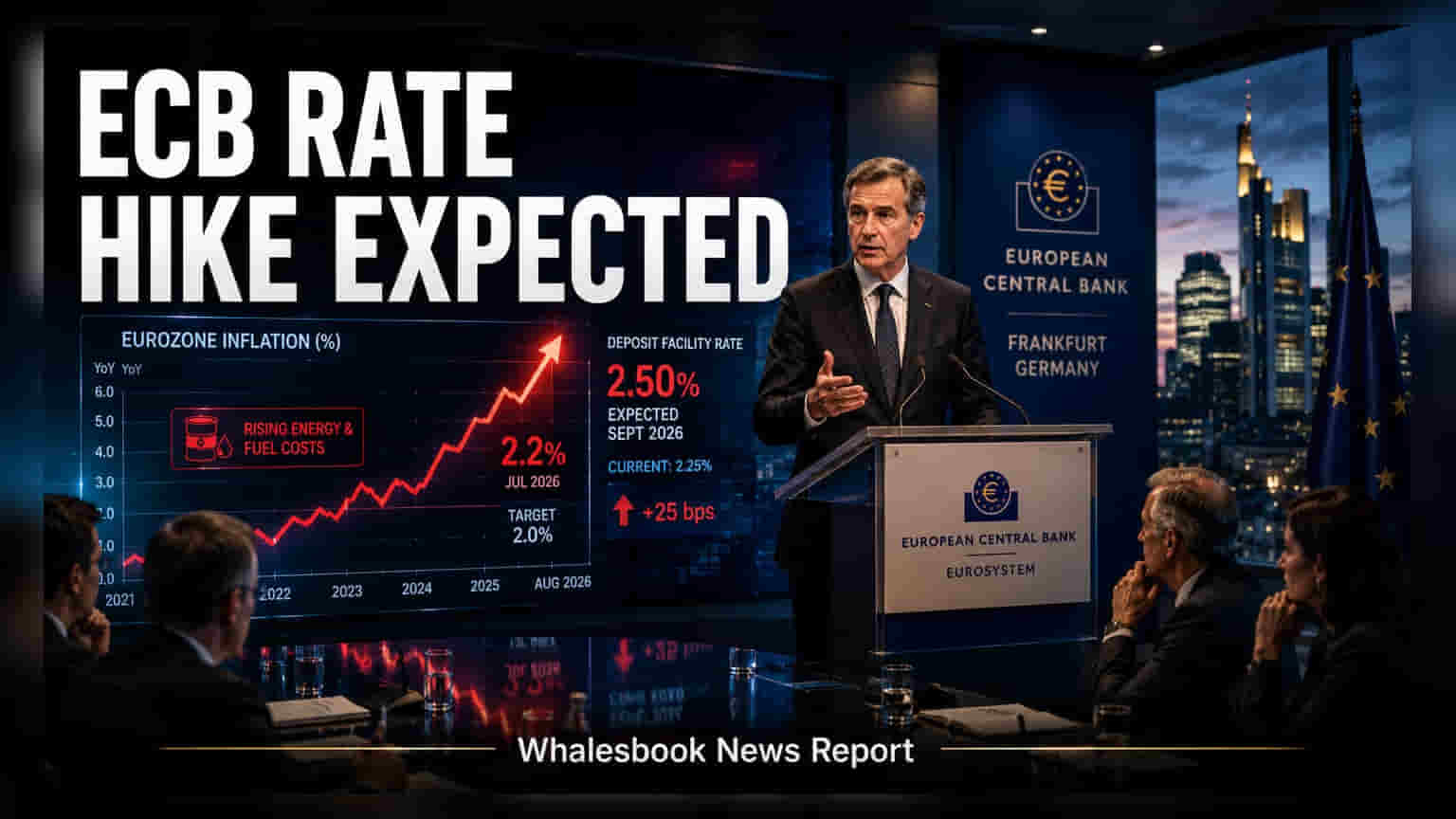
European Central Bank policymaker Primoz Dolenc has signaled support for a September interest rate hike to 2.5%, aiming to combat inflation driven by rising energy costs. For Indian investors, this move is important as it influences global liquidity and foreign capital flows, potentially impacting the Indian Rupee and investor sentiment toward emerging market assets.
European Central Bank (ECB) Governing Council member Primoz Dolenc has expressed clear support for an interest rate hike in September 2026. This move is aimed at controlling inflation, which remains a challenge due to higher energy and fuel costs resulting from geopolitical tensions in the Middle East. If implemented, this would raise the deposit facility rate to 2.50% from the current 2.25%, a level set in June 2026.
While the Eurozone economy has shown some resilience, policymakers are focused on ensuring that inflation does not become deeply rooted in the economy. Mr. Dolenc emphasized that while the current economic data is stronger than expected, it is important to take proactive steps to anchor inflation expectations. The focus remains on preventing a scenario where rising prices lead to a cycle of higher wages and further inflation, commonly known as a second-round effect.
For Indian investors, the European Central Bank’s decision is significant because of its influence on global financial conditions. When major central banks like the ECB increase interest rates, it often leads to a tightening of global liquidity. This can impact foreign capital flows into Indian markets, as investors might prefer the relative stability of developed-market assets when rates rise. Additionally, changes in interest rate differentials can influence currency valuations, affecting the exchange rate between the Euro and the Indian Rupee.
The path ahead involves balancing the need to fight inflation with the risk of slowing down economic growth. While markets largely expect the 25-basis-point increase, there is little guidance on what happens after September. Policymakers have indicated that they prefer to remain flexible, relying on upcoming economic data rather than committing to a long sequence of future rate hikes.
The most important monitorable for investors in the coming months will be the central bank's projections scheduled for December. These forecasts will provide a clearer roadmap for the medium-term policy path and help markets understand whether the tightening cycle will continue or if the ECB will pause to assess the impact of higher borrowing costs on the broader economy.