

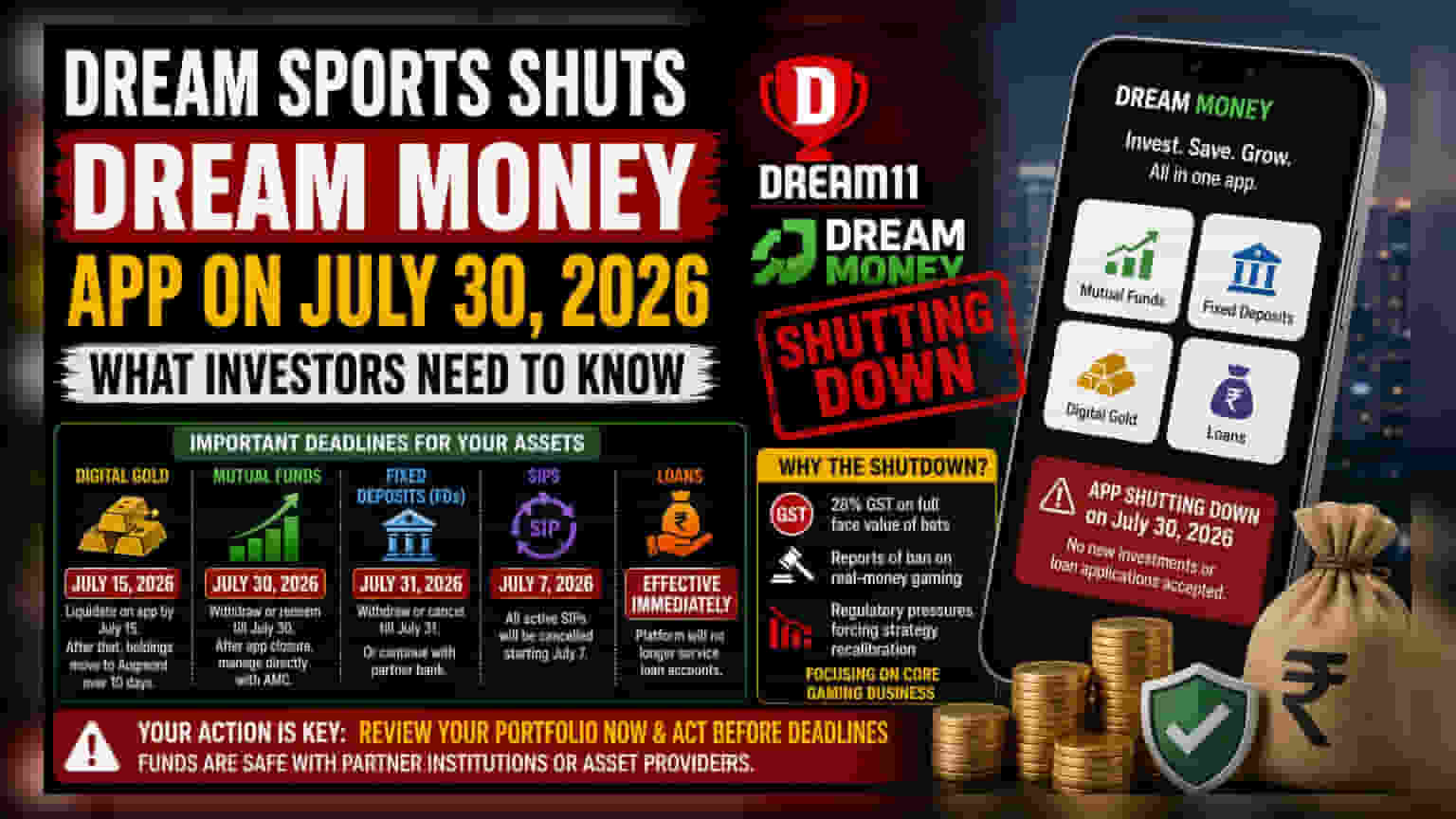
Dream Sports is shutting down its fintech app, Dream Money, on July 30, 2026, less than a year after launch. The decision follows regulatory pressure on the real-money gaming sector. Users must act to manage their investments—including mutual funds, digital gold, and fixed deposits—as the company winds down operations.
What Happened
Dream Sports, the parent company of the popular gaming platform Dream11, has announced it will shut down its fintech venture, Dream Money, on July 30, 2026. The app, which launched in August 2025, provided users with access to financial products like mutual funds, fixed deposits, digital gold, and loans. This closure marks an early end to the company's attempt to diversify its business beyond real-money gaming. The company has informed users that it is halting new loan applications and investments immediately.
What Happens To Your Investments
Dream Sports has stated that customer funds remain secure and will be managed either by partner institutions or directly through the asset providers. Investors need to take specific steps before the July 30, 2026, closure date to ensure their accounts are migrated correctly:
- Digital Gold: Customers have until July 15, 2026, to liquidate their holdings on the app. After this date, holdings will transition to Augmont, the partner platform, over a ten-day period.
- Mutual Funds: Investors can withdraw or redeem their funds through the platform until July 30, 2026. After the app closes, they can manage their investments directly through their respective asset management companies (AMCs).
- Fixed Deposits (FDs): Users can withdraw or cancel their FDs until July 31, 2026. Alternatively, these FDs can continue with the partner bank, which will provide direct service to the customers.
- Systematic Investment Plans (SIPs): All active SIPs will be cancelled starting July 7, 2026.
- Loans: The platform will no longer service loan accounts effective immediately.
Why The Shutdown Is Happening
This decision is largely due to the changing regulatory environment for the real-money gaming (RMG) sector in India. Gaming companies have faced significant challenges following the government's implementation of a 28% Goods and Services Tax (GST) on the full face value of bets. Reports of an impending ban on certain forms of real-money gaming have also forced firms in this sector to re-evaluate their strategies. The closure of Dream Money reflects a broader trend of consolidation, where gaming companies are pulling back from non-core diversification efforts to focus on their primary business amid these regulatory pressures.
What Users Should Track Next
If you have investments or loans on the Dream Money platform, the most important step is to review your portfolio immediately and note the specific deadlines for each asset class. While the company has assured users that assets are safe, taking action before the July deadlines will ensure a smoother transition to the partner platforms or direct management. The key monitorable for users is the migration of these assets to their respective partners to avoid any operational delays after the app is shut down.