

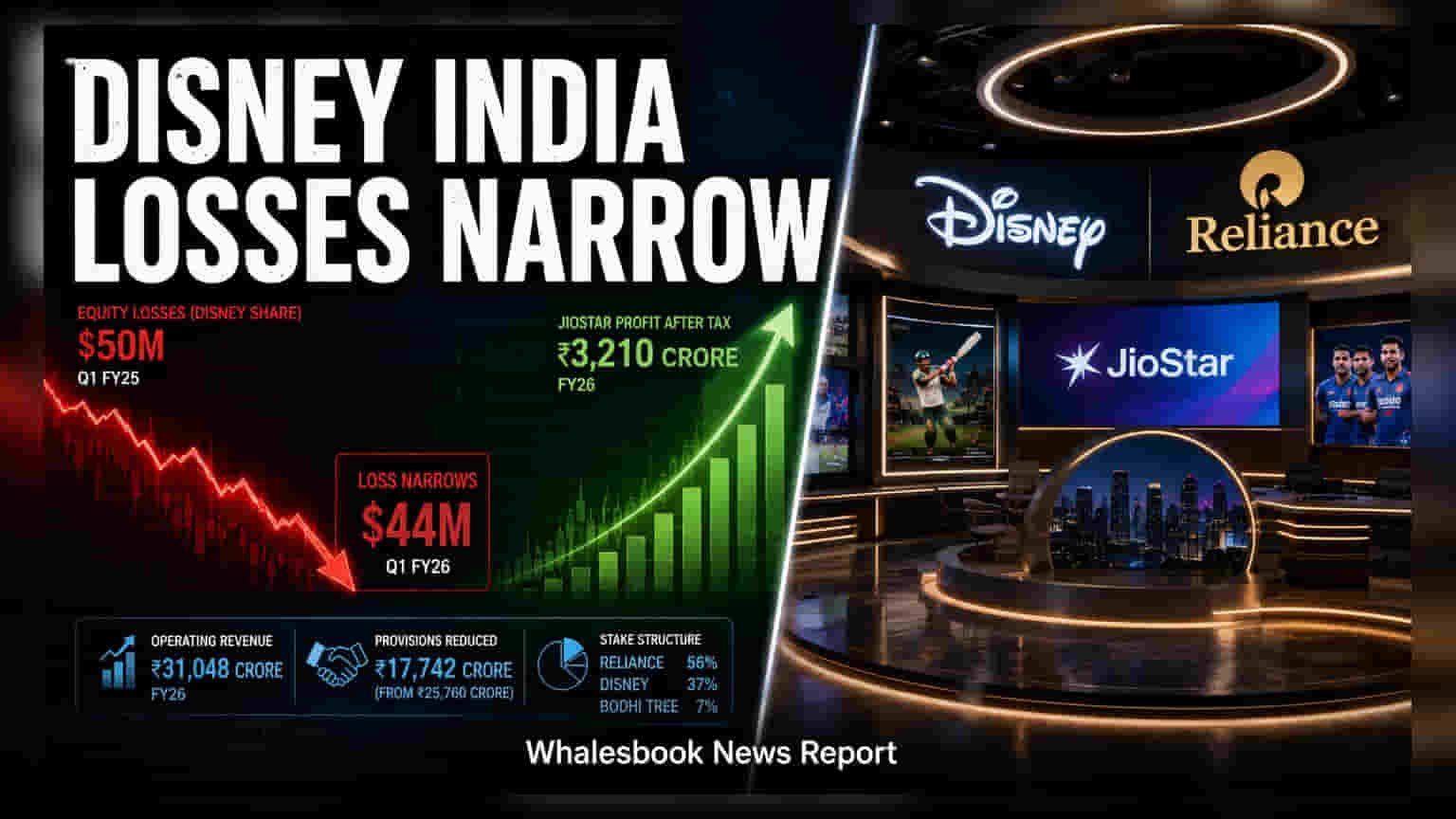
Walt Disney’s equity losses from its Indian operations narrowed to $44 million in the June 2026 quarter. The joint venture with Reliance Industries, JioStar, reported a profit of ₹3,210 crore for the full fiscal year 2026, driven by a reduction in provisions for high-cost sports contracts and improved digital monetization.
The financial performance of Walt Disney’s media assets in India shows signs of stabilization as the joint venture with Reliance Industries, known as JioStar, reports significant operational progress. For the quarter ended June 27, 2026, Disney’s share of equity losses from its Indian investments narrowed to $44 million, an improvement from the $50 million deficit recorded in the same period last year. This trend suggests that the integration of Star-branded assets with Reliance’s media business is beginning to yield financial stability.
JioStar Financial Performance
JioStar, which combines Disney’s entertainment and sports assets with Reliance-controlled Viacom18, posted strong results for the fiscal year 2026. The venture reported an operating revenue of ₹31,048 crore and a profit after tax of ₹3,210 crore. This growth has been supported by a strategic reduction in the provisions for onerous sports contracts—agreements where the projected costs of broadcast rights exceed the expected revenue. These provisions were reduced to ₹17,742 crore from ₹25,760 crore in the previous year, effectively freeing up capital and boosting the bottom line without requiring fresh cash injections for future losses.
The venture is structured with Reliance Industries holding a majority 56% stake, while Walt Disney holds 37%, and Bodhi Tree Systems retains the remaining 7%. This ownership alignment has enabled a consolidated approach to content and sports broadcasting, which is crucial for managing the high costs associated with premium sports rights in the Indian market.
Sector Risks and Regulatory Watch
While the financials show improvement, the media sector faces ongoing challenges. The joint venture operates in a landscape where traditional linear television advertising remains under pressure as audiences shift toward digital platforms. Additionally, the company faces potential regulatory hurdles, with the Competition Commission of India closely monitoring the market dynamics following the merger. Concerns have been raised regarding the combined entity's market dominance, particularly in relation to the control of high-value cricket broadcast rights.
While JioStar is demonstrating growth, other legacy investments continue to struggle. Disney’s partnership in Tata Play, a direct-to-home satellite television service, continues to face headwinds. The venture has reported widened losses, reflecting the broader structural challenges in the legacy pay-TV segment, which is increasingly being outpaced by internet-based streaming services.
Moving forward, investors will be closely monitoring whether JioStar can sustain this profitability as it navigates the competitive streaming market and regulatory requirements. Key monitorables for the coming quarters include the company’s ability to manage sports broadcasting costs, further digital monetization trends, and any updates regarding regulatory clearances related to market dominance.