

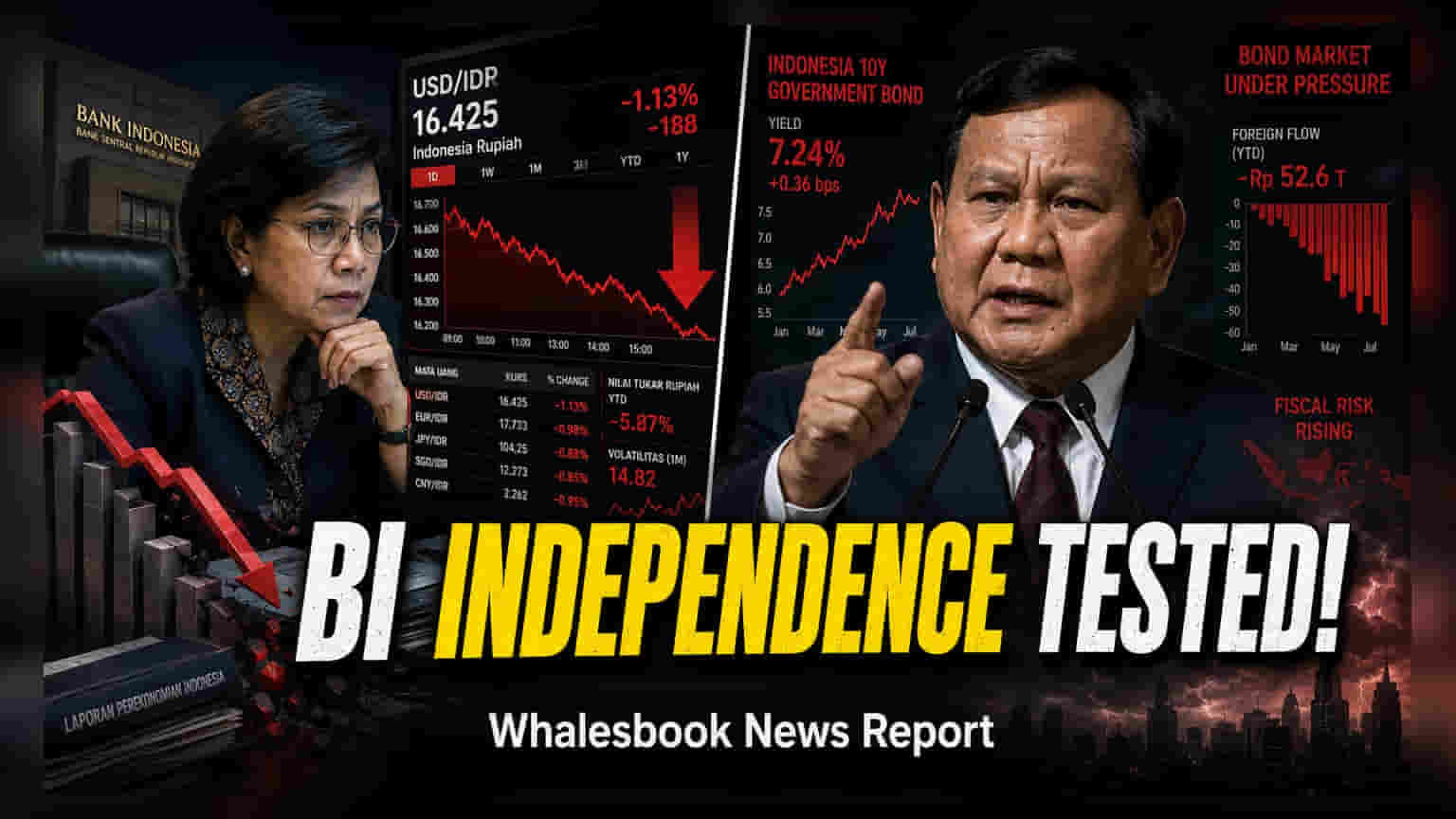
President Prabowo Subianto has named Destry Damayanti as the sole candidate for Bank Indonesia Governor following the resignation of Perry Warjiyo. Investors are watching closely to see if she can maintain the central bank's independence from political pressure as the government targets aggressive economic growth. Her leadership will be critical for the stability of the Indonesian rupiah and bond markets.
President Prabowo Subianto has nominated Destry Damayanti to lead Bank Indonesia on a permanent basis, following the sudden resignation of former Governor Perry Warjiyo in late July 2026. Damayanti, who currently serves as the acting governor, is widely seen as an experienced technocrat. If confirmed by parliament—a move considered likely given the president's coalition majority—she would become the first woman to hold the position.
Balancing Growth and Independence
The appointment comes at a difficult time for Indonesia’s monetary policy. The administration is pushing for accelerated economic growth of 6% to 8%, a target that often requires supportive monetary policies. However, the central bank’s traditional mandate is to control inflation and maintain the stability of the rupiah. Investors and economists are closely monitoring the situation to see if Damayanti can maintain the central bank’s autonomy. There is concern that political pressure to fuel growth could force the bank to keep interest rates lower than necessary, potentially leading to inflation or further weakening of the currency.
Market Confidence and Currency Stability
The Indonesian rupiah has faced significant pressure throughout 2026, making currency stability a top priority for market participants. The central bank's independence is a key pillar of financial credibility, established in the years following the Asian financial crisis. Any perception that the government is influencing interest rate decisions or monetary policy to meet political goals can lead to capital flight and increased volatility in the bond markets.
Damayanti’s background as a monetary insider is viewed by many as a signal of continuity, which provided some relief to markets following Warjiyo's unexpected departure. However, the true test of her leadership will lie in her ability to navigate the government's demands for economic expansion while maintaining the discipline required to protect the nation's financial health.
What Investors Should Monitor Next
For investors, the immediate focus will be on the parliamentary confirmation process and any early policy signals from the central bank. Specifically, the market will watch how the bank handles upcoming interest rate decisions and whether there are signs of policy shifts to align more closely with government growth targets. Continued monitoring of the rupiah’s performance against the US dollar and the yield on Indonesian government bonds will be essential indicators of whether the market remains confident in the central bank’s ability to operate without direct political interference.