 Whalesbook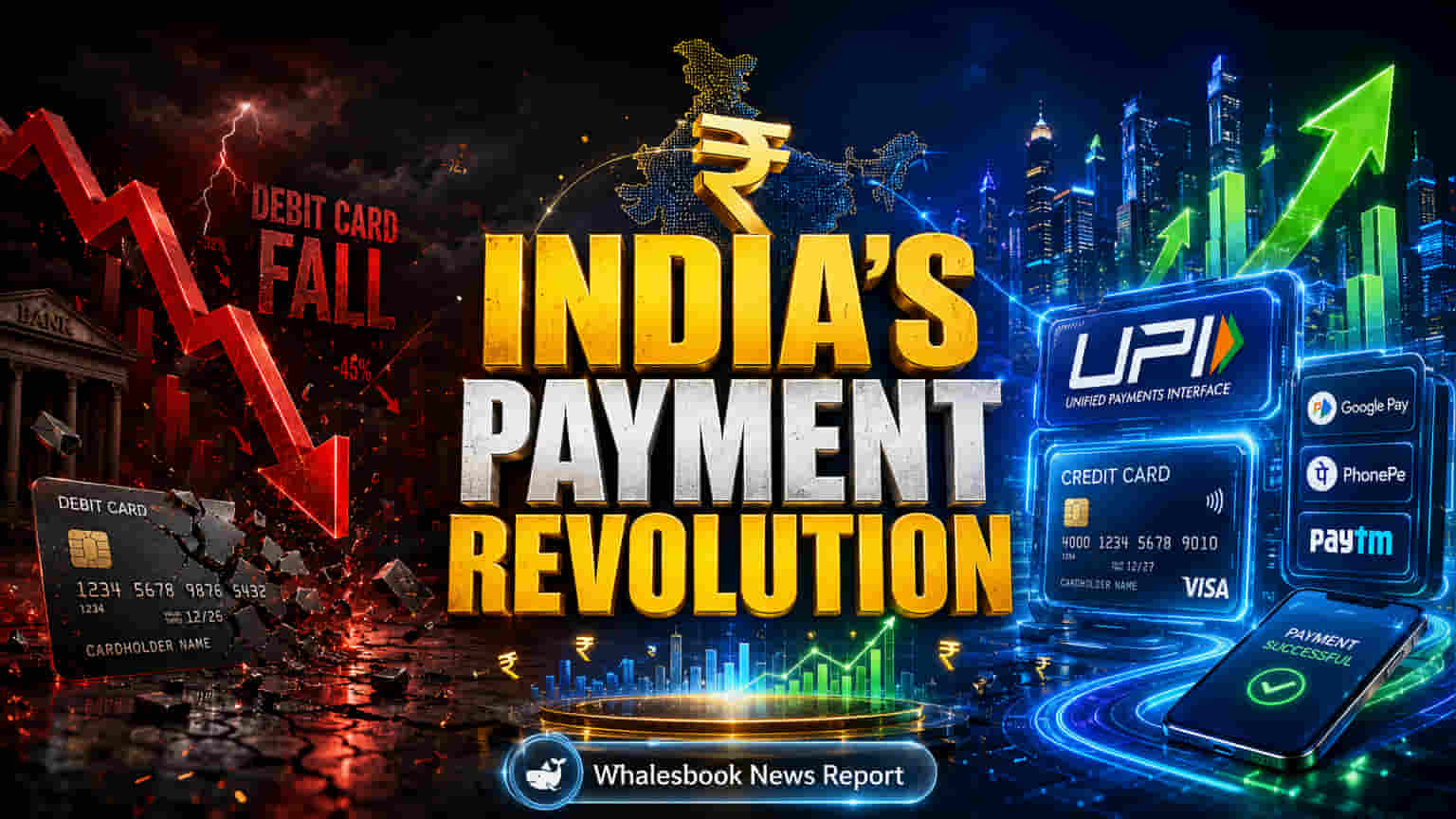


India's Payment Revolution: Debit Card Collapse Fuels Fintech Disruption and Banking Sector Realignment
The Indian payments ecosystem is undergoing a dramatic transformation, with traditional debit card usage experiencing an unprecedented decline. Transaction volumes have fallen by a stark 67%, from 4.087 billion in 2021 to 1.336 billion in 2025, accompanied by a substantial decrease in transaction value. This erosion in debit card utility is directly correlated with the meteoric rise of digital alternatives, particularly the Unified Payments Interface (UPI) and credit cards.
Debit Card Use Declines Sharply
The Reserve Bank of India's (RBI) latest Payment Systems Report shows a fundamental shift in consumer payment preferences. Debit card transaction volumes fell by 24.4% annually from 2021 to 2025, with values decreasing by 11.7% each year. This sharp drop indicates a clear move away from debit cards for everyday purchases. Public sector banks, once dominant in the debit card market, saw their share fall from 67.9% in late 2021 to 63.1% by late 2025, impacting their revenue. However, these banks still issue most debit cards, with 1.0343 billion by the end of 2025.
Digital Payments Surge: UPI and Credit Cards Lead
In contrast, credit card transactions more than doubled between 2021 and 2025. Volumes rose from 2.16 billion to 5.7 billion, with values growing around 27% annually. This rise is largely because credit cards are now preferred for online shopping and accessing credit. The Unified Payments Interface (UPI) has become the clear leader in digital payments, handling a massive 85.5% of total transaction volumes by late 2025. UPI's success, thanks to its speed, ease of use, and low cost, has made India a global leader in real-time payment transactions.
Debit Cards for Cash, Credit Cards for Purchases
Debit cards are now mostly used for cash withdrawals and basic banking. Their usefulness for everyday purchases has greatly decreased. Credit cards, however, have established themselves for larger retail buys and online transactions, meeting the demand for deferred payments and better credit access.
Banking Sector Shifts: Public vs. Private Banks
This shift is clearly affecting market shares among banks. Public sector banks still hold most debit cards, but their lead is slowly shrinking as private sector banks gain ground. Private banks have also strengthened their lead in credit cards, growing their share from 65.8% in mid-2020 to 70.8% by mid-2025. Public sector banks saw a small rise in their credit card share, while foreign banks saw a sharp drop.
Foundation for Digital Payments: Past Initiatives and Regulation
This digital revolution built on years of effort. Government initiatives like 'Digital India' and the JAM (Jan Dhan-Aadhaar-Mobile) trinity promoted financial inclusion and developed necessary infrastructure. The Reserve Bank of India (RBI) played a key role through a strong regulatory framework, including the Payment and Settlement Systems Act, 2007, which governs digital systems like UPI. Regulations on KYC, security, data privacy, and authentication methods have built consumer trust. The COVID-19 pandemic greatly accelerated the move to contactless digital payments.
Future Growth: Fintech Innovation Ahead
Analysts expect strong growth for India's fintech sector, with the market predicted to expand significantly due to digital payments, lending, and insurtech. Trends like embedded finance, AI financial tools, and decentralized finance are set to drive future innovation. The government's focus on digital infrastructure and the RBI's payment vision should maintain this growth, moving India towards a fully digital economy.
Risks in Digital Payments
Despite impressive growth, the rapid shift to digital payments brings risks. Cybersecurity threats like phishing, identity theft, and social engineering scams are increasing, challenging consumer trust and financial stability. While regulations are updating, issues remain with transaction failures, data privacy, and digital literacy, especially in developing areas. The growing reliance on digital platforms also raises concerns about the long-term viability of payment providers with thin margins, particularly those affected by policies like zero Merchant Discount Rate (MDR). Moreover, the move away from debit cards, which provide banks with interchange fee revenue, requires traditional financial institutions, especially public sector banks heavily involved in debit card issuance, to rethink their revenue models.