

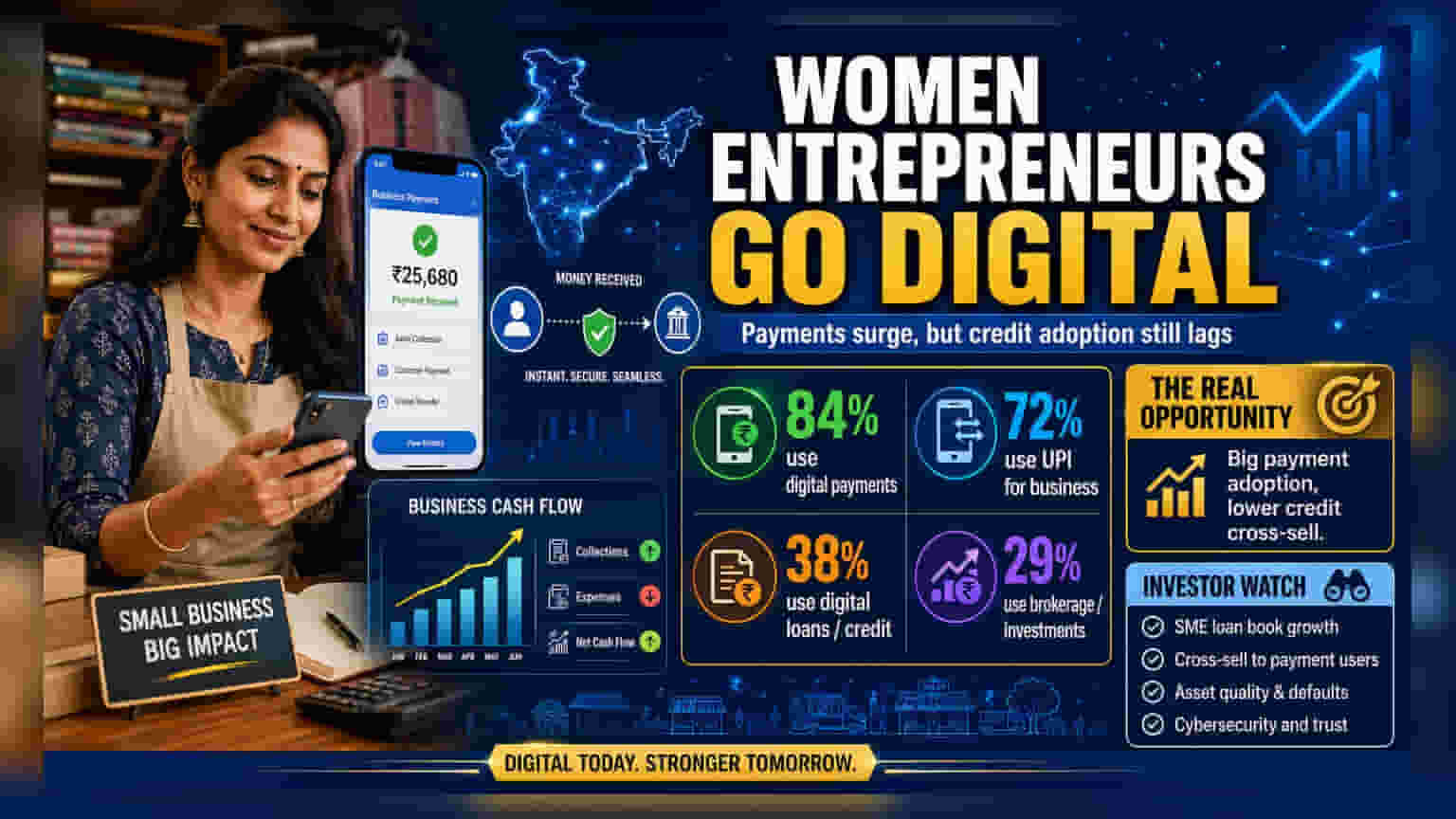
A recent DBS Bank India study reveals that 84% of female entrepreneurs use digital payment tools, while 38% access credit and investment platforms. This trend signals a major shift in SME operations, offering banks a clear opportunity to deepen relationships with this growing customer segment through digitized lending and advisory services.
What Happened
A study by DBS Bank India, conducted in partnership with Deloitte Touche Tohmatsu India, indicates a significant shift toward digital financial adoption among female entrepreneurs in India. Based on a survey of over 1,300 women, the findings show that 84% of respondents now rely on digital payment platforms, while 72% utilize the Unified Payments Interface (UPI) for business transactions. Beyond basic payments, the data shows that 38% of these entrepreneurs are accessing digital loan and credit platforms, while 29% are using brokerage services for investments.
The Business Strategy Behind The Data
For financial institutions, this shift is more than just a behavioral change; it is a vital business strategy. Banks increasingly focus on the Small and Medium Enterprise (SME) segment to drive credit growth. Historically, assessing the creditworthiness of SMEs was expensive and slow due to the reliance on paper-based documents.
When entrepreneurs move their financial operations to digital platforms, they leave a 'digital footprint' of their cash flow, revenue, and spending habits. This data allows banks to assess credit risk more accurately and quickly. By targeting this segment, banks like DBS can lower their cost of acquiring customers (CAC) and offer automated credit products, which typically carry higher margins than corporate lending.
Why The Gap Between Payments And Credit Matters
While 84% of women entrepreneurs are using digital payments, the usage of credit and investment tools sits much lower at 38% and 29% respectively. For investors and market analysts, this 'usage gap' is the most important monitorable.
It suggests that while the base of digitally-active customers is large, they are not yet fully integrated into the banks' credit and investment ecosystems. The bank's ability to cross-sell higher-value financial products—such as working capital loans, insurance, or wealth management services—to these existing payment users will determine the long-term profitability of this segment.
Risk Factors In SME Digitization
While digital adoption is rising, it does not eliminate the fundamental risks of lending to the SME sector. Small businesses are often more vulnerable to economic cycles, pricing pressure, and supply chain disruptions than large corporations. Even with better digital data, the risk of credit defaults remains higher in this segment compared to traditional retail or large corporate lending.
Furthermore, as businesses move more of their financial activity online, the operational risk regarding cybersecurity and data privacy increases. Banks must invest heavily in securing these platforms to maintain trust, which is identified in the study as a key driver for adoption.
What Investors Can Track
Investors looking at the banking and financial services sector may track whether institutions can effectively convert payment-only users into credit customers. Success will be reflected in improving fee-based income and growth in the SME loan book. Management commentary regarding digital transformation, the cost-to-income ratio for SME operations, and the quality of the SME loan portfolio will be important indicators of how well banks are capitalizing on this digital shift.