

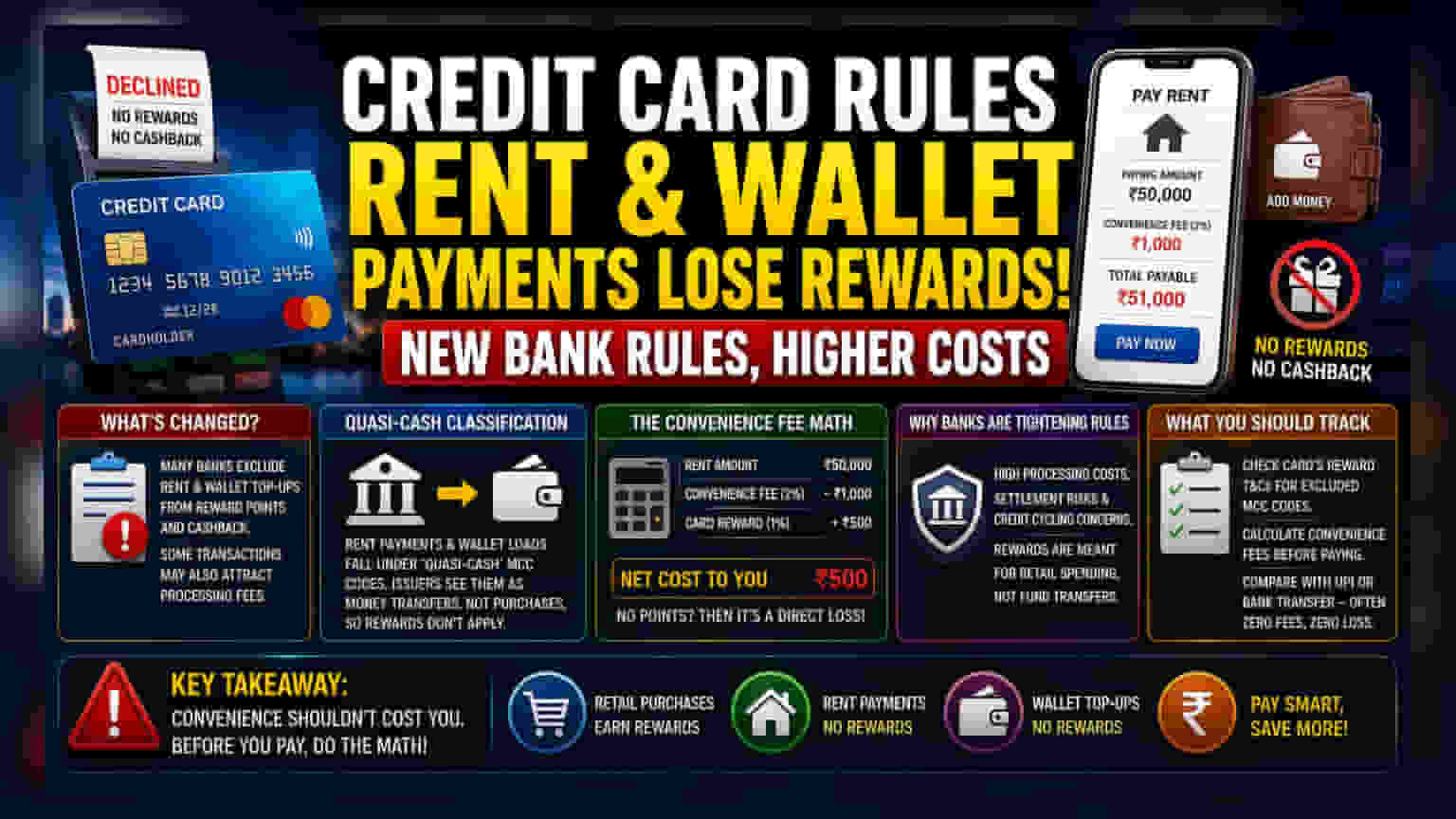
Using credit cards for rent payments or digital wallet loads may not earn reward points and could even trigger extra fees. Many banks have updated their policies to classify these transactions differently, often labeling them as 'quasi-cash.' Before processing these payments, it is essential to check your card's terms and conditions to see if you are actually losing money after factoring in convenience charges and lost rewards.
What Happened
Credit card users are increasingly finding that transactions for rent payments and digital wallet top-ups are being treated differently than standard retail purchases. Many major banks and credit card issuers in India have updated their terms and conditions, specifically excluding these categories from earning reward points or cashback. While these payments may still go through, they no longer count toward the benefits that users typically associate with their cards. In some cases, these transactions may even attract separate processing fees, changing the economics of using a credit card for these expenses.
The 'Quasi-Cash' Classification
Banks categorize credit card transactions using specific labels called Merchant Category Codes (MCC). Rent payments and wallet loads often fall under codes that banks define as 'quasi-cash' or money-transfer activities. Because these transactions essentially involve moving funds rather than purchasing a tangible good or service, issuers have become stricter. They view these payments as a form of credit cycling—where a user might inflate their transaction volume to earn rewards without actually making a consumer purchase. To prevent this, banks have largely stripped these categories of reward benefits.
The Math Behind Convenience Fees
Beyond the loss of reward points, consumers must watch for 'convenience fees' charged by third-party payment platforms. When you use a credit card to pay rent through a digital application, the app often charges a fee—typically ranging from 1% to 3% of the transaction amount—to cover processing costs.
If you use a card that provides, for example, a 1% reward rate, but you are paying a 2% convenience fee to the platform, you are effectively paying an extra 1% for the privilege of using your card. When you factor in that many cards now offer zero points for these specific transactions, the net result is a direct financial loss for the user.
Why Banks Are Tightening Rules
For banks, processing these transactions carries costs and risks. Unlike a standard retail purchase where the merchant pays a fee to the payment network, rent transfers and wallet loads involve specific settlement processes. Banks often subsidize rewards on retail spending to encourage genuine consumption. By excluding rent and wallet top-ups, issuers are trying to protect their profit margins and ensure that reward programs are used for their intended purpose: retail consumption, not cash flow management or fund transfers.
What You Should Track
Before initiating a large payment, check your credit card’s latest 'Reward Point Terms and Conditions.' Most issuer websites now maintain a specific list of excluded merchant categories, which almost always includes rent and wallet load transactions. Additionally, before paying rent through an app, calculate the total convenience fee. If the fee is higher than the value of any benefits you might receive—if any—it is usually more cost-effective to use an alternative payment method, such as UPI or a direct bank transfer, which typically carries no transaction fee.