

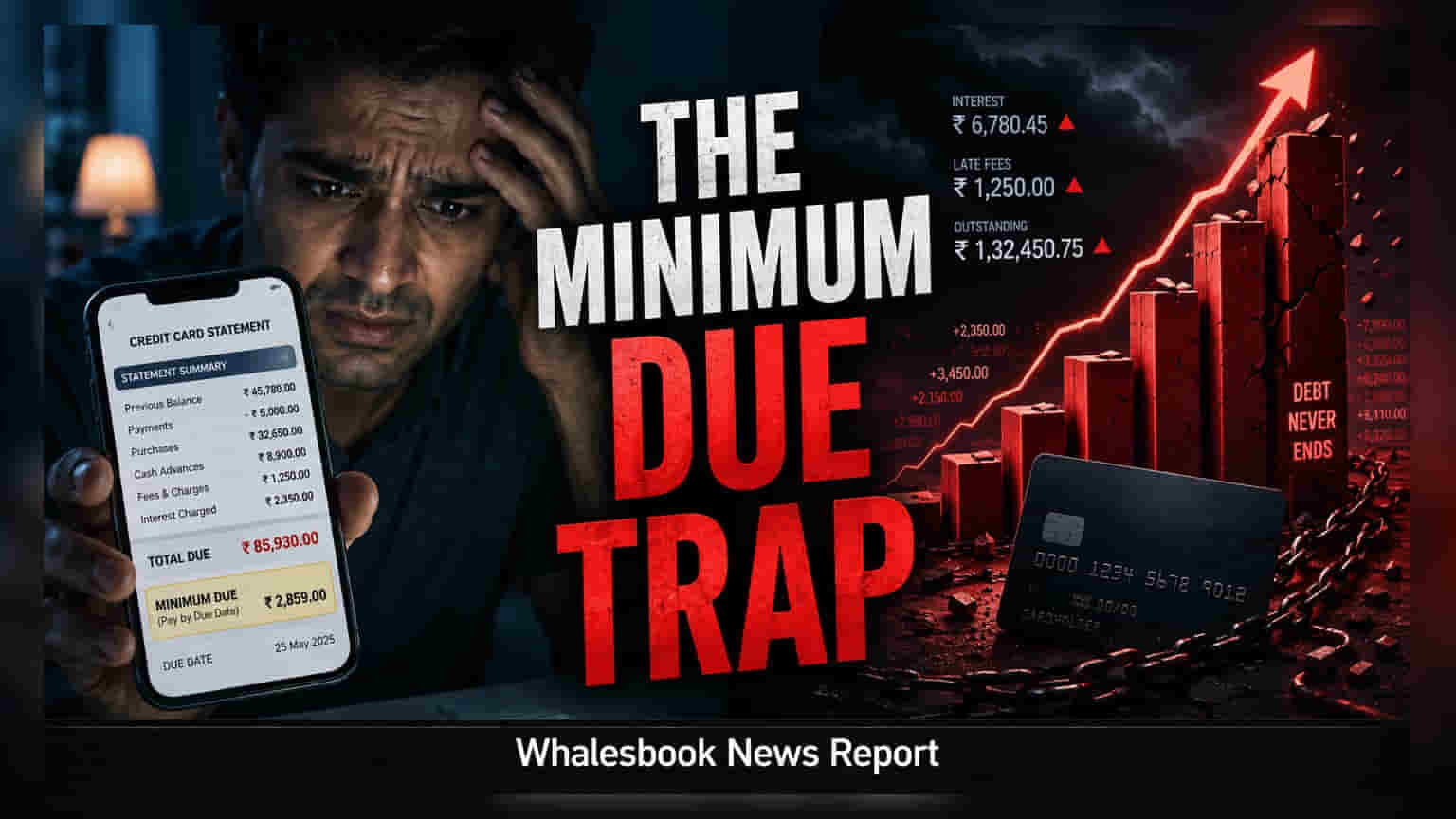
Paying only the 'minimum amount due' on credit cards triggers high annual interest rates, typically ranging from 36% to 48%. This common practice can lead to a cycle of debt and causes consumers to lose the interest-free grace period on their cards, often without realizing the long-term financial impact.
Credit card users in India are increasingly facing a financial challenge known as the 'minimum amount due' trap. When a bank statement arrives, it shows a total amount due and a much smaller 'minimum amount due.' While paying just this minimum amount allows a customer to avoid late payment fees and keeps the account status active, it carries a significant hidden cost.
Most credit cards charge annual interest rates between 36% and 48% on outstanding balances. When a cardholder pays only the minimum amount, the remaining unpaid balance begins to attract this high interest from the date of purchase. Because these rates are high, the interest charges can accumulate quickly, making it difficult for the user to ever pay off the full principal amount. This effectively turns a short-term convenience into a long-term revolving debt cycle.
A critical, yet often misunderstood, consequence of paying only the minimum amount is the loss of the interest-free grace period. Typically, credit cards offer a period where no interest is charged on purchases if the total bill is paid in full by the due date. Once a user fails to pay the total amount and opts for the minimum payment instead, this grace period is cancelled. This means that interest begins to accrue not just on the existing unpaid balance, but also on all new transactions made on the card until the full amount is settled.
While the Reserve Bank of India mandates that banks must disclose the implications of paying only the minimum amount, these warnings are often located in technical, lengthy PDF statements. Many consumers now manage their finances exclusively through mobile banking apps and digital payment platforms. In these digital interfaces, the 'minimum due' option is frequently presented as a quick way to avoid penalties. Without immediate, clear explanations about the compounded interest costs, many users select this option without realizing it could lead to a ballooning debt.
For many, this habit can silently damage credit scores. Consistently carrying high revolving debt leads to higher credit utilization ratios, which can negatively impact a consumer's credit score, such as their CIBIL score. This can make it harder or more expensive to get future loans for homes, cars, or personal needs. The most effective way to maintain a healthy credit card account remains paying the full statement balance before the due date, ensuring the interest-free window stays active and avoiding the high-cost debt trap.