

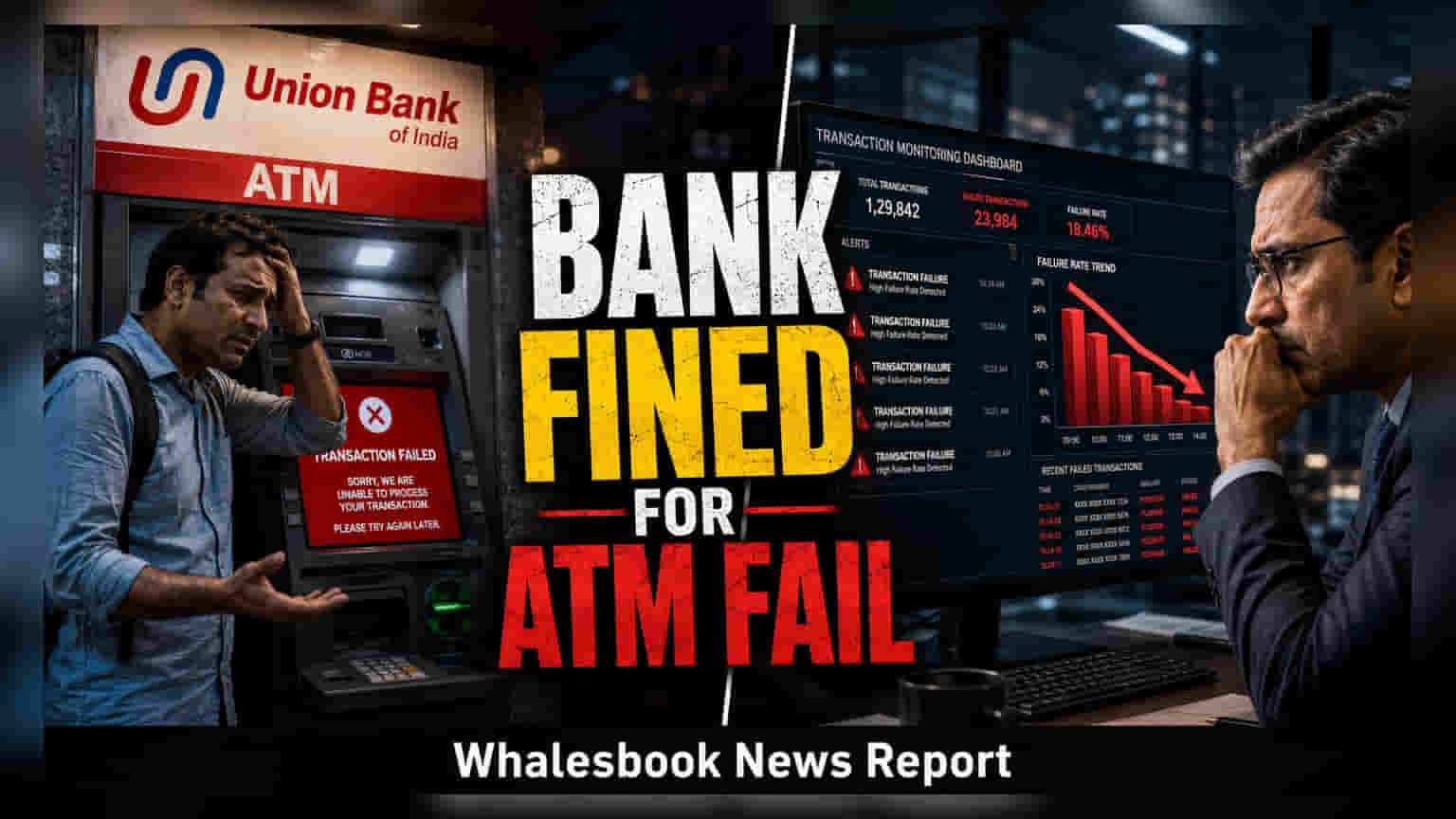
A consumer commission in Kozhikode has ruled against Union Bank of India regarding a failed ATM transaction, ordering a refund of ₹10,000 and ₹5,000 in compensation. The case highlights the bank's operational gap in providing evidence to resolve customer disputes, a key metric for service quality and grievance handling under Reserve Bank of India (RBI) guidelines.
The District Consumer Disputes Redressal Commission in Kozhikode has issued a ruling against Union Bank of India, ordering the institution to refund ₹10,000 and pay an additional ₹5,000 in compensation to a customer. The order follows a dispute involving a failed ATM transaction where the customer’s account was debited, but cash was not dispensed.
The commission determined that the bank failed to demonstrate that the transaction was successful. While the bank relied on Electronic Journal (EJ) logs to contest the claim, it could not produce CCTV footage to provide concrete proof that the cash had actually reached the customer. The commission noted this as a deficiency in service, emphasizing that banks must maintain robust evidentiary standards to resolve customer complaints effectively.
Regulatory Context and Operational Responsibility
This ruling focuses on the importance of strict adherence to Reserve Bank of India (RBI) guidelines regarding digital and ATM transactions. Under current regulatory frameworks, banks are required to reverse failed ATM transactions within T+5 working days. When a bank fails to meet this deadline or cannot resolve a dispute through internal records, it often faces liability in consumer courts.
For investors, such events provide insight into the operational efficiency and grievance redressal systems of banking institutions. While the financial impact of a single penalty is minor for a large public sector bank, the ability to manage customer disputes is a core component of operational risk management. Inefficient grievance handling can lead to increased litigation costs, reputational risks, and potentially higher scrutiny from regulators regarding technology infrastructure and internal controls.
Monitoring Grievance Redressal
As public sector banks continue to expand their digital reach and ATM networks, the volume of transactions grows, making it essential to have reliable tracking and evidence-retrieval systems. Investors often monitor a bank's ability to maintain high service standards and effective dispute resolution mechanisms, as these factors contribute to customer trust and long-term retention. The next steps for the bank, as per standard practice in such rulings, involve compliance with the commission's order and potential reviews of its internal evidence-keeping procedures for dispute resolution.