

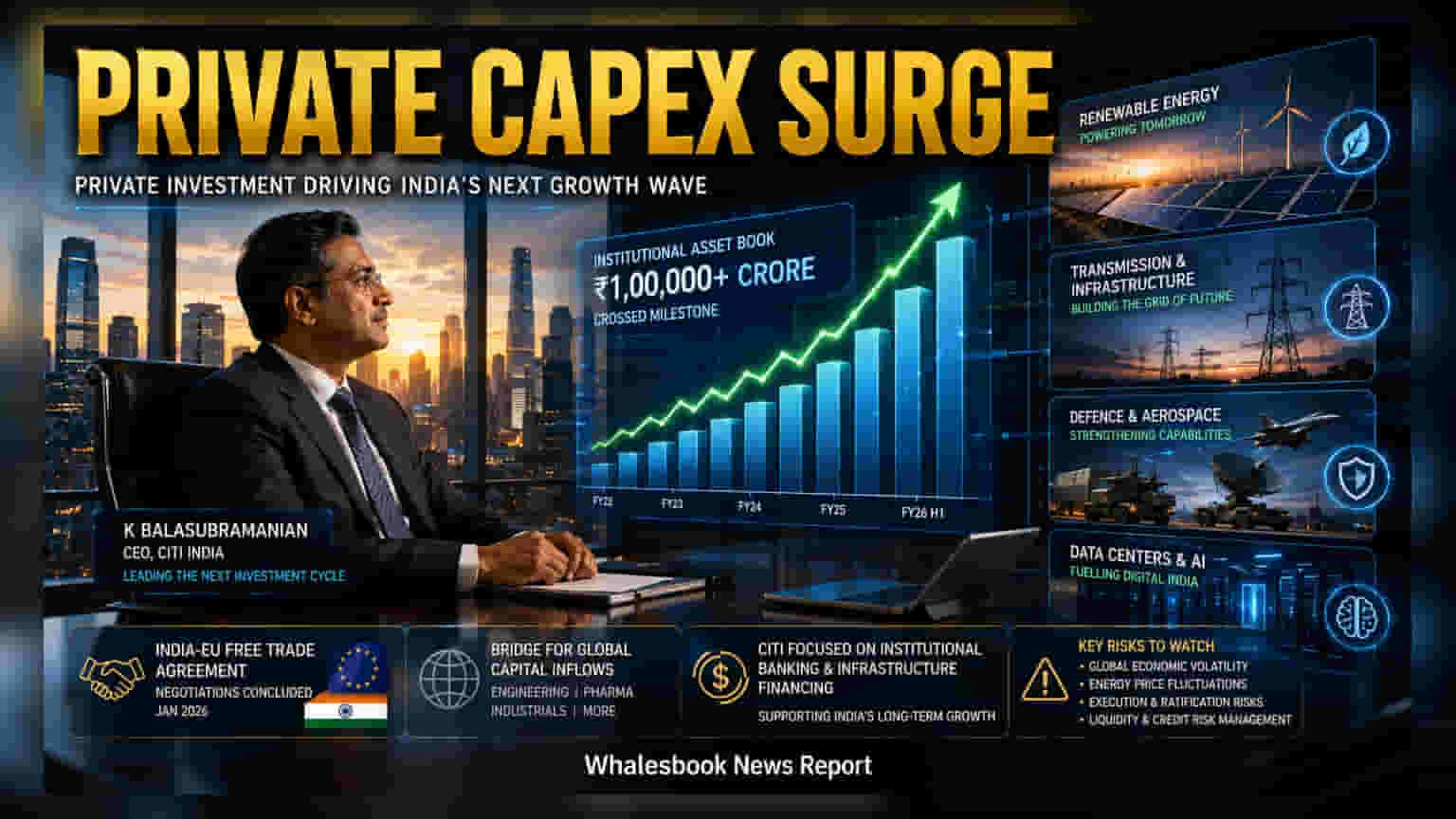
Citi India’s leadership reports a resurgence in private capital spending, particularly in renewable energy, defense, and AI-related infrastructure. The bank, having pivoted to an institutional-focused model with an asset book exceeding ₹1 lakh crore, is preparing for increased foreign capital flows ahead of the anticipated India-EU Free Trade Agreement. Investors are monitoring the bank's ability to balance large-scale infrastructure financing with disciplined risk management.
Citi India’s leadership has highlighted a noticeable turnaround in private sector capital expenditure, marking a shift in the country’s economic investment cycle. According to CEO K Balasubramanian, capital is increasingly flowing into high-growth areas such as renewable energy, transmission, and defense. A significant portion of this activity is centered on data centers and artificial intelligence infrastructure, sectors that are attracting both local conglomerates and global technology firms as they expand their digital footprints in the region.
The bank has undergone a strategic transformation over the last few years, moving away from its traditional retail banking presence to focus exclusively on institutional clients. This pivot appears to be gaining traction, as the bank's institutional asset book has now crossed the ₹1 lakh crore mark. By concentrating on large-scale corporate and investment banking, Citi India is aiming to capture the demand for complex financing solutions required by these massive infrastructure projects.
Looking ahead, the firm is positioning itself to benefit from the expected finalization of the India-EU Free Trade Agreement, following the conclusion of negotiations in January 2026. This trade deal is widely anticipated to serve as a bridge for increased foreign capital inflow into India, particularly in sectors like engineering, pharmaceuticals, and industrials. Citi is preparing its dedicated infrastructure banking unit to facilitate these cross-border investments, aiming to support the long-term growth of these industries.
However, the outlook is not without challenges. While the appetite for AI and renewable infrastructure is high, the bank faces the ongoing task of managing liquidity and credit risk in a high-growth institutional lending environment. Market observers are also tracking global economic volatility, including potential fluctuations in energy prices, which could influence the pace and consistency of foreign direct investment. Furthermore, the actual translation of the India-EU trade negotiations into concrete trade flows remains subject to execution risks and the formal ratification of the agreement, which is targeted for later this year.
Investors tracking these developments may look for updates on the actual commissioning of these large-scale infrastructure deals and the formal signing of the India-EU trade pact, which will clarify the timeline for the anticipated boost in cross-border capital flows.