 Whalesbook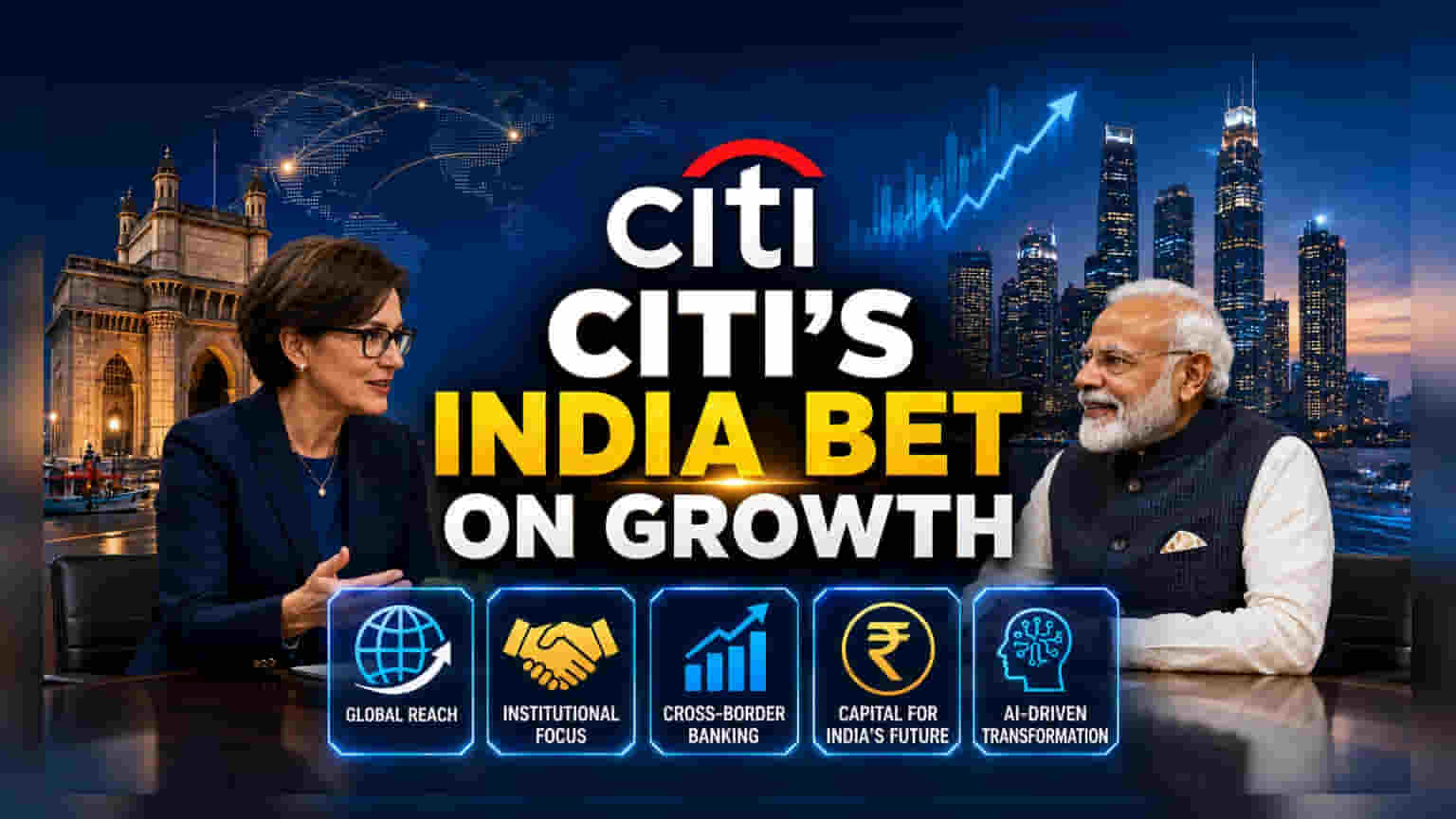


The Institutional Pivot
Citigroup’s recent high-level dialogue in Mumbai serves as the definitive signal of the bank's post-consumer-divestiture strategy. By focusing on cross-border institutional banking, Citi is explicitly shifting its capital allocation toward India's surging industrial base. This meeting between CEO Jane Fraser and Prime Minister Narendra Modi arrives at a critical juncture for the firm, as it seeks to shed its legacy as a sprawling financial supermarket in favor of a leaner, high-velocity service model. With roughly 80% of Fortune 500 companies within its client fold, Citi's India-centric approach aims to capture the widening spread of global capital migrating toward Asia’s emerging industrial corridors.
The Valuation Gap
Unlike domestic peers that remain tethered to massive U.S.-style consumer deposit franchises, Citi is leveraging its global network of 95 countries to differentiate itself. The bank’s institutional franchise now targets firms with annual revenues exceeding $100 million, a sector where Citi historically maintains a top-tier quality rating. While competitors like HDFC Bank and ICICI Bank leverage massive local branch networks and high-volume retail lending, Citi is betting that its specialized trade finance, liquidity management, and capital structuring capabilities provide a superior return on tangible common equity. This move is essential, as the bank targets a return on tangible common equity (RoTCE) of 10-11% for 2026, a goal that requires higher-margin revenue streams from its services, markets, and banking segments.
The Forensic Bear Case
Despite the bullish narrative surrounding India's economic growth, significant risks remain. The bank faces intense competition from local giants that have recently benefited from strong domestic credit demand, which grew at 16.2% year-on-year in May 2026. Furthermore, Citi’s reliance on cross-border flows exposes it to shifts in global risk sentiment and potential volatility in foreign institutional investor (FII) taxation, which remains a regulatory friction point. While leadership reports no current stress in its corporate portfolio, the ongoing geopolitical tensions in West Asia and potential energy-price shocks pose a material threat to the import-dependent Indian corporate sector. Additionally, if the Reserve Bank of India maintains its current status quo on interest rates—as widely expected in the June policy review—the sustained high borrowing costs may dampen private capital expenditure, challenging Citi’s ability to aggressively expand its loan book.
The Future Outlook
As the bank moves toward its 125th year in India in 2027, the focus remains firmly on AI-driven productivity gains and supporting the 'Viksit Bharat 2047' agenda. With the bank’s divestiture phase mostly complete and its transformation program nearly finalized, the ability to execute on these institutional mandates will be the primary indicator of its long-term success in the region. Analysts are watching whether this concentrated strategy can generate the requisite fee momentum to outperform the broader banking market, particularly as the industry navigates a higher-for-longer interest rate environment.