

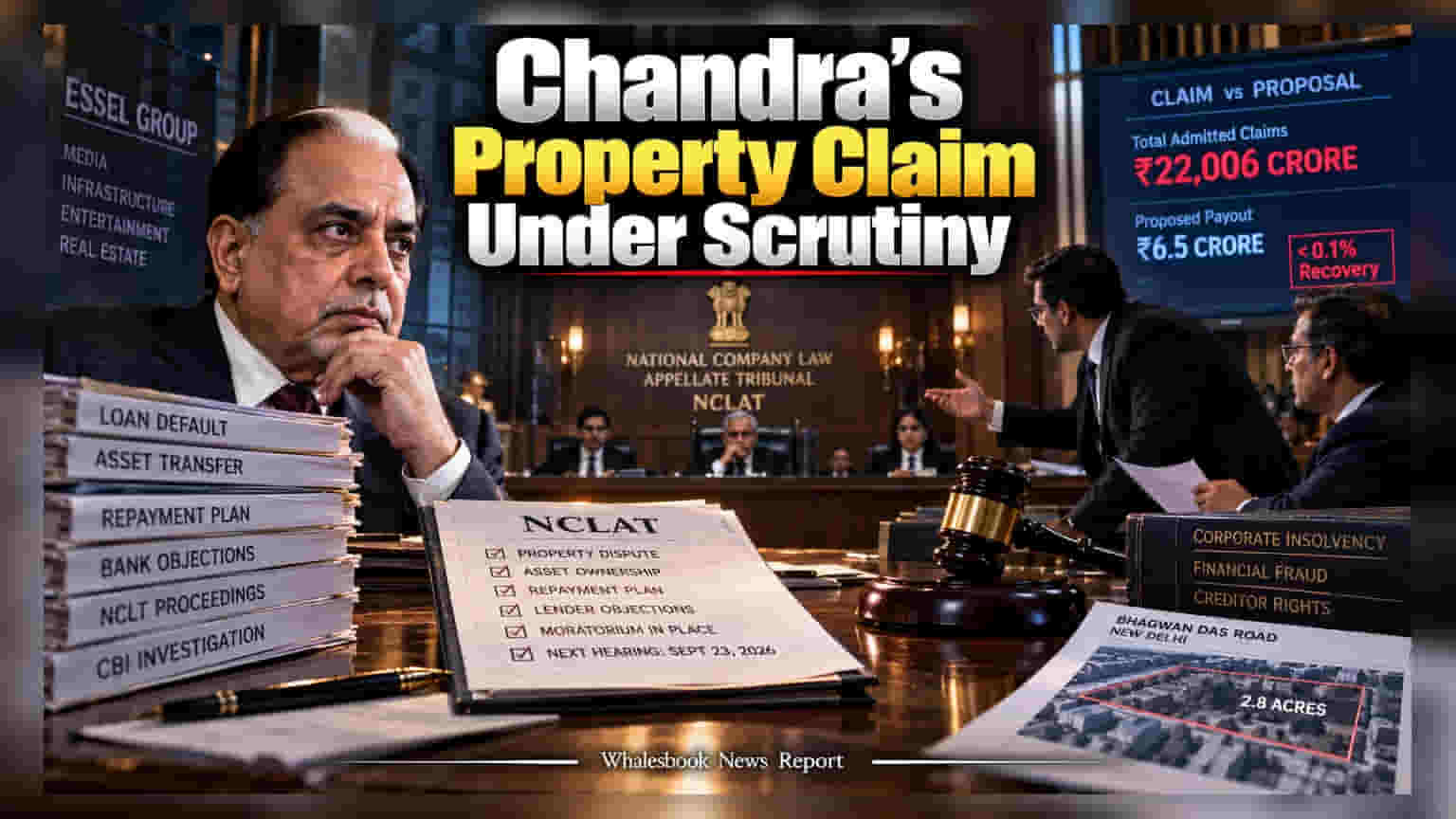
Canara Bank and other lenders have challenged Subhash Chandra’s repayment plan at the NCLAT, citing conflicting claims over a Delhi property. The move follows a proposed 99.9% haircut on ₹22,006 crore in admitted claims. A special NCLT bench has now stayed the settlement approval and barred asset sales ahead of a September 23, 2026, hearing.
Canara Bank has taken formal legal action against Essel Group chairman Subhash Chandra at the National Company Law Appellate Tribunal (NCLAT). The dispute centers on conflicting accounts regarding a 2.8-acre property located on Bhagwan Das Road in New Delhi. The bank alleges that while Mr. Chandra maintained the asset belonged to an independent company called Greatway Estates, his own submitted repayment plan indicates he directed the sale proceeds of the property to settle liabilities. This discrepancy has become a key point of contention for lenders.
The property issue is part of a broader, highly contested insolvency process involving Essel Group companies. Lenders, including Canara Bank, Union Bank, and LIC Housing Finance, have strongly opposed a proposed repayment plan that suggested a payout of only ₹6.5 crore against total admitted claims of ₹22,006 crore. If accepted, this proposal would result in a recovery of less than 0.1% for the creditors, a scenario that has drawn significant scrutiny.
A five-member special bench of the National Company Law Tribunal (NCLT) has intervened in the matter. The bench recently stayed the earlier approval of this repayment plan, noting a lack of consensus among the previous decision-makers. In addition to staying the plan, the tribunal imposed a strict moratorium, prohibiting Mr. Chandra from selling or transferring assets while the investigation continues.
Legal pressure on the promoter has intensified further following recent developments. On September 5, 2026, the Central Bureau of Investigation (CBI) registered an FIR against Subhash Chandra. The investigation pertains to allegations of inflating net worth figures to secure loans that eventually went into default, involving a sum of approximately ₹980 crore.
The situation remains a significant concern for the banks involved, as the recovery of large-scale corporate defaults relies heavily on the transparency of asset disclosures and the court-approved resolution processes. The NCLT is scheduled to re-examine the repayment plan on September 23, 2026. Investors and stakeholders will likely watch the upcoming court hearings closely to see whether the repayment proposal is rejected, modified, or if the ongoing CBI probe impacts the insolvency proceedings.