

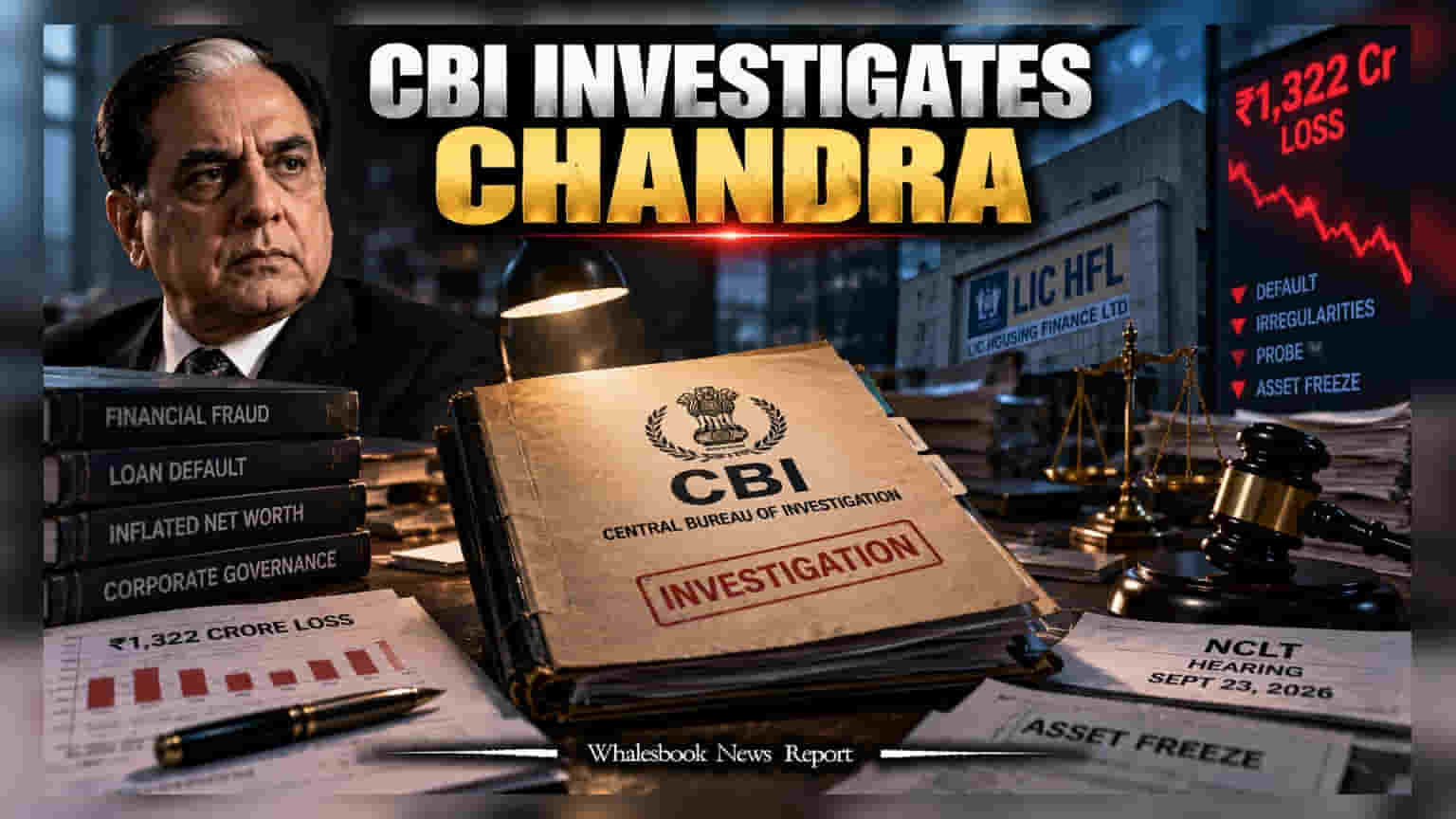
The Central Bureau of Investigation has registered an FIR against Subhash Chandra over allegations of misrepresenting financial health to secure ₹980 crore in loans from LIC Housing Finance. This development coincides with an NCLT stay on a controversial personal insolvency repayment plan that had previously faced criticism from creditors.
The Central Bureau of Investigation (CBI) has formally opened a criminal investigation into Essel Group Chairman Subhash Chandra following allegations of financial deception. The case, registered on August 31, 2026, concerns a loss of over ₹1,322 crore incurred by LIC Housing Finance Ltd (LICHFL) due to defaulted loans originally sanctioned in 2018. The FIR also names three other individuals, including Pankaj Surolia, Amish Pandya, and Rajeev Dholakia, for their alleged roles in the matter.
At the heart of the probe are two credit facilities totaling ₹980 crore granted to Essel-linked entities, including Vasant Sagar Properties Pvt Ltd, Pan India Infra Projects Pvt Ltd, and others. The core of the accusation is that these funds were secured by presenting inflated net worth certificates. Investigations suggest that documents submitted to the lender claimed a net worth of approximately ₹59,113 crore in 2018. However, during subsequent personal insolvency proceedings, discrepancies arose when Chandra provided conflicting financial data, admitting that his assets were significantly lower than previously declared.
This legal development is significant for investors as it runs parallel to a high-stakes battle at the National Company Law Tribunal (NCLT). A special five-member bench at the NCLT has recently stayed a proposed personal insolvency repayment plan. This plan had faced intense scrutiny because it reportedly allowed for a settlement of only ₹6.5 crore against massive liabilities, effectively forcing lenders to absorb a substantial financial loss. The tribunal has now barred Chandra from transferring or selling any assets until the matter is heard further, freezing his financial flexibility.
For investors, this case highlights critical governance and risk management lessons. The involvement of chartered accountancy firms in validating the disputed financial certifications is also under regulatory review, pointing to the importance of scrutinizing borrower documentation in the lending process. For public sector lenders like LICHFL, such cases represent the persistent challenge of recovering dues from complex corporate structures where net worth claims often differ from actual financial reality.
The next critical update for the market and stakeholders will be the NCLT hearing scheduled for September 23, 2026. Investors and creditors will be watching this date closely to see whether the tribunal moves toward a stricter recovery process or if further legal hurdles emerge. The outcome will likely determine the potential for asset recovery in this long-running insolvency dispute.