

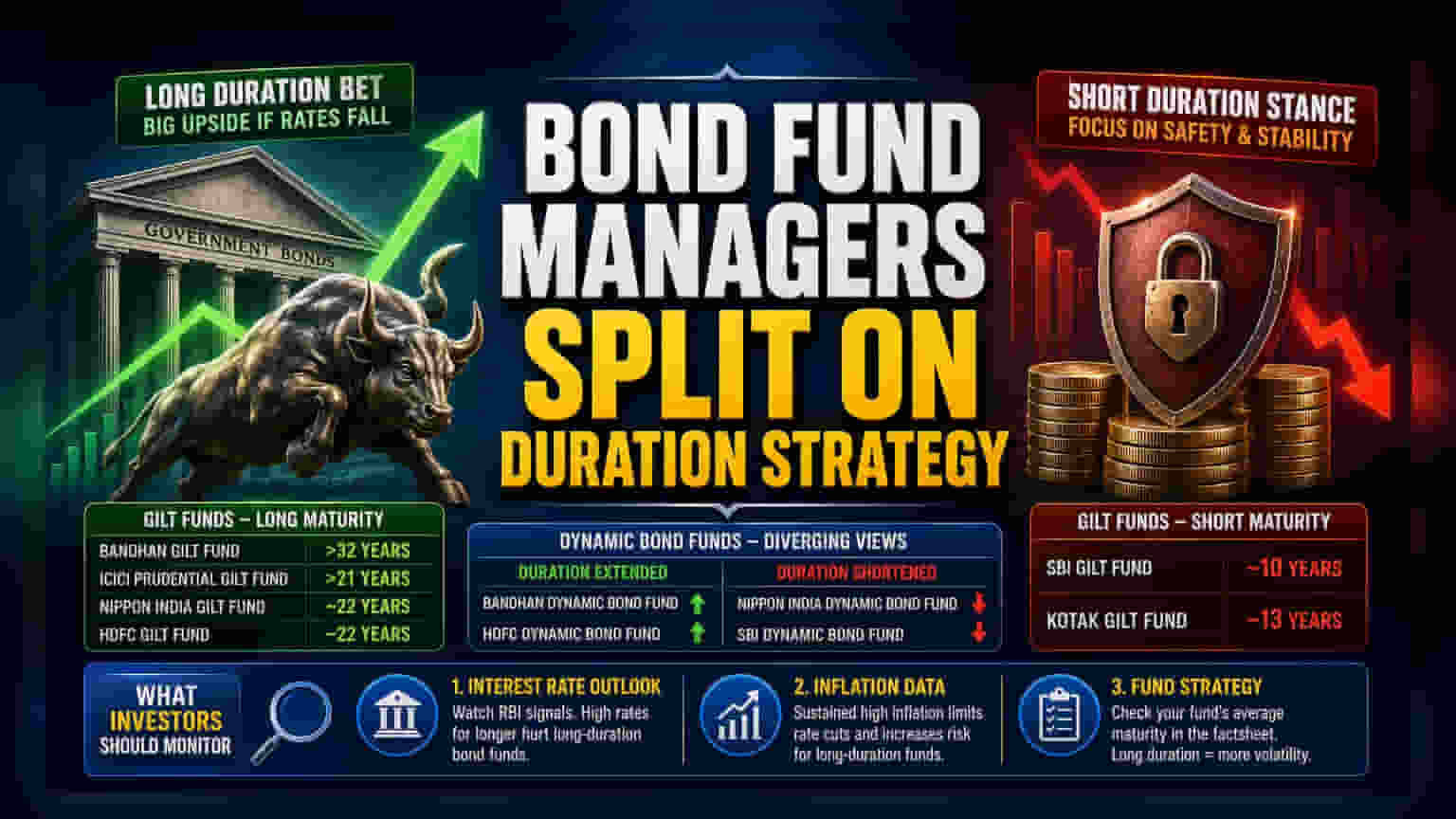
Bond fund managers are sharply divided on how to manage their portfolios, with some aggressively betting on long-term bonds while others stay defensive. This divergence stems from conflicting views on interest rates and inflation, creating different risk profiles for investors in gilt and dynamic bond funds.
What Happened
Bond fund managers in India are showing a clear divide in their investment strategies. Some fund managers are significantly extending the "duration" of their portfolios, while others are keeping them short and defensive. This split is visible among both Gilt funds (which invest in government securities) and Dynamic Bond funds (which have the flexibility to change duration based on market conditions).
Duration is a financial term used to measure how sensitive a bond fund’s price is to changes in interest rates. A fund with a longer duration is more sensitive; its value can rise significantly if interest rates fall, but it can also drop sharply if rates rise. Conversely, a shorter duration fund is generally more stable but offers less potential for gains when interest rates drop.
The Split Between Fund Managers
Recent data shows a major difference in how these funds are positioned. For instance, in the Gilt fund category, some funds have opted for very long maturities. Bandhan Gilt Fund, for example, has an average maturity of over 32 years. ICICI Prudential, Nippon India, and HDFC Gilt funds also maintain high maturities, often exceeding 21 years.
In contrast, other fund houses are taking a much more cautious approach. SBI Gilt Fund and Kotak Gilt Fund, for example, have maintained significantly shorter average maturities—around 10 to 13 years—suggesting a preference for safety over the potential gains of long-term bets.
A similar pattern appears in the dynamic bond category. While some funds like Bandhan and HDFC have lengthened their portfolio duration, others like Nippon India and SBI remain positioned with much shorter durations, reflecting their view that the market environment remains uncertain.
Why the Strategy is Splitting
This divergence is driven by conflicting views on the economic outlook. Those extending their duration are betting that interest rates will fall or stabilize. Factors such as Reserve Bank of India (RBI) policy measures, potential changes to foreign investment taxes, and global stability—such as the recent US-Iran truce—have helped ease some pressure on bond markets. When interest rates drop, older bonds with higher interest payments become more valuable, which benefits long-duration funds.
However, other managers are staying defensive because of persistent uncertainty regarding inflation. If inflation remains high or rises unexpectedly, the central bank may be forced to keep interest rates higher for longer or even raise them. In such a scenario, long-duration funds would face a decline in value. Therefore, managers holding shorter-duration papers are prioritizing capital protection.
What Investors Should Monitor
For investors, this split highlights the importance of understanding the fund’s strategy before investing.
Interest Rate Outlook: Watch for official statements from the RBI. Any signal that interest rates will stay high for a longer period generally hurts long-duration bond funds.
Inflation Data: Sustained high inflation is the primary risk for bond funds. If consumer price inflation remains high, it limits the RBI's ability to cut interest rates.
Fund Strategy: Check the monthly factsheet of your bond fund to see its average maturity. If you are a conservative investor, a fund with a very long duration may expose you to more volatility than you expect.