 Whalesbook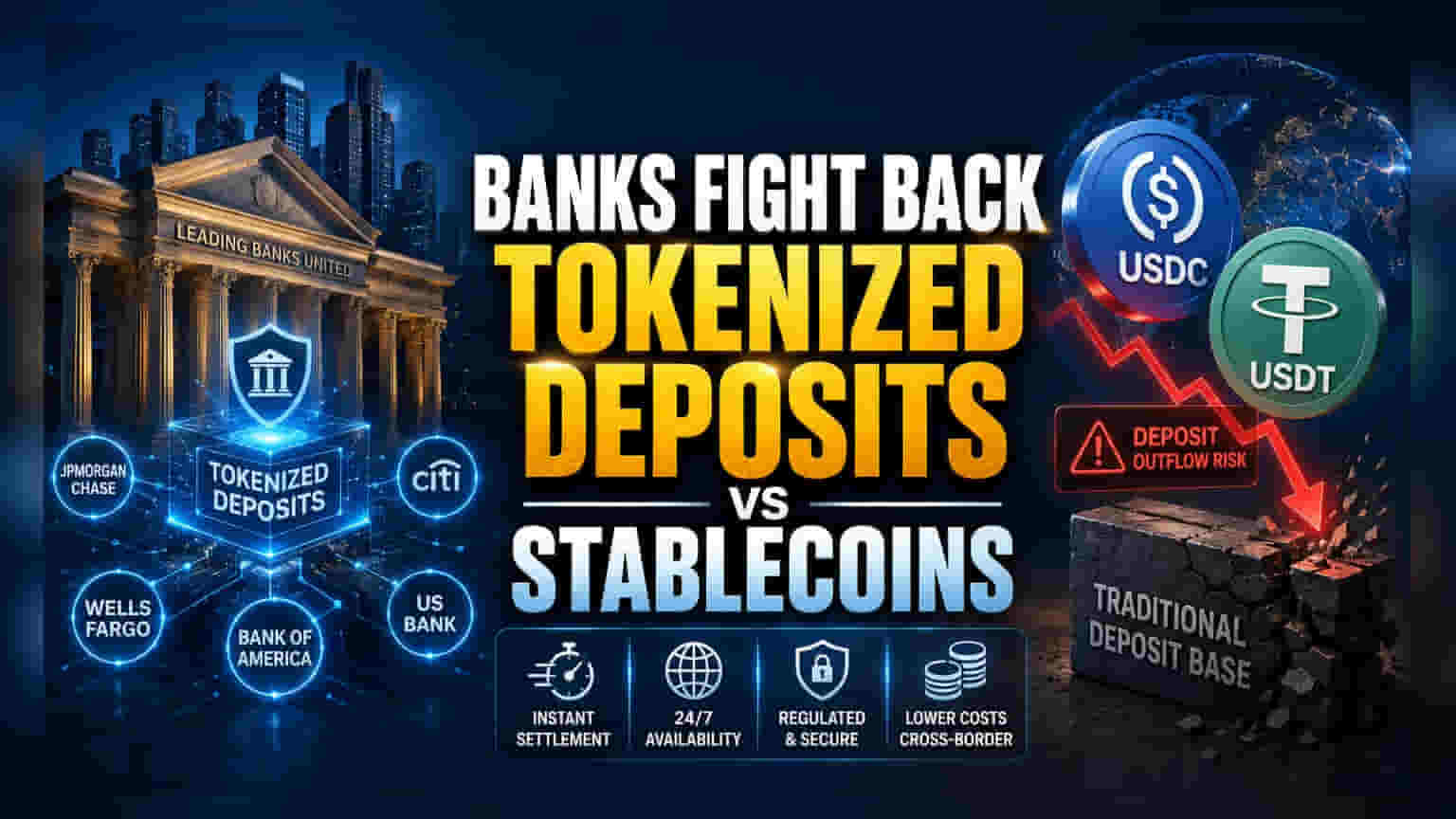


The Institutional Pivot to Private Rails
The coordinated move by major domestic lenders to standardize tokenized deposits represents a defensive maneuver against the structural threat posed by digital assets. By consolidating ledger operations within a shared framework under The Clearing House, these institutions are signaling a strategic retreat from the inefficiency of legacy batch settlement cycles. This infrastructure is not designed for public interoperability but rather to create a walled garden where liquidity remains within the traditional banking perimeter while gaining the speed of modern distributed ledger technology.
The Erosion of Core Deposits
Beyond the headline focus on payment speed, the underlying driver is the protection of the deposit base. The rise of stablecoins like USDC and USDT has provided corporate treasury departments with high-liquidity, yield-generating alternatives that operate outside the immediate regulatory oversight and capital constraints of the traditional banking system. Analysts have identified a measurable risk to bank balance sheets, where stablecoin adoption functions as a substitute for traditional savings. By offering a tokenized version of regulated deposits, banks are attempting to prevent the disintermediation of their balance sheets while simultaneously lowering the cost of cross-border settlements that currently rely on antiquated correspondent banking models.
Competitive Disparities and Regulatory Moats
Unlike decentralized stablecoin issuers which face ongoing scrutiny regarding reserve transparency, the proposed bank-led network relies on the existing legal framework of deposit insurance and regulatory reporting. While crypto-native entities tout the transparency of public blockchains, the banking sector is doubling down on private, permissioned ledgers. This creates a regulatory moat where the cost of compliance serves as a barrier to entry for smaller fintech challengers. Competitors lacking the scale of JPMorgan or Citigroup may struggle to integrate into this private network, potentially accelerating the industry's trend toward consolidation among systemically important financial institutions.
The Risk of Technological Obsolescence
Despite the scale of this collaboration, the project faces significant execution hurdles. History shows that bank-led consortiums often succumb to bureaucratic friction and interoperability issues when attempting to merge disparate legacy systems onto a unified blockchain layer. Furthermore, a private network may lack the network effects of open-source protocols, potentially alienating smaller corporate clients who prioritize the flexibility of public chains. If this initiative fails to achieve rapid adoption by the mid-2027 target, it risks becoming a costly technological dead end that fails to slow the encroachment of decentralized finance alternatives, leaving major banks vulnerable to margin compression as stablecoin utility continues to scale globally.