

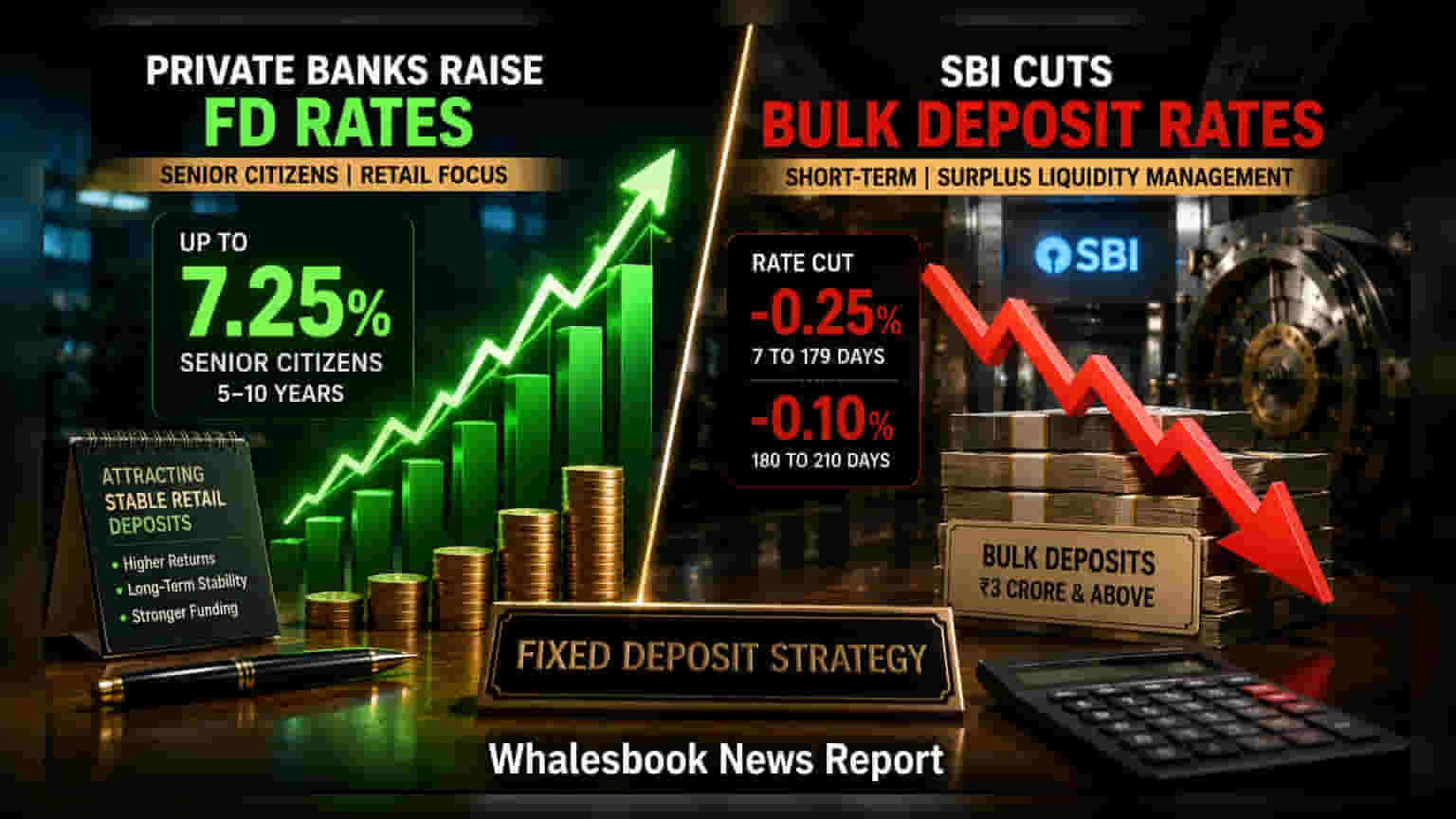
Private sector banks including HDFC, Federal, and Axis Bank have increased fixed deposit rates for senior citizens. Meanwhile, the State Bank of India has reduced interest rates on short-term bulk deposits. These contrasting moves reflect how different lenders are managing their funding and liquidity needs in the current market.
Indian banks are currently adopting different strategies for fixed deposits as they manage their balance sheets. While several private sector lenders are increasing interest rates to attract stable retail money from senior citizens, the State Bank of India (SBI) has reduced rates on short-term bulk deposits. These changes, occurring in August 2026, show how banks prioritize different types of funding based on their internal liquidity requirements.
Private Banks Target Retail Deposits
Private sector banks are focusing on attracting granular, long-term retail deposits, which are considered more stable than bulk corporate money.
HDFC Bank increased its fixed deposit rates by 10 basis points (0.10%) for specific tenures on deposits below ₹3 crore, effective August 19, 2026. Federal Bank also adjusted its rates on August 17, 2026, offering returns up to 7.20% for 48-month tenures to senior citizens. Axis Bank joined this trend on August 26, 2026, with new rates offering up to 7.25% for senior citizens on deposits between five and ten years for amounts below ₹3 crore.
For investors, these increases are a move by private banks to lock in stable funding to support their credit growth. Retail deposits are generally 'stickier,' meaning customers are less likely to withdraw them quickly, which provides banks with a reliable source of funds.
Public Sector Strategy: Managing Bulk Liquidity
In contrast, the State Bank of India has adjusted its approach to bulk deposits, which are large sums of money often from corporate clients or institutions. The bank reduced interest rates on domestic bulk term deposits of ₹3 crore and above, effective August 15, 2026.
The cuts were primarily for shorter durations. Rates were lowered by 25 basis points (0.25%) for bulk deposits maturing between seven and 179 days, and by 10 basis points (0.10%) for tenures between 180 and 210 days. This indicates that the bank likely has sufficient liquidity for short-term needs and does not need to pay higher rates to attract large, short-term corporate deposits.
Considerations for Senior Investors
While rising rates for senior citizens may appear attractive, investors should consider a few factors before locking in their capital. First, interest earned on fixed deposits is taxable according to an individual's income tax slab. Investors should calculate their net return after taxes to understand the actual gain.
Second, the Deposit Insurance and Credit Guarantee Corporation (DICGC) provides insurance coverage of up to ₹5 lakh per depositor per bank. Investors with large corpuses might consider diversifying their deposits across multiple banks to stay within this safety limit. Finally, interest rates are subject to change based on the broader economic environment and the liquidity position of the banking system. Investors should monitor future rate revisions, as frequent updates can impact the returns on renewals.