

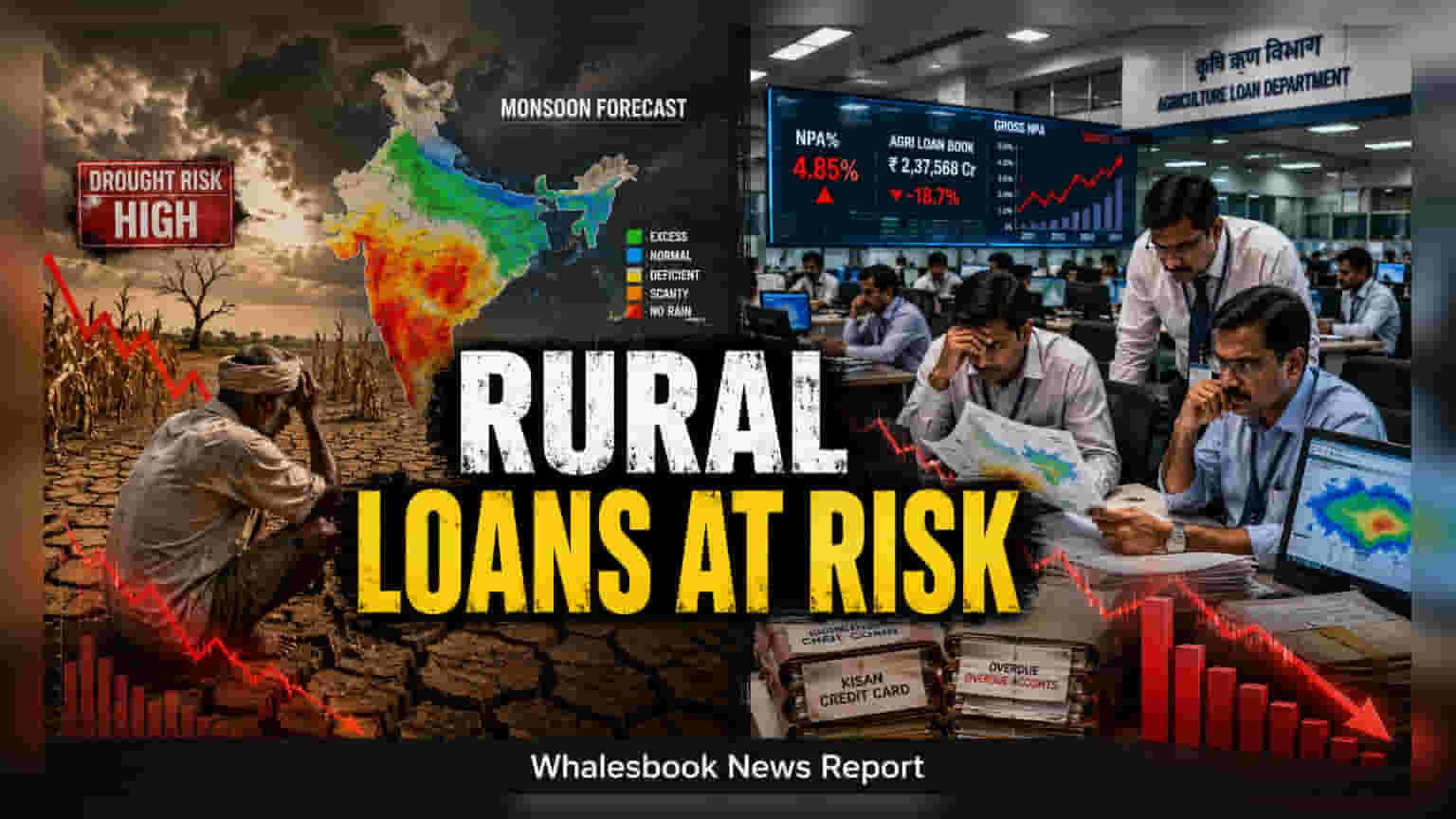
Erratic monsoon rainfall in key Indian agricultural regions is raising concerns over rural income and loan repayment quality. Banks are now tightening their lending criteria, particularly for small-ticket personal and micro-enterprise loans, to protect their balance sheets against potential stress.
Indian financial institutions are re-evaluating their lending strategies for rural markets as uneven monsoon rainfall continues to affect major agricultural belts. The primary concern among lenders is the potential impact of moisture deficiency on Kharif crop yields, which could suppress rural incomes and, by extension, affect the ability of borrowers to repay loans.
Early Signs of Pressure in Micro-Lending
Banks are already reporting an increase in Special Mention Accounts, or SMA-1, particularly within the micro-enterprise and small-ticket personal loan portfolios. These accounts represent loans where repayments are delayed by 31 to 60 days. The segment for personal loans under ₹50,000 is being viewed with increased caution, as these borrowers are often the first to be impacted by fluctuations in agricultural and non-farm rural income. With several fintech firms holding significant exposure to these smaller loan sizes, the sector may face heightened volatility if income patterns do not stabilize.
Strategic Shifts by Lenders
Lenders are proactively adjusting their risk appetite to manage potential asset quality issues. For instance, Bank of India has indicated that protecting asset quality remains a priority amid the dual uncertainties of monsoon progress and global geopolitical pressures. Similarly, institutions like Bandhan Bank, which have a strong focus on the emerging entrepreneur business segment, are considering conservative growth targets for their rural books. This shift represents a move away from aggressive expansion toward a more defensive posture in regions where rainfall has been below seasonal averages.
Broader Economic Indicators
While the national monsoon deficit has shown some signs of narrowing, the total area under cultivation for various crops remains behind the levels seen at this time last year. Economists suggest that the combination of unpredictable weather and the lingering effects of global climate phenomena like El Niño may weigh on rural consumption. Data from recent Reserve Bank of India surveys also suggests that rural sentiment regarding employment and price levels has been subdued. Despite these headwinds, demand for durable goods and vehicles has remained relatively steady, suggesting that the impact on rural consumption has not yet resulted in a broad-based decline.
Investors and market observers will likely focus on future updates regarding crop harvest data, which will be the next major indicator of rural economic health. Lenders will be monitored for shifts in their loan disbursement numbers and any further rise in stressed accounts within their agricultural and rural portfolios in upcoming quarterly reports.