

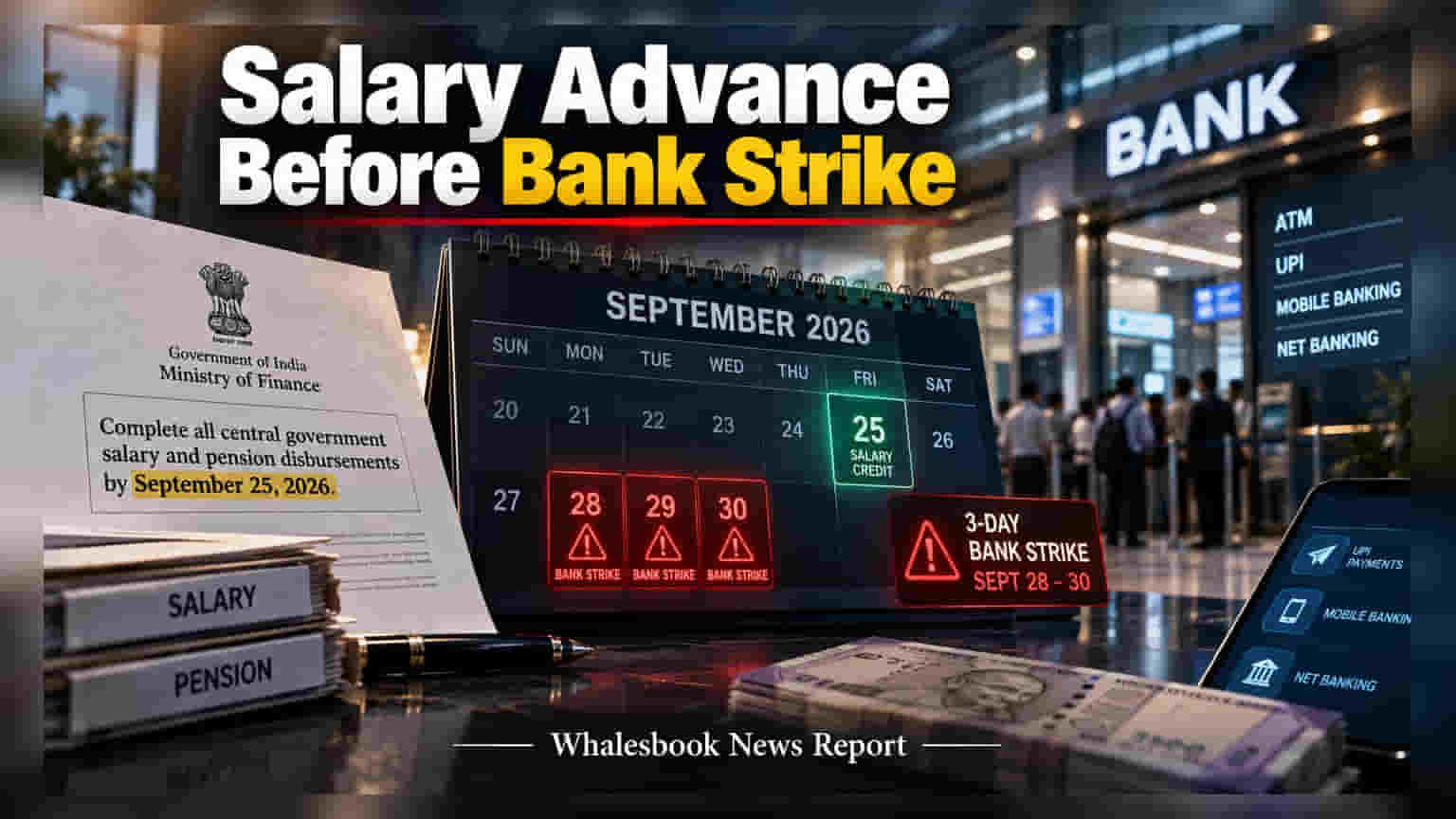
The Finance Ministry has mandated that all central government salaries and pensions be paid by September 25, 2026, ahead of a planned three-day nationwide bank strike starting September 28. Banks are now pushing digital services and Sunday operations to manage the impact during the critical half-yearly financial closing period.
The Indian Finance Ministry has issued a directive to complete all central government salary and pension disbursements by September 25, 2026. This move is a preemptive step to ensure that government employees have their funds accessible before a planned three-day nationwide bank strike scheduled by the United Forum of Bank Unions from September 28 to 30.
The strike, driven by union demands for a five-day work week and other benefits, coincides with a busy period for the Indian banking sector. The period ending September 30 is the half-yearly fiscal closing, a time usually characterized by heavy reconciliation, provisioning, and treasury operations. The government's decision to move payroll processing forward aims to ensure that liquidity needs of government employees are addressed well before bank branches potentially face service disruptions.
To maintain operational continuity, the Reserve Bank of India is coordinating with banks to ensure cash remains available in systems, particularly for automated teller machines and electronic transfer services. Furthermore, the Ministry of Finance has encouraged banks, including Regional Rural Banks, to keep branches open this coming Sunday to manage the rush of essential transactions. Authorities are also advising customers to rely on digital alternatives like the Unified Payments Interface, mobile banking applications, and net banking to circumvent any potential service bottlenecks.
For investors, the operational resilience of the banking sector is the primary focus during such labor actions. While short-term strikes generally do not alter the long-term fundamentals of the sector, they highlight the importance of digital banking infrastructure. The increasing shift toward electronic payments has reduced the reliance on physical branch visits, which helps banks maintain service delivery even during labor unrest. The demand for a five-day work week remains a long-standing discussion point in the sector, and investors typically track how such human resource changes could impact operational costs over the long term. The next key monitorable will be how banks manage their end-of-quarter transactions and overall service levels during the three-day window.