

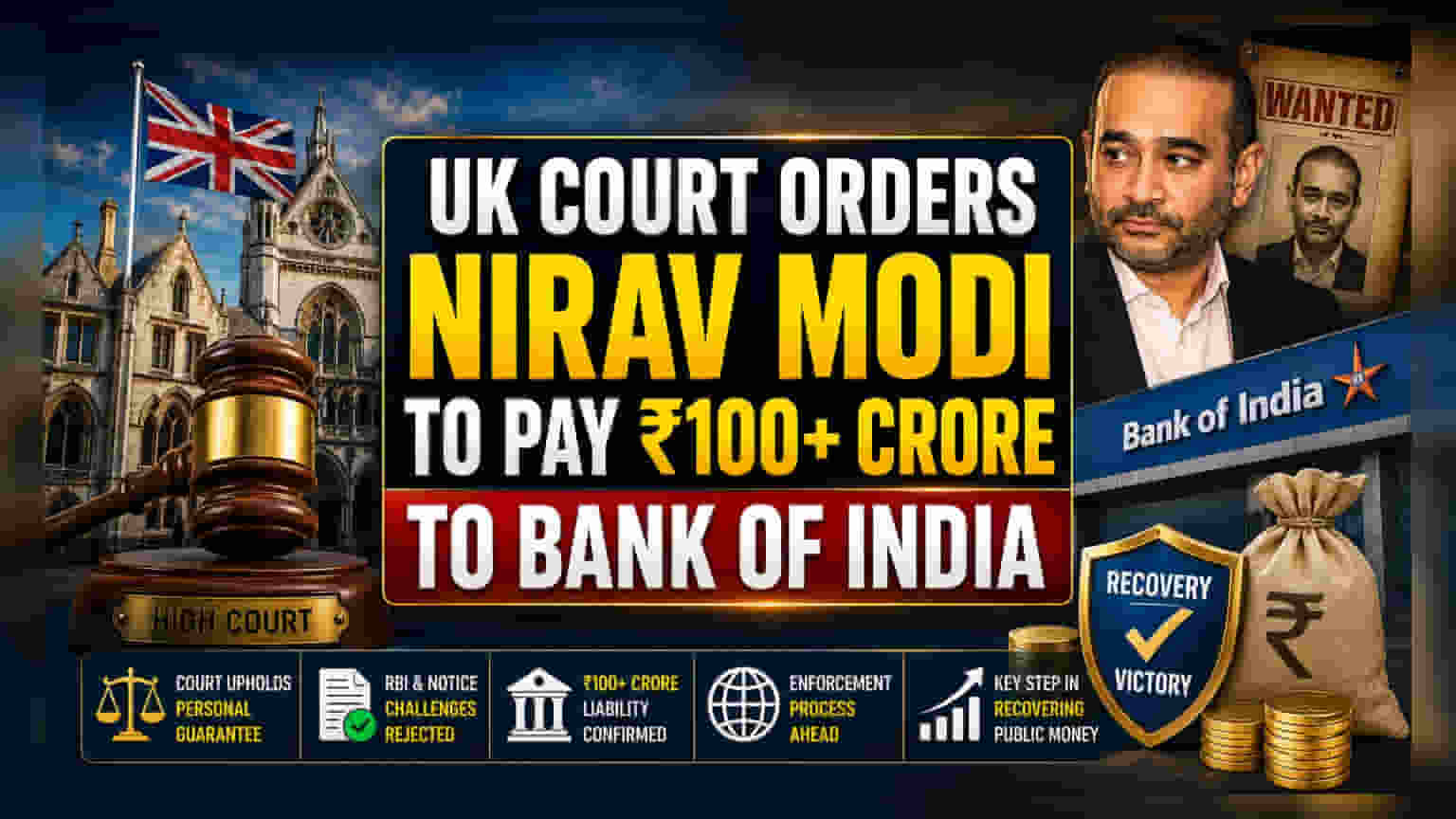
The UK High Court has ruled fugitive Nirav Modi personally liable for a ₹100 crore guarantee provided to the Bank of India. This judgment supports the bank's claim regarding a 2013 loan. While this is a legal win, investors should note that actual cash recovery from dormant entities is a long-term process in the banking sector.
What Happened
The UK High Court has ruled that Nirav Modi is personally liable to pay over ₹100 crore to the Bank of India. This decision follows a legal battle over a personal guarantee that Modi signed in 2013. The court rejected Modi's various arguments, including those regarding Indian foreign exchange regulations and the way legal notices were served. This ruling confirms that the guarantee provided by Modi is enforceable, marking a significant step in the bank's long-running efforts to recover dues related to the Firestar Diamond group.
Why This Matters for Bank of India
For public sector banks like the Bank of India, recovering money from legacy bad loans is a key monitorable. High-profile cases often involve complex cross-border legal battles that can last for years. While a court order does not automatically translate into immediate cash, it is a necessary legal milestone. It allows the bank to move forward with the enforcement process to claim assets or funds if available. Investors often track these developments to understand the bank's ability to manage its non-performing assets (NPAs) and the progress of its recovery proceedings.
The Reality of Recovery
The court order confirms the debt, but the actual collection process remains complex. The loan was originally linked to Firestar Diamond FZE, a Dubai-based entity. Reports indicate that this company is now dormant, and its parent company in India, Firestar International, has been declared insolvent. When the primary borrower is insolvent or inactive, the bank must rely on the personal guarantee to pursue the individual's assets. This is often a difficult, time-consuming process that depends on international cooperation and the location of the borrower's assets.
Legal Hurdles Cleared
In the court proceedings, Modi had attempted to challenge the bank's claim on several grounds. He argued that the guarantee was not valid because it lacked prior approval from the Reserve Bank of India (RBI). He also challenged how the bank had served its legal demands, claiming the procedures were incorrect. The court dismissed these defenses, accepting the bank’s evidence that the lack of RBI approval could be rectified and that the legal demands were properly served according to the contract. This prevents further delays that might have been caused by procedural challenges.
What Investors Should Track Next
Investors may keep a watch on the bank's updates regarding the actual realization of these funds. A court ruling is a victory, but the next stage involves the enforcement of this judgment in the relevant jurisdictions where assets might be identified. The timeline for such recovery, any further appeals by the defense, and the impact of these recoveries on the bank’s asset quality will be the key items to monitor in future quarterly reports.