

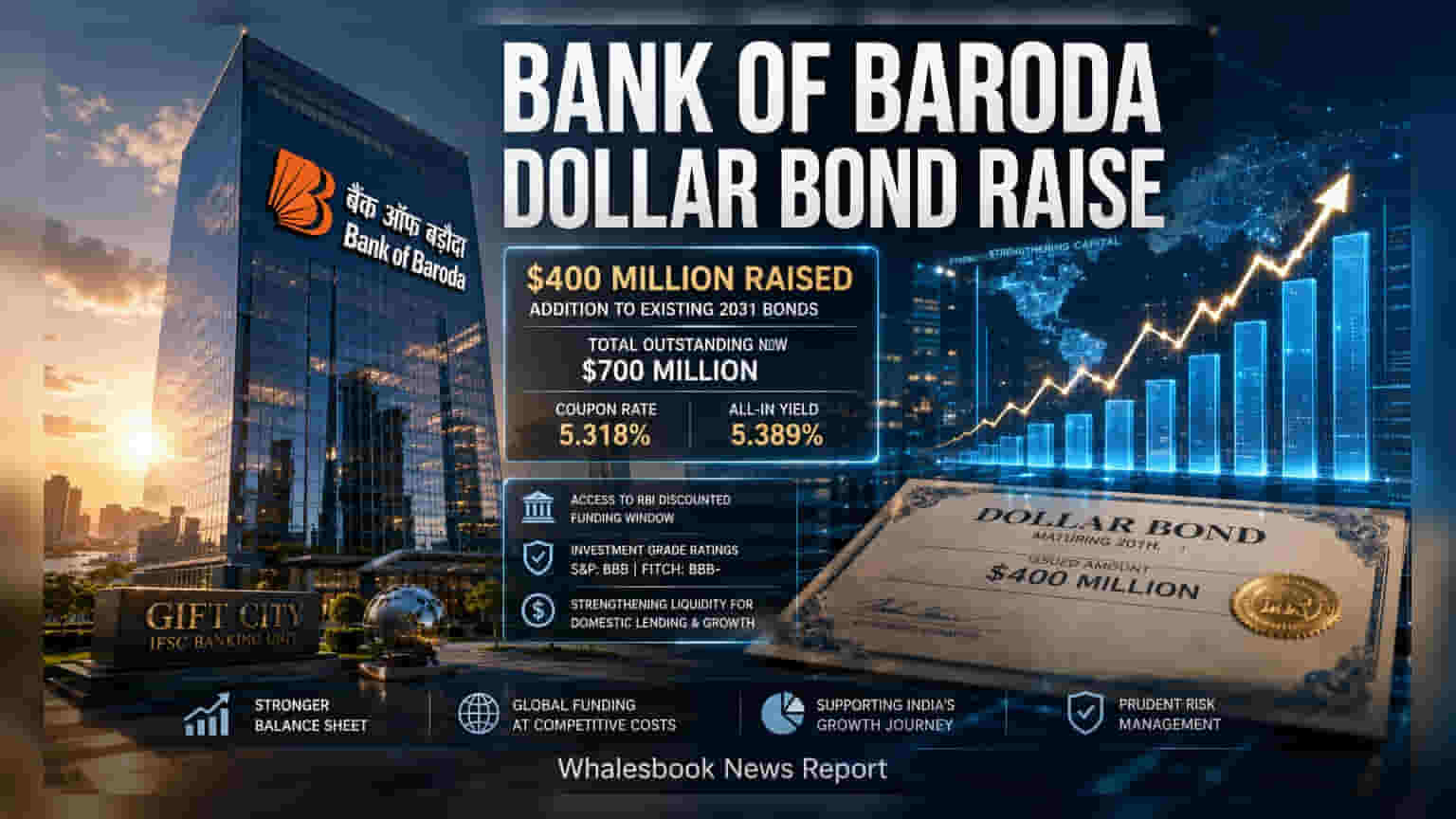
Bank of Baroda has raised $400 million by adding to its existing 2031 dollar-denominated bonds via its GIFT City unit, bringing the total issue size to $700 million. This move boosts the lender's foreign currency liquidity, though investors should monitor the impacts of currency volatility and past regulatory capital pressures on the bank's balance sheet.
Bank of Baroda has successfully raised $400 million by selling more of its existing dollar-denominated bonds maturing in 2031. This transaction was completed on August 27, 2026, through the bank’s IFSC Banking Unit located in GIFT City. By choosing to add to its existing bond series, the lender has increased the total outstanding amount of these specific notes to $700 million. The bonds carry a coupon rate of 5.318% with an all-in yield of 5.389%.
This capital raise is significant as it makes Bank of Baroda the second state-owned bank to utilize the central bank’s discounted funding window, which has been accessible to lenders since June 2026. By accessing this specific mechanism, the bank is able to secure foreign currency funding more efficiently. This move allows the public sector lender to strengthen its liquidity position, providing it with the necessary funds to support its domestic lending activities while managing its international debt obligations.
From a credit perspective, the bank maintains investment-grade ratings, including BBB from S&P and BBB- from Fitch. These ratings reflect the bank's current standing, though the reliance on external borrowing does expose the institution to global market risks. Investors should be aware that fluctuations in foreign exchange rates can impact the cost of these borrowings. Additionally, as a large public sector entity, the bank operates under strict regulatory oversight. It has previously navigated capital requirements related to large settlements, such as the NMC Health litigation, which remains a factor that market observers track when assessing the bank's long-term capital buffers and financial flexibility.
The bank's stock closed at ₹242.50 on August 26, 2026. Moving forward, shareholders will likely observe how this influx of foreign currency influences the bank's net interest margins and whether the cost of this debt remains stable amid potential global interest rate changes. The bank’s ability to effectively deploy these funds while navigating sector-wide regulatory pressures and potential cost increases in overseas funding will be a key area for investors to monitor in the coming quarters.