

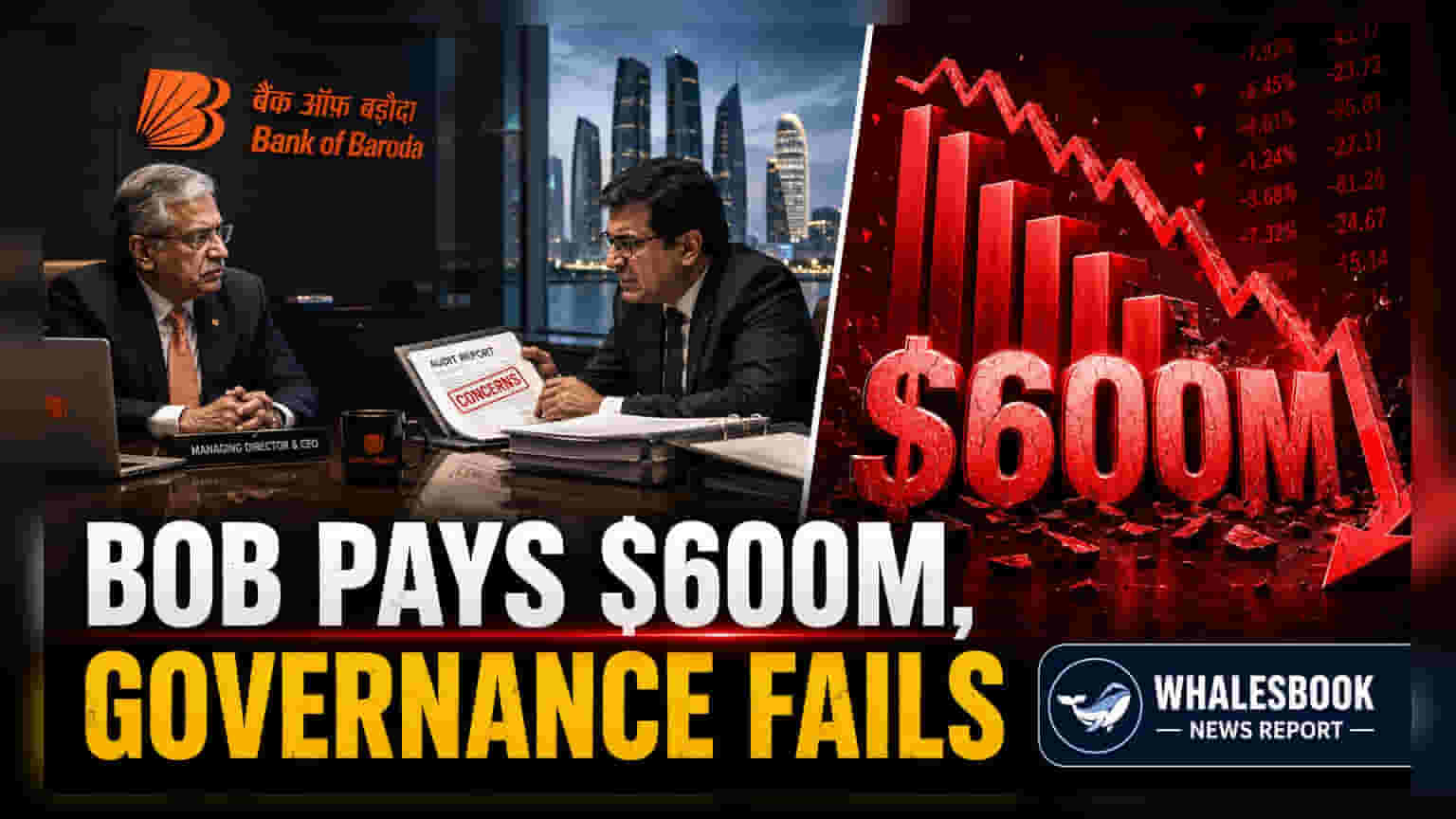
Bank of Baroda has reached a $600 million (approx. ₹5,700 crore) settlement with NMC Healthcare administrators. The payment resolves a long-standing legal battle linked to the 2020 collapse of the healthcare group. This significant outflow, representing over a quarter of the bank's projected annual profit, has drawn scrutiny toward governance and risk disclosure practices.
Bank of Baroda has finalized a settlement of $600 million, or roughly ₹5,700 crore, to resolve a major legal dispute with the administrators of NMC Healthcare. This payment concludes a multi-year conflict that originated from the 2020 insolvency of the UAE-based healthcare company, which was founded by B.R. Shetty. While the bank settled the matter without admitting to any liability, the financial impact is substantial for the state-owned lender.
The settlement amount is equivalent to more than 25% of Bank of Baroda's projected net profit for the 2026 financial year. Investors are now evaluating the implications of this payout, particularly as the bank had previously communicated a firm legal stance regarding its defense against the claims. The shift from an expected legal defense to a large settlement has highlighted questions regarding how such significant risks are reported to shareholders.
Governance and Disclosure Concerns
The dispute dates back to allegations brought before the Abu Dhabi Global Market Court, where administrators claimed that the bank’s management had been involved in issues surrounding structured deposits and overdrafts at NMC Healthcare since 2012. These court documents alleged that the bank’s practices helped mask debt, which went against standard banking and anti-money laundering protocols. The initial claims against the bank were valued at as much as $6 billion, making the settlement a finality for a major area of legal uncertainty.
For shareholders, the primary concern remains the lack of clear disclosure regarding the potential for such a large financial hit. In its recent annual report from May, the bank had indicated it was prepared to defend itself against the claims. The rapid change in position has caused investors to look closer at the internal governance and the decision-making process behind this resolution.
Regulatory Context and Sector Comparison
This event has sparked a wider conversation about the regulatory environment for Indian banks. There is a long-standing observation among financial analysts regarding the difference in how public and private sector banks are treated by regulators during compliance failures. While private institutions like Kotak Mahindra Bank and Paytm Payments Bank have experienced strict, business-impacting orders from the Reserve Bank of India (RBI) for compliance or technology-related issues, state-owned banks have historically seen a different regulatory approach.
Past instances, such as the 2022 incident at UCO Bank where officials ignored alerts during a large fraud, resulted in limited direct regulatory penalties from the central bank. This has led to recurring questions about whether regulatory powers are applied consistently across all lenders regardless of ownership. The RBI currently faces legislative limits on its ability to penalize the management of state-backed banks with the same degree of force used against private counterparts. Investors should monitor how the bank manages its capital and future risk disclosure in the coming quarters following this significant settlement.