

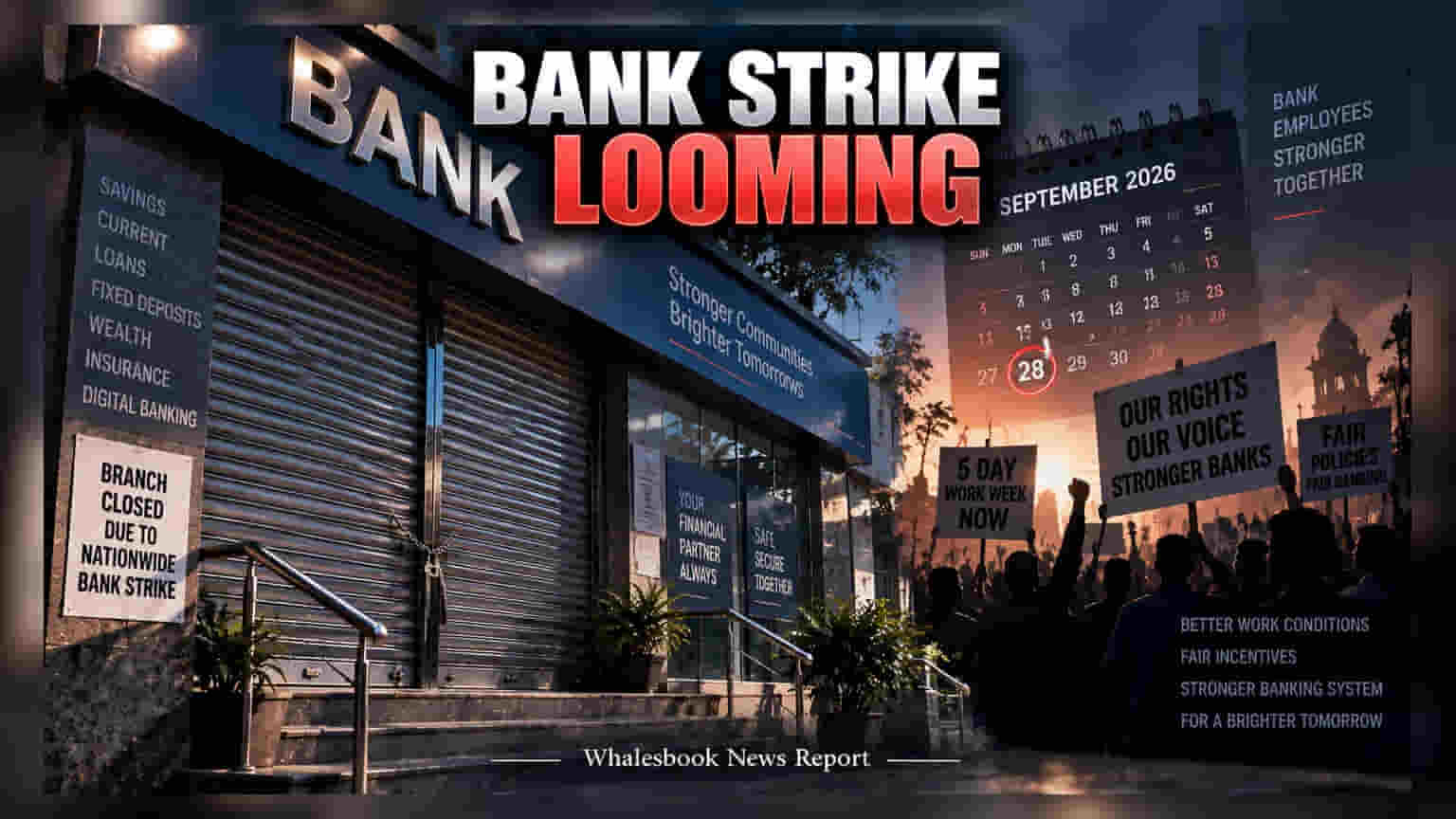
A nationwide three-day bank strike is scheduled to begin on September 28, 2026, due to an unresolved dispute over a five-day workweek. While the government has rejected the unions' claim of a prior agreement, the standoff continues to impact banking services. Authorities have requested public sector banks to remain open on Sunday, September 27, to mitigate potential service disruptions.
A three-day nationwide bank strike is scheduled to begin on September 28, 2026, following a breakdown in discussions between the government and banking unions. The primary point of contention is the implementation of a five-day workweek, a demand the United Forum of Bank Unions claims was agreed upon during the wage revision talks in March 2024. Finance Ministry officials have contested this, stating that the proposal for a five-day workweek was never formally part of the wage settlement discussions. This disagreement has led to a significant impasse, with unions representing a large portion of the banking workforce preparing to halt operations.
Beyond the five-day workweek dispute, the relationship between bank employees and the government is under pressure due to a performance-linked incentive scheme. Introduced in November 2024, this policy targets officers at Scale IV and above, linking bonus payouts to specific performance metrics. While the government views this as a way to improve efficiency, labor unions have voiced strong opposition. Despite direct discussions between Finance Minister Nirmala Sitharaman and staff representatives on September 8, no compromise has been reached, prolonging the tension.
To manage the impact on retail and corporate customers, the Department of Financial Services has issued instructions for public sector and regional rural banks to keep branches operational on Sunday, September 27, 2026. This is intended to provide customers with an opportunity to complete necessary in-branch transactions before the strike begins. While physical branches may face service disruptions during the three-day strike, most modern banking activities, such as fund transfers and bill payments, have migrated to digital platforms. These digital channels are expected to remain functional, allowing customers to avoid most direct service issues.
For investors and customers, the situation highlights the ongoing friction between the government's push for performance-linked management and the workforce's demand for restructured work conditions. The long-term impact on banking operations will depend on how effectively these industrial relations are managed. The next important step will be any further dialogue between the Ministry and union representatives to prevent the strike from extending or recurring, as well as updates on the implementation status of the performance-linked incentive scheme.