

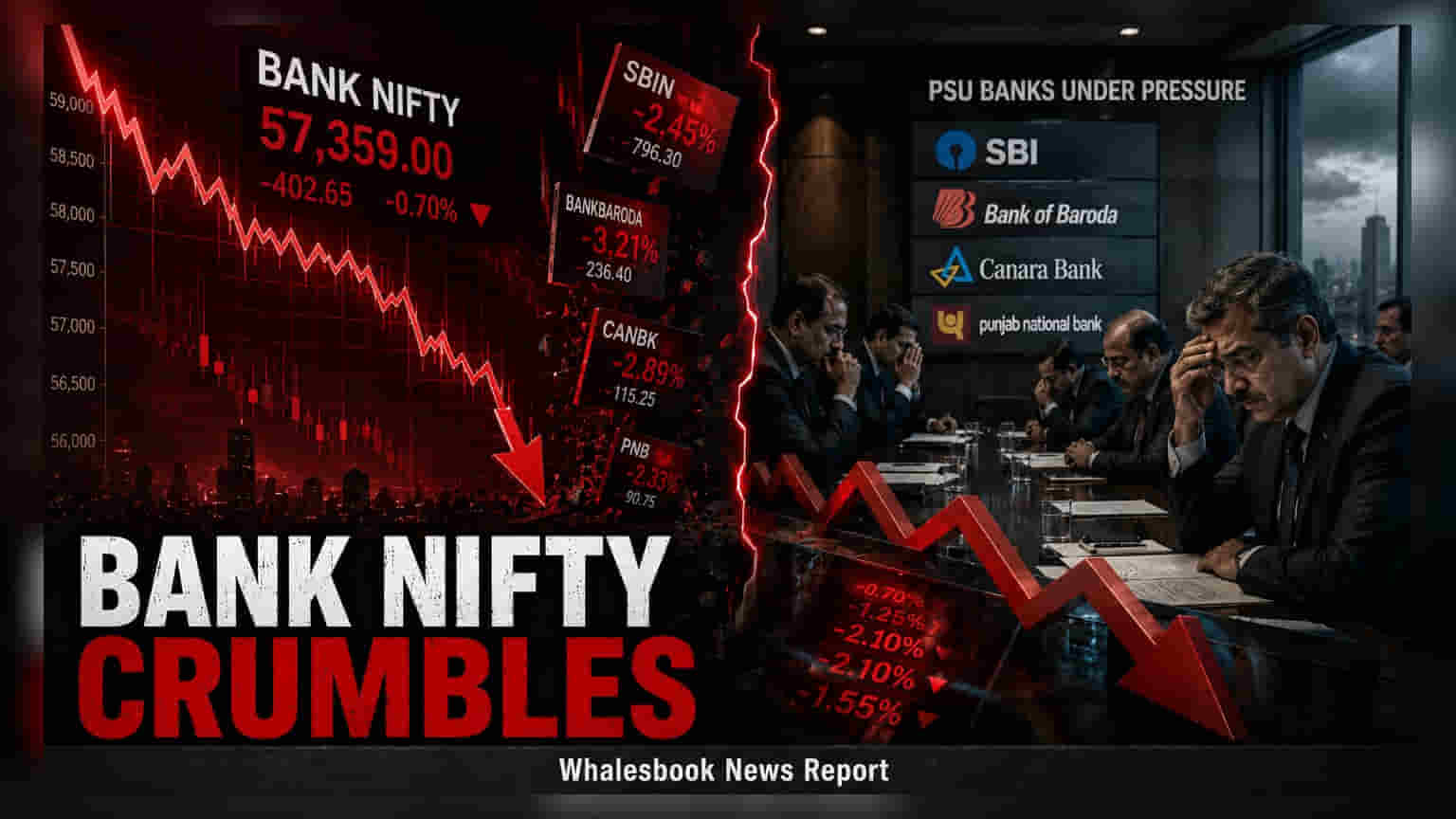
The Bank Nifty index fell 0.7% to 57,359 on August 24, ending a two-day rally. The decline was driven by weakness in PSU banks and caution due to rising crude oil prices and geopolitical tensions involving Iran. Investors are now closely monitoring key technical support levels as market volatility increases.
The Bank Nifty index experienced a reversal on August 24, 2026, falling 0.7% to close at 57,359. This dip snapped a two-day upward trend, as investors chose to lock in profits after a period of gains. The sell-off was observed across the financial sector, but it was particularly intense among Public Sector Undertaking (PSU) banks.
Global Cues Weigh on Sentiment
The move lower in banking stocks was not just driven by domestic profit-booking; it also reflected rising anxiety over global macroeconomic factors. Investors are closely tracking volatility in crude oil prices, which can influence inflation expectations in India. Furthermore, recent reports regarding potential new US sanctions on Iran have added a layer of geopolitical uncertainty to global markets. As oil is a major import for India, higher prices can pressure the rupee and corporate margins, leading traders to adopt a more defensive stance.
PSU Banks Under Pressure
PSU banks saw the sharpest decline during the trading session, with major names like the State Bank of India, Bank of Baroda, and Canara Bank acting as significant drags on the index. These stocks are often more sensitive to changes in sentiment and broader market trends. Beyond the PSU space, private sector lenders and financial service companies, including Axis Bank, Kotak Mahindra Bank, Federal Bank, and IDFC First Bank, also traded in the red. This broad-based weakness suggests that market participants are currently avoiding riskier bets until there is more clarity on both the earnings outlook and the global macro situation.
Technical Levels to Watch
For traders and investors, the focus has shifted to key technical support levels to see if the index can stabilize. Analysts are monitoring the 57,500 mark closely. A consistent hold above this level would be viewed as a sign of strength, whereas a sustained break below it could lead to further testing of lower support zones, such as 56,700. Conversely, if the index manages to regain momentum and cross the 58,000 level, it might signal that the recent selling pressure was merely a temporary correction rather than a change in trend.
Investors should continue to track upcoming quarterly disclosures and management commentary on asset quality. As the banking sector navigates these macroeconomic headwinds, the ability of these institutions to manage their net interest margins and loan books will be the primary factor determining stock performance in the coming weeks.