 Whalesbook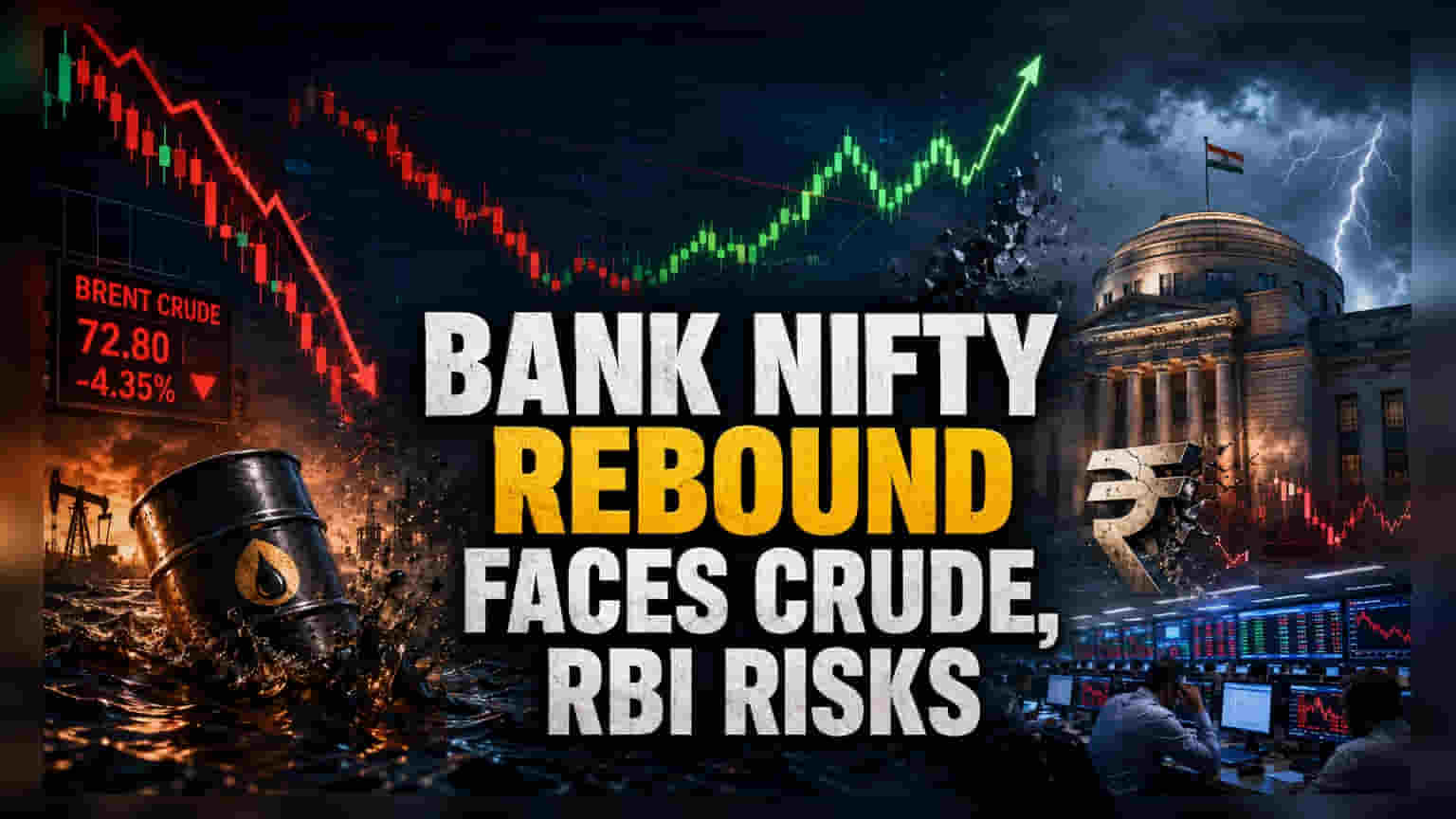


The Valuation Gap
The recovery in the Bank Nifty index, which reclaimed 700 points from intraday lows, appears more reactive to global commodity fluctuations than a reflection of underlying domestic banking health. While the retreat of Brent crude below $95 per barrel provides a tactical respite for an oil-importing nation, the move serves as a localized correction rather than a shift in long-term sentiment. Banking constituents such as AU Small Finance Bank, State Bank of India, and HDFC Bank saw marginal gains, yet these movements must be measured against a broader bearish trend that has erased over 2% of the index's value over the preceding four sessions.
The Analytical Deep Dive
The correlation between energy prices and the Indian banking index remains tethered to the nation's import dependence, which constitutes approximately 85% of its crude requirements. Analysts note that while lower oil prices theoretically ease the import bill and temper inflation, the current geopolitical environment—specifically the volatility in the Middle East—renders this trend fragile. Furthermore, the Reserve Bank of India’s (RBI) upcoming Monetary Policy Committee (MPC) meeting looms as a significant hurdle. With inflationary pressures mounting, the central bank faces a difficult trade-off; sustaining interest rates at 5.25% may prove insufficient if energy-driven imported inflation accelerates toward the 5% threshold in the coming quarter.
The Forensic Bear Case
A cynical view of the current rebound suggests it may be a classic dead-cat bounce. The banking sector continues to battle significant headwinds, including the impact of sustained, albeit fluctuating, energy costs on credit growth and margin profiles. Specific banking giants continue to grapple with idiosyncratic risks, such as ongoing internal governance scrutiny and vigilance investigations, which have weighed heavily on institutional confidence. Unlike more defensive sectors, the banking industry remains acutely sensitive to shifts in foreign institutional flow and currency volatility. With the rupee struggling near historic lows against the dollar, the potential for further margin compression and elevated default risk—particularly if crude prices pivot back toward triple digits—cannot be dismissed. Reliance on cost-driven supply shocks to power a sustained rally is a dangerous strategy when underlying industrial credit demand remains sensitive to interest rate uncertainty.
The Future Outlook
Market participants are now fixated on the 53,100-53,200 support range, with technical analysts warning that a failure to hold these levels could trigger a deeper correction toward the 52,300 mark. While the sector remains in a wait-and-watch mode ahead of the RBI’s policy announcement, the consensus remains cautious. Investors should be prepared for continued volatility as the market parses whether the recent energy cooling is a durable trend or merely a temporary fluctuation in an otherwise inflationary cycle.