

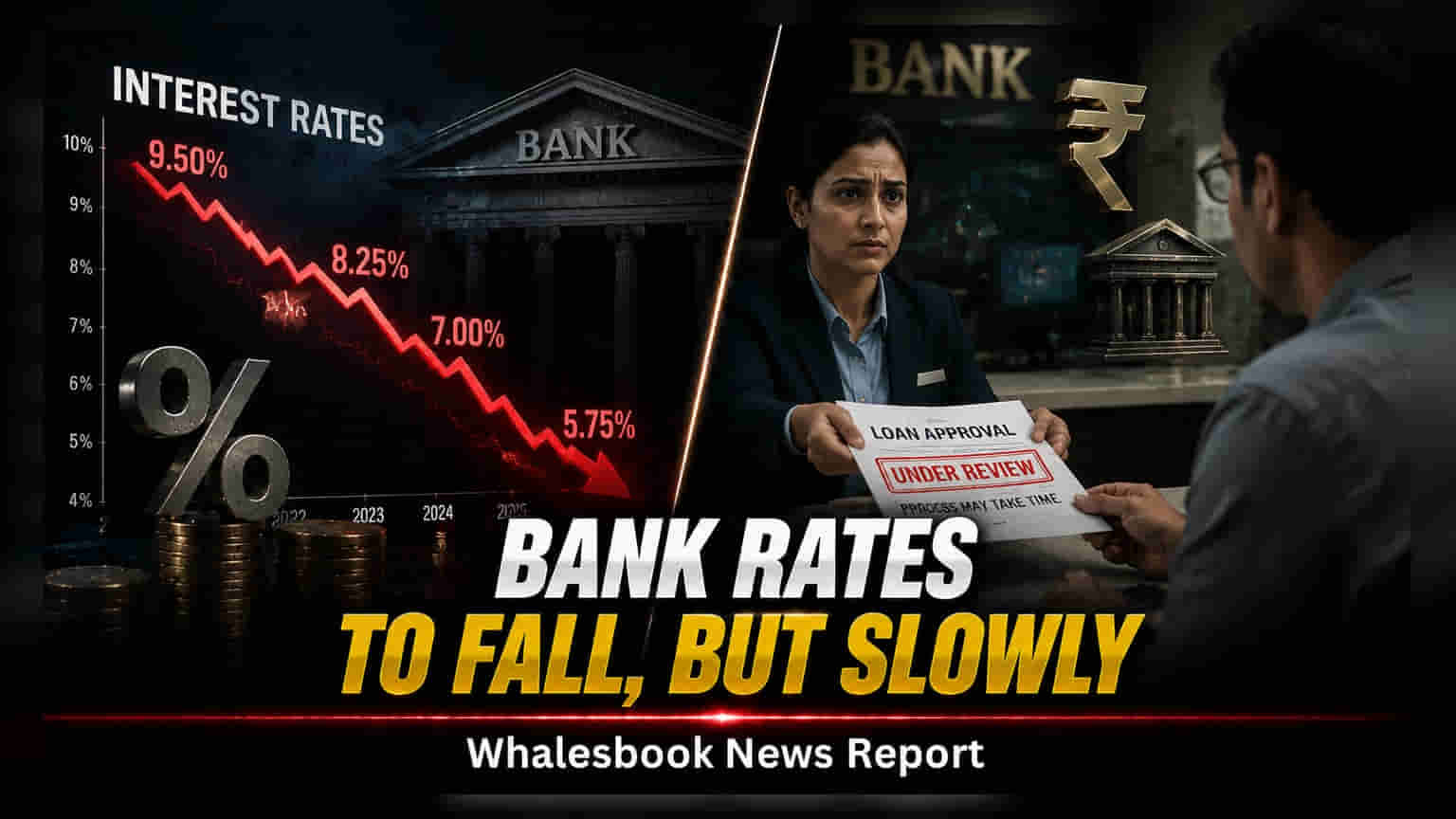
Lending and deposit rates may moderate slowly as high-cost legacy deposits expire and liquidity remains stable. While banks face competition for retail deposits, strong credit growth of 17.7% continues to support the sector. Investors should monitor how banks balance margin protection with the transmission of lower interest rates.
Indian banking sector interest rates are entering a period of gradual moderation. A recent report by CareEdge indicates that as banks move past the maturity of older, high-cost deposits, the pressure on funding costs is expected to soften. This environment, supported by comfortable system liquidity, creates room for a downward shift in interest rates for both borrowers and depositors.
However, the decline in rates is likely to be measured rather than sharp. Banks are currently managing an intense competitive environment to attract retail deposits. Simultaneously, there is a strategic imperative to preserve profit margins, which often dictates how quickly banks adjust their lending and deposit rates in response to broader monetary conditions.
Impact on Credit and Treasury
The expected easing of funding costs is set to exert mild downward pressure on fresh lending spreads. For corporate borrowers, this could translate into lower borrowing costs in the coming quarters. Furthermore, treasury operations at banks may see a boost. The report anticipates the 10-year government security yield to average between 6.8% and 6.9% this year, assuming Brent crude prices remain near $90 per barrel. Softer bond yields typically assist banks by enabling treasury gains and improving access to debt market funding.
Current Market Data
As of May 2026, the financial landscape showed fresh lending rates for scheduled commercial banks at 8.51%, while domestic term deposit rates were at 5.84%. This created a spread of 2.67% between fresh lending and deposit products. In comparison, outstanding lending rates were recorded at 8.97% against outstanding deposit rates of 6.57%, resulting in a spread of 2.40%. These figures highlight the ongoing efforts by banks to maintain margins as the interest rate cycle shifts.
Credit Growth and Regulatory Support
Despite the evolving rate environment, credit demand remains healthy. Data as of June 15, 2026, shows that bank credit grew by 17.7% year-on-year, touching Rs 215.5 lakh crore. This growth is largely driven by strong demand in the retail segment, particularly in gold and vehicle loans, alongside sustained credit flow to the MSME sector. During the same period, deposits rose by 12% to reach Rs 258.4 lakh crore, primarily bolstered by an increase in time deposits.
The Reserve Bank of India has also provided structural support through measures aimed at managing external financing pressures. Initiatives such as the expansion of the Fully Accessible Route for government securities, relaxed norms for External Commercial Borrowings for public sector undertakings, and tax exemptions for foreign investors have contributed to overall stability in the banking system. The next phase for investors will be to track how individual banks manage their asset-liability maturity profiles and whether their net interest margins stabilize as the transmission of lower rates continues.