

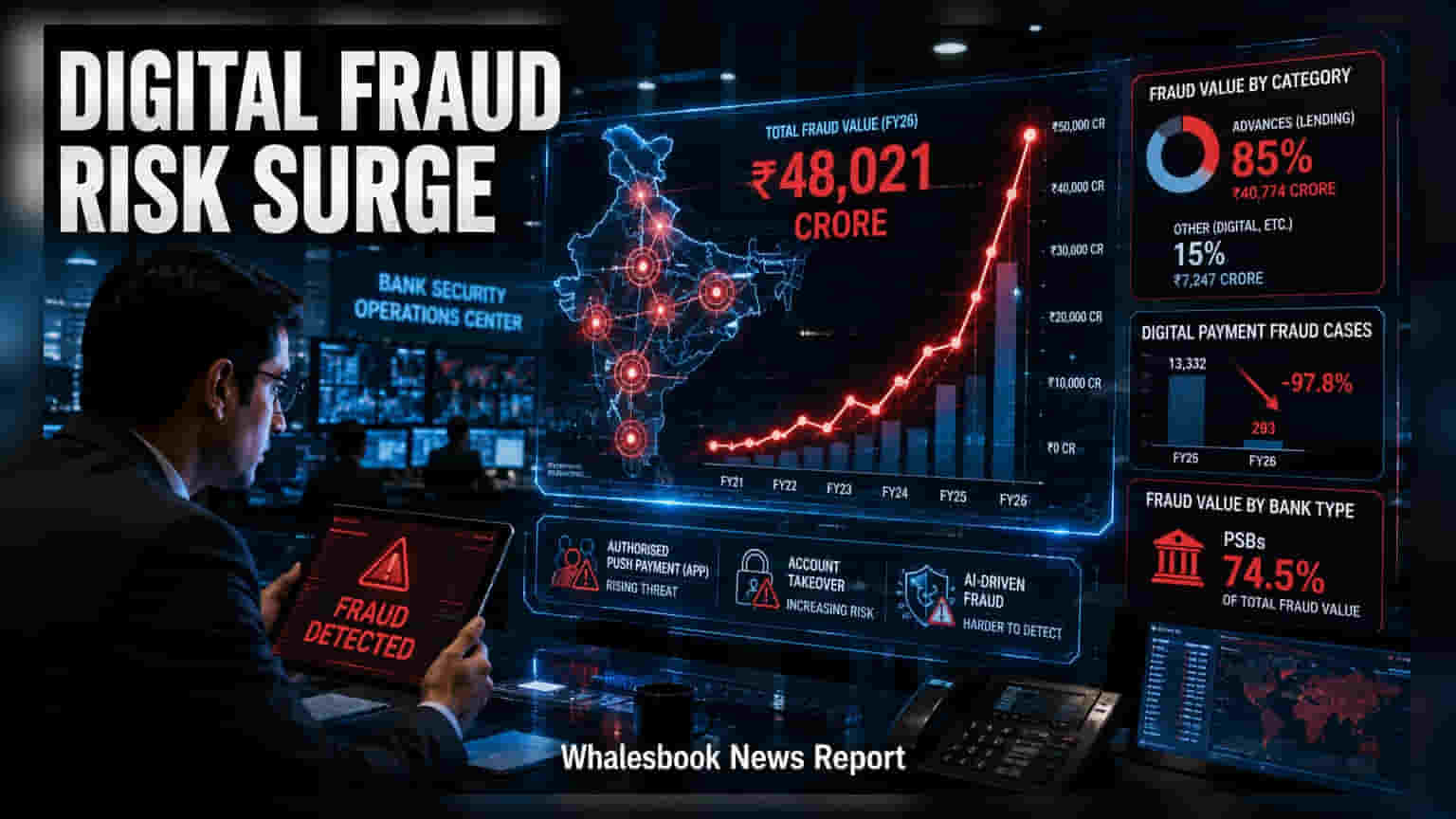
While financial fraud figures reached ₹48,021 crore in FY26, RBI data shows that the majority of this amount stems from loan (advances) portfolios, not digital payment incidents. Digital payment fraud cases have actually seen a decline, even as lenders face new, sophisticated cyber threats.
The financial sector is navigating a complex landscape of risk, with recent data highlighting a significant shift in the nature of banking fraud in India. While total reported fraud value touched ₹48,021 crore for FY26, the primary driver of this figure is not digital payment hacks, but rather issues within the 'advances' or lending portfolio. RBI data reveals that advances account for roughly 85% of total fraud value, amounting to ₹40,774 crore.
This data provides a critical perspective for investors and observers. The narrative around fraud is often dominated by high-profile digital payment incidents, yet the actual numbers paint a different picture. The volume of digital payment fraud cases has shown a significant decline, dropping to 293 in FY26 from 13,332 in the previous year. This suggests that while cyber-security measures are becoming more effective against volume-based digital attacks, the larger financial risk remains concentrated in the legacy business of loan underwriting and monitoring.
Public Sector Banks (PSBs) currently carry the largest burden of these reported losses, accounting for 74.5% of the total fraud amount. A notable portion of the FY26 figures includes the reclassification of 314 cases worth ₹30,199 crore from previous years, following a Supreme Court judgment. This reclassification has artificially inflated the current year's numbers, a nuance that investors must account for when assessing year-on-year trends in asset quality.
Despite the decline in digital payment fraud volume, the nature of these threats is changing. Reports from firms like Experian highlight that 'Authorised Push Payment' (APP) fraud—where victims are tricked into initiating transfers—and account takeover attempts are becoming more sophisticated. Unlike traditional hacks, these tactics manipulate legitimate user behavior, making them difficult for automated systems to detect. These emerging threats create a dual challenge for financial institutions: they must continue to manage legacy credit risks in their loan books while simultaneously upgrading their digital defenses to counter AI-driven, highly targeted fraud strategies.
For investors, the key monitorable remains the asset quality and underwriting standards of banks. High-value fraud in the advances portfolio can lead to increased provisioning, which directly impacts profitability. While reclassifications explain a large chunk of the current figures, the persistence of fraud in the lending segment indicates that banks need to maintain rigorous checks on borrower profiles and loan monitoring systems. Investors may track management commentary on credit risk management and the adoption of real-time monitoring technology, which is increasingly becoming the industry standard to protect both bank balance sheets and customer funds.