

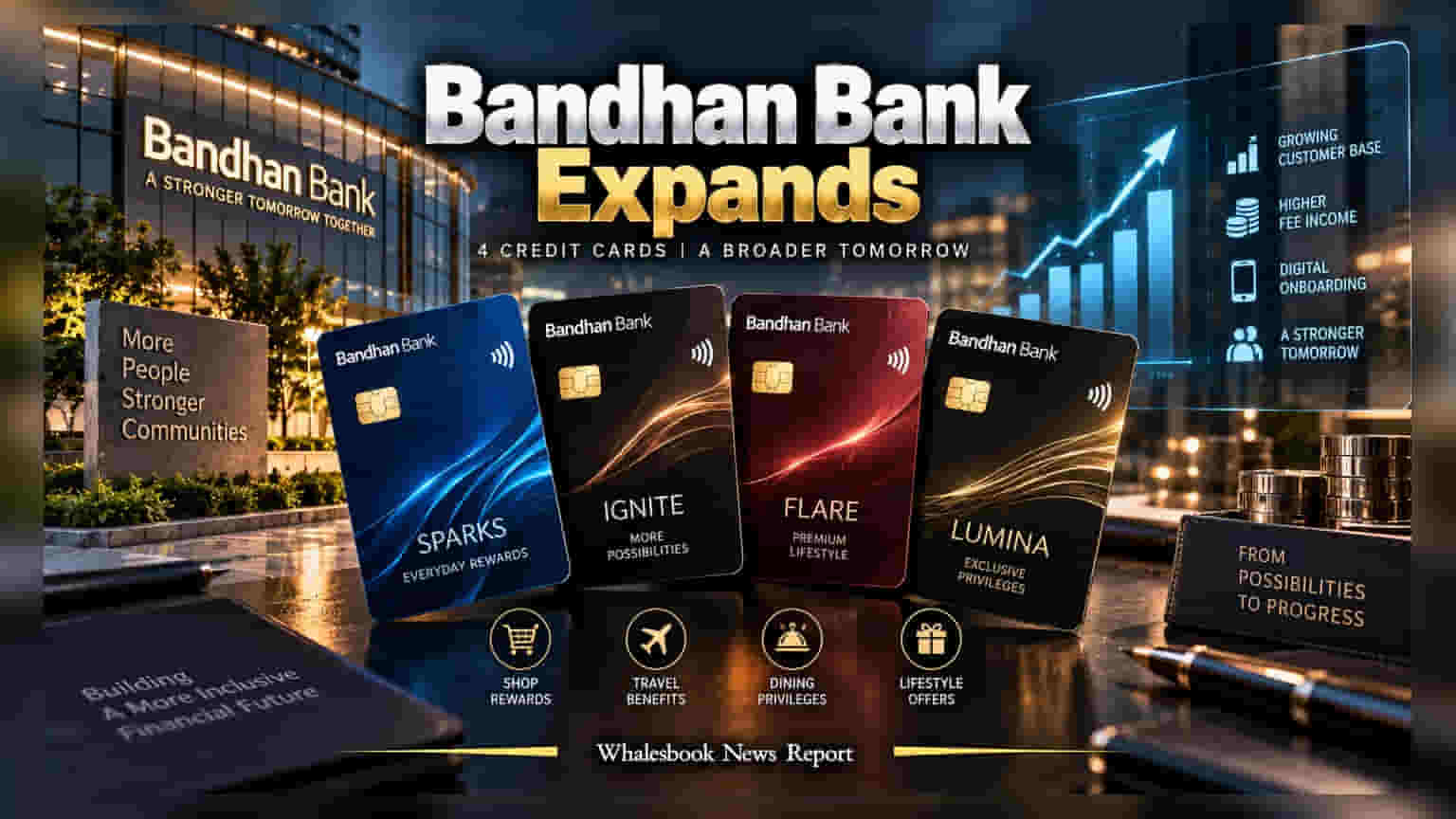
Bandhan Bank has introduced a four-tier credit card portfolio in partnership with Mastercard to expand its retail business. The bank aims to tap its 3.2 crore customer base to boost fee-based income, though the launch comes as the lender faces margin pressure and a recent downward revision in its return on assets guidance.
Bandhan Bank officially entered the credit card market on September 7, 2026, launching four variants—Sparks, Ignite, Flare, and Lumina. This product rollout is a key part of the bank’s broader strategy to transform into a universal bank by diversifying beyond its traditional lending business.
The bank intends to leverage its 3.2 crore customer base to cross-sell these products, aiming to increase its fee-based income. The portfolio is tiered to cater to different segments, from everyday retail shoppers to affluent clients looking for lifestyle and travel benefits. The bank plans to use its network of over 6,400 outlets alongside digital channels to onboard new customers.
While this launch is a strategic step toward growth, the bank is navigating a period of financial caution. In its Q1 FY27 results, Bandhan Bank reported a net profit of ₹501.67 crore, which was a 34.9% increase compared to the previous year. However, profit was down 6.1% compared to the previous quarter. More importantly, the bank’s management recently revised its exit Return on Assets (RoA) guidance for FY27 downward to a range of 1.2% to 1.4%, compared to the earlier guidance of 1.6% to 1.8%.
The credit card business comes with its own set of operational challenges. Launching and maintaining these products requires heavy spending on technology, digital infrastructure, and customer acquisition. These expenses, combined with the industry-wide pressure from rising deposit costs, mean the bank will need to carefully manage its profit margins.
Asset quality remains another area for investors to track. The bank has faced credit cost management issues in the past, particularly within its Emerging Enterprise Business (EEB) and retail unsecured segments. Since credit cards are an unsecured product, the bank will need to ensure that its risk-scoring and collection processes are robust to prevent an increase in bad loans.
Currently trading at around ₹164–₹165, the bank's stock valuation reflects the challenging environment in the banking sector. The success of this credit card venture will depend on how quickly Bandhan Bank can scale its user base and whether it can generate sustainable fee income without hurting its overall asset quality. Investors will likely look for updates on card adoption rates and the impact on the bank's operational costs in the upcoming quarterly reports.