

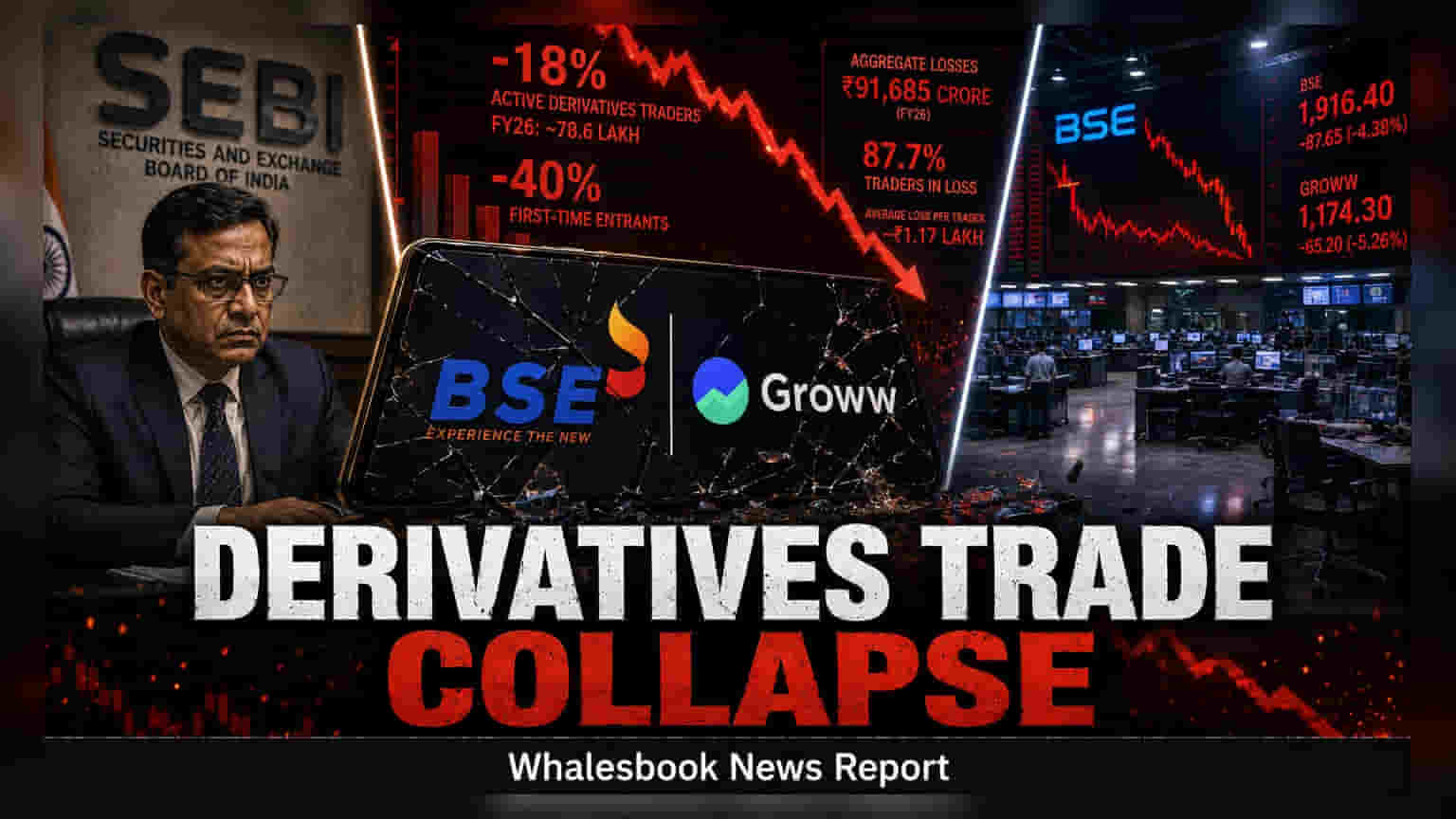
Shares of BSE and Groww (Billionbrains Garage Ventures) faced selling pressure on August 21, 2026, after a SEBI study showed an 18-20% drop in active derivatives traders in FY26. This is the first annual decline in a decade for retail participation in the futures and options segment. Investors are assessing the impact of tightened regulations and reduced trading volumes on the revenue potential of exchanges and brokerage platforms.
BSE Ltd and Groww (Billionbrains Garage Ventures) witnessed selling pressure in the stock market on August 21, 2026, as investors reacted to a sobering study released by the Securities and Exchange Board of India (SEBI). The regulator’s latest report indicated that the number of active individual derivatives traders fell by approximately 18% to 20% in the 2025-26 fiscal year (FY26), marking the first such contraction in a decade.
Impact of Shrinking Derivatives Participation
The SEBI study revealed that the active derivatives trader base dropped to roughly 78.6 lakh in FY26. Furthermore, the number of first-time entrants into the market plummeted by 40% compared to previous periods. This shift in market participation is significant because the futures and options (F&O) segment has historically been a major driver of trading volumes for stock exchanges and a key revenue generator for discount brokerage platforms like Groww.
While the reduction in active traders aligns with SEBI’s ongoing efforts to limit speculative trading and protect retail investors, it creates a challenging environment for market intermediaries. The study also highlighted that despite a decrease in aggregate losses—down to ₹91,685 crore in FY26 from ₹1.12 lakh crore in FY25—about 87.7% of individual traders remained in a loss-making position. With the average loss per trader rising to approximately ₹1.17 lakh, the trend suggests that fewer people are willing or able to sustain losses in the derivatives market.
Business Context and Stock Performance
For exchanges like BSE, a moderation in F&O volumes directly impacts the fee income generated from trading activities. Market analysts have noted that the sector is currently navigating a period of normalization where speculative trading volatility has decreased compared to previous high-growth years. This makes the ability of exchanges to maintain high transaction volumes more difficult.
Groww, which operates as a leading digital brokerage, faces a dual challenge. Beyond the broader industry trend of cooling retail interest in F&O, the company’s stock has also been impacted by recent market activity, including significant block deals worth ₹1,500 crore reported earlier in the week on August 18, 2026. Because Groww’s business model is heavily dependent on retail user engagement, any regulatory change that discourages trading or reduces the active trader base is viewed as a potential risk to its future revenue growth.
Investor Monitorables
The regulatory landscape remains the most critical factor for shareholders to track. SEBI has been implementing several measures to increase transparency and discourage excessive risk-taking, such as the recently introduced Closing Auction Session for F&O-enabled stocks. Investors may continue to monitor monthly trading volume data from exchanges and updates from brokerage firms regarding their revenue diversification strategies. The key question for the market is whether the decline in the trader base is a temporary normalization or a long-term structural shift in how retail investors engage with complex financial products.