

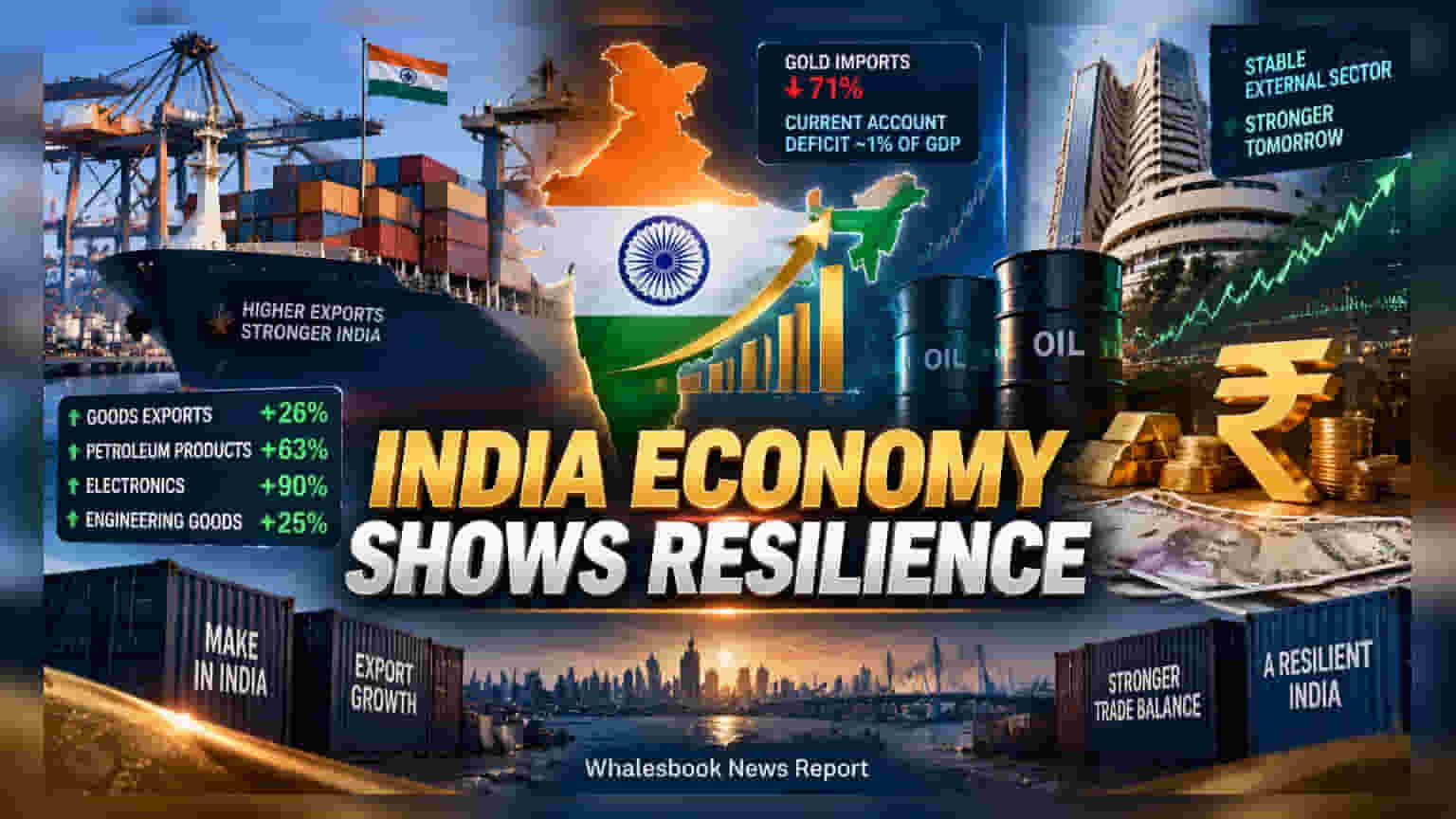
Axis Bank reports that India’s external sector held steady in August 2026, aided by a 26% jump in goods exports. While the bank estimates a manageable current account deficit of 1% of GDP for FY27, it also warned that weaker urban demand remains a key risk for the economy.
Axis Bank released a report stating that India’s external sector remained resilient throughout August 2026. Despite global oil price volatility, the bank noted that stronger export numbers and a decline in gold imports helped keep the trade balance in check. The report estimates the current account deficit, which is the gap between the money a country earns from abroad and the money it spends, at roughly 1% of GDP for the 2027 fiscal year.
Export Drivers and Trade Balance
The bank’s data showed that goods exports grew by 26% compared to the same period last year. This growth was led by several key categories, including petroleum products which rose by 63%, electronics at 90%, and engineering goods with a 25% increase. Additionally, a significant 71% drop in gold imports compared to recent trends provided further relief, helping to offset the pressure typically caused by oil import costs.
State finances also showed signs of improvement during the April to July period of FY27. According to the report, capital expenditure—money spent on building assets like roads and infrastructure—increased by 15% among the 19 states analyzed. Meanwhile, tax collections for these states grew by 14%, supported by GST and stamp duties.
Financial Context and Risks
While the bank maintains an optimistic view on the external sector, it highlighted notable risks within the broader economy. Specifically, the report pointed to softer domestic demand, citing rising urban unemployment and weaker consumer sentiment. These trends could signal a slower pace for economic activity in the coming quarters.
Investors looking at Axis Bank’s own performance can note that the bank reported a net profit of ₹7,114 crore for the first quarter of FY27, marking a 22.5% increase year-on-year. However, the bank is also navigating challenges, as its net interest margin—the difference between the interest it earns on loans and pays on deposits—stood at 3.46% for the same period. This margin is a key figure that analysts watch to determine how efficiently a bank generates profit.
Axis Bank shares, which closed at ₹1,222.90 on September 15, 2026, have experienced recent volatility. The bank is currently preparing for upcoming investor interactions, including the Jefferies 5th India Forum scheduled for September 17-18, 2026.
What to Monitor Next
Market participants will likely focus on whether the identified trend in urban demand begins to recover or continues to cool. Additionally, future commentary from the bank regarding its net interest margins and the impact of global oil price fluctuations on the trade balance will be important to track for understanding both the bank’s stability and the health of the Indian economy.