

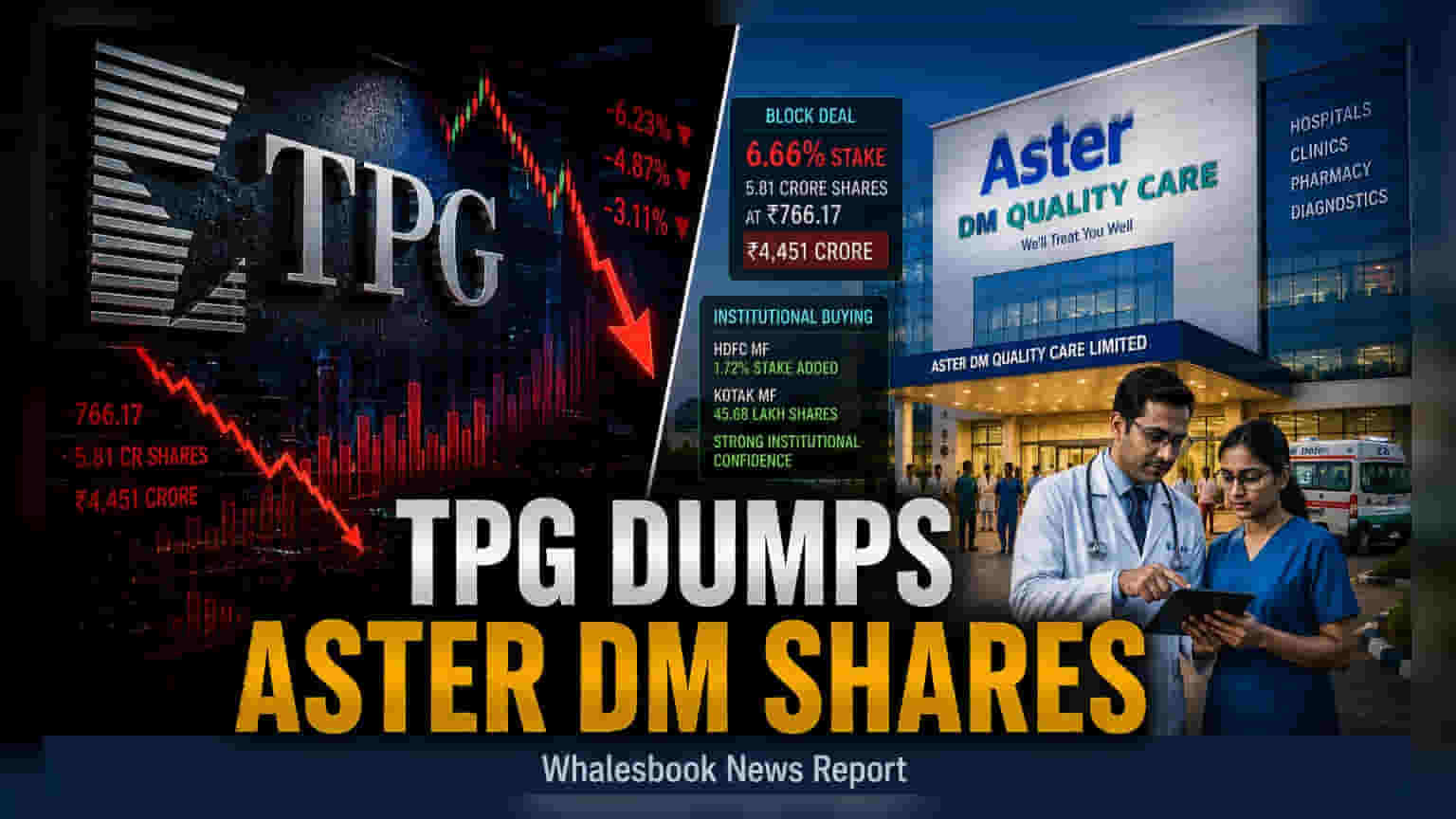
TPG’s investment arm sold a 6.66% stake in the newly merged Aster DM Quality Care in a major block deal. While the stock saw initial volatility, institutional buyers like HDFC Mutual Fund absorbed a large portion of the supply. Investors are now balancing this large sell-off against the company’s recent strong Q1 financial growth and the ongoing integration of its healthcare assets.
Aster DM Quality Care saw heavy trading activity on August 19, 2026, after a major shareholder, Centella Mauritius Holdings—an investment vehicle of TPG—offloaded a 6.66% equity stake. The block deal involved selling 5.81 crore shares at a price of ₹766.17 per share, totaling approximately ₹4,451 crore. The stock faced significant pressure in early trading, dipping more than 6% on the National Stock Exchange, before staging a partial recovery to close at ₹800.2, down 2.18% for the day.
Institutional Interest Absorbs the Supply
Despite the massive supply of shares entering the market, institutional investors stepped in to absorb a significant portion. HDFC Mutual Fund led the buying, adding 1.5 crore shares, representing a 1.72% stake, to its portfolio. Kotak Mahindra Mutual Fund also increased its holding by purchasing 45.68 lakh shares. Other participants, including Citigroup Global Markets Singapore and Integrated Core Strategies Asia, also acquired substantial quantities. This strong institutional interest suggests continued confidence from large fund houses in the company's business model following its recent corporate restructuring.
Impact of the Recent Merger
Investors are currently evaluating the company’s performance after the major merger between Aster DM Healthcare and Quality Care India became effective on July 1, 2026. The new entity, now operating as Aster DM Quality Care Limited, has shown positive operational momentum. In its recent first-quarter results for the 2027 fiscal year, the company reported a 20% year-on-year revenue growth to ₹2,597 crore, while operating EBITDA rose by 30% to ₹576 crore on a pro forma basis. This financial performance has been a core focus for shareholders, as it highlights the scale and efficiency potential of the combined entity.
Risks and Monitorables
While the recent earnings report provides a positive baseline, investors are watching several critical areas. The primary challenge remains the complex integration of the newly merged healthcare assets, including the Evercare and KIMS India businesses. Any delays or complications in realizing cost and operational synergies could weigh on profit margins. Furthermore, the healthcare sector faces intense competition, particularly in high-demand regions like Bengaluru, which may impact patient acquisition and pricing power. Operational risks, such as maintaining clinical talent and the timely commissioning of planned greenfield hospital projects, remain essential monitorables. Moving forward, the company's ability to maintain its margin growth and execute its expansion plans without integration hurdles will be the primary focus for the market.