 Whalesbook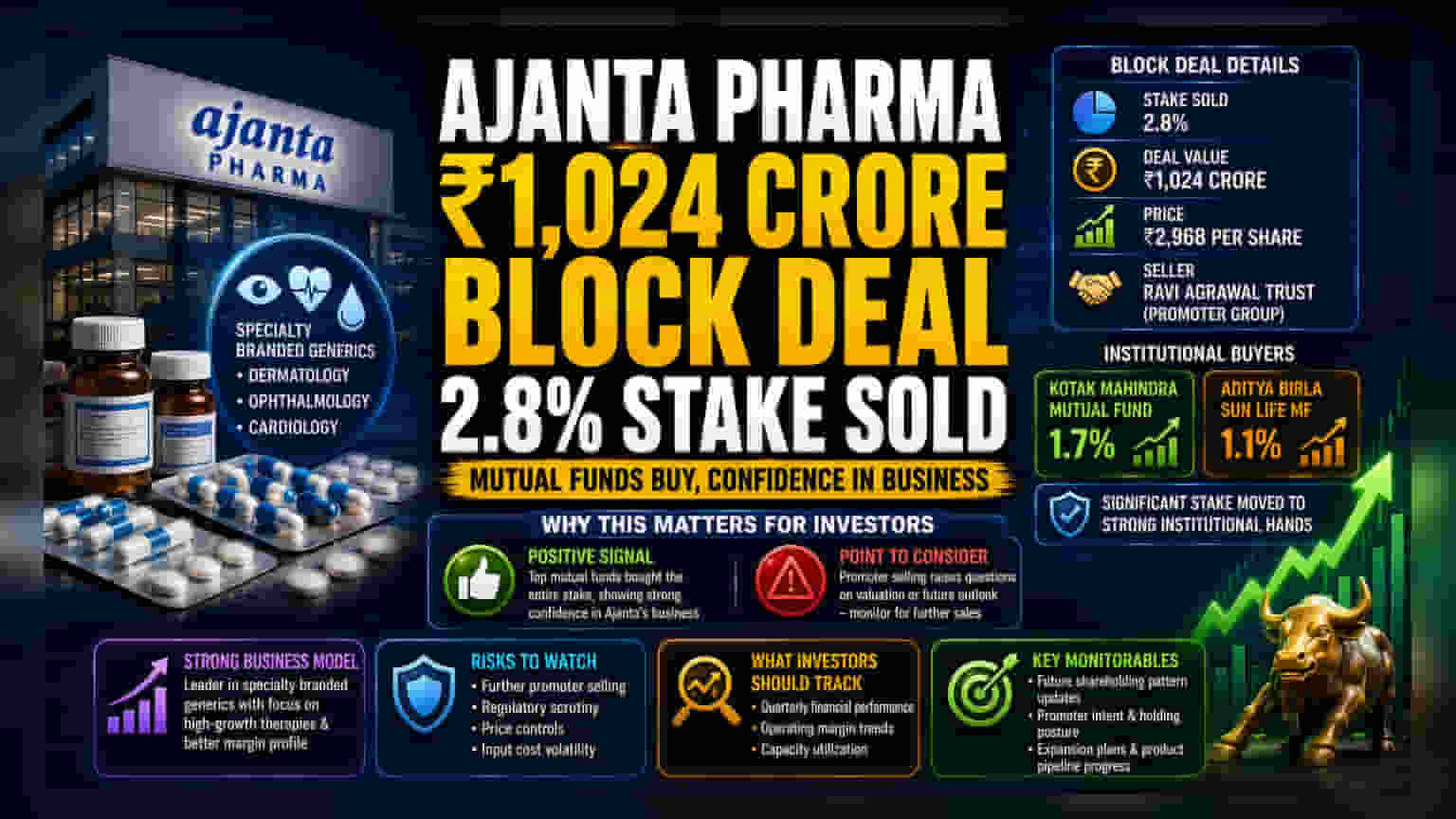


What Happened
Ajanta Pharma saw a major block deal on Tuesday, June 9, 2026, involving the sale of a 2.8% stake by the Ravi Agrawal Trust, an entity linked to the company's promoters. The transaction, valued at approximately Rs 1,024 crore, was executed at an average price of Rs 2,968 per share. Institutional investors were the main buyers in this deal. Kotak Mahindra Mutual Fund acquired a 1.7% stake, while Aditya Birla Sun Life Mutual Fund purchased a 1.1% stake, effectively moving a significant portion of shares from promoter control into the portfolios of these large institutional funds.
Why This Matters For Investors
For retail shareholders, promoter selling often acts as a double-edged sword. On one hand, the fact that major mutual funds stepped in to purchase the entire offered stake suggests institutional confidence in the company’s underlying business. This usually provides a floor for the stock price and indicates that smart money sees long-term value despite the promoter's decision to trim their position. On the other hand, whenever promoters sell, it leads investors to ask if the stock has reached its fair valuation or if the owners have concerns about future growth cycles. Because this was a clean block deal executed away from the open market, it helped prevent a sharp price drop, which is a common concern during large-scale selling.
The Bigger Business Context
Ajanta Pharma is well-regarded in the Indian pharmaceutical sector for its focus on specialty branded generics, particularly in high-growth therapeutic areas like dermatology, ophthalmology, and cardiology. Unlike generic-heavy companies that compete primarily on volume and price, Ajanta’s business model typically allows for better profit margins. Investors often watch the company's ability to maintain these margins, as rising raw material costs or increased competition in the branded generic space can put pressure on profitability. The entry of mutual funds through this deal may imply that these institutions are betting on the company’s consistent track record of maintaining specialized product lines.
Risks and Investor Considerations
While institutional buying is generally a positive signal, investors should remain cautious about promoter selling. It is important to determine if this is a one-time liquidity requirement for the promoter trust or the beginning of a larger exit strategy. If more selling follows in the coming quarters, it could dampen investor sentiment. Additionally, the pharmaceutical sector is subject to intense regulatory scrutiny and price controls by the government, which can impact revenue. While Ajanta has historically navigated these pressures well, the company is not immune to the sector-wide challenges of pricing volatility and regulatory changes in both domestic and export markets.
What Investors Should Track
Moving forward, the key monitorables are the quarterly financial performance and future shareholding pattern updates. Investors should track whether the company can continue to protect its operating margins despite broader sector pressures. Additionally, observing whether the promoter group makes any further sales or if they commit to holding their remaining stake will be crucial. Keeping an eye on the company's commentary regarding its expansion plans and capacity utilization for its specialized products will help determine if the fundamental growth story remains intact despite the recent change in ownership structure.