

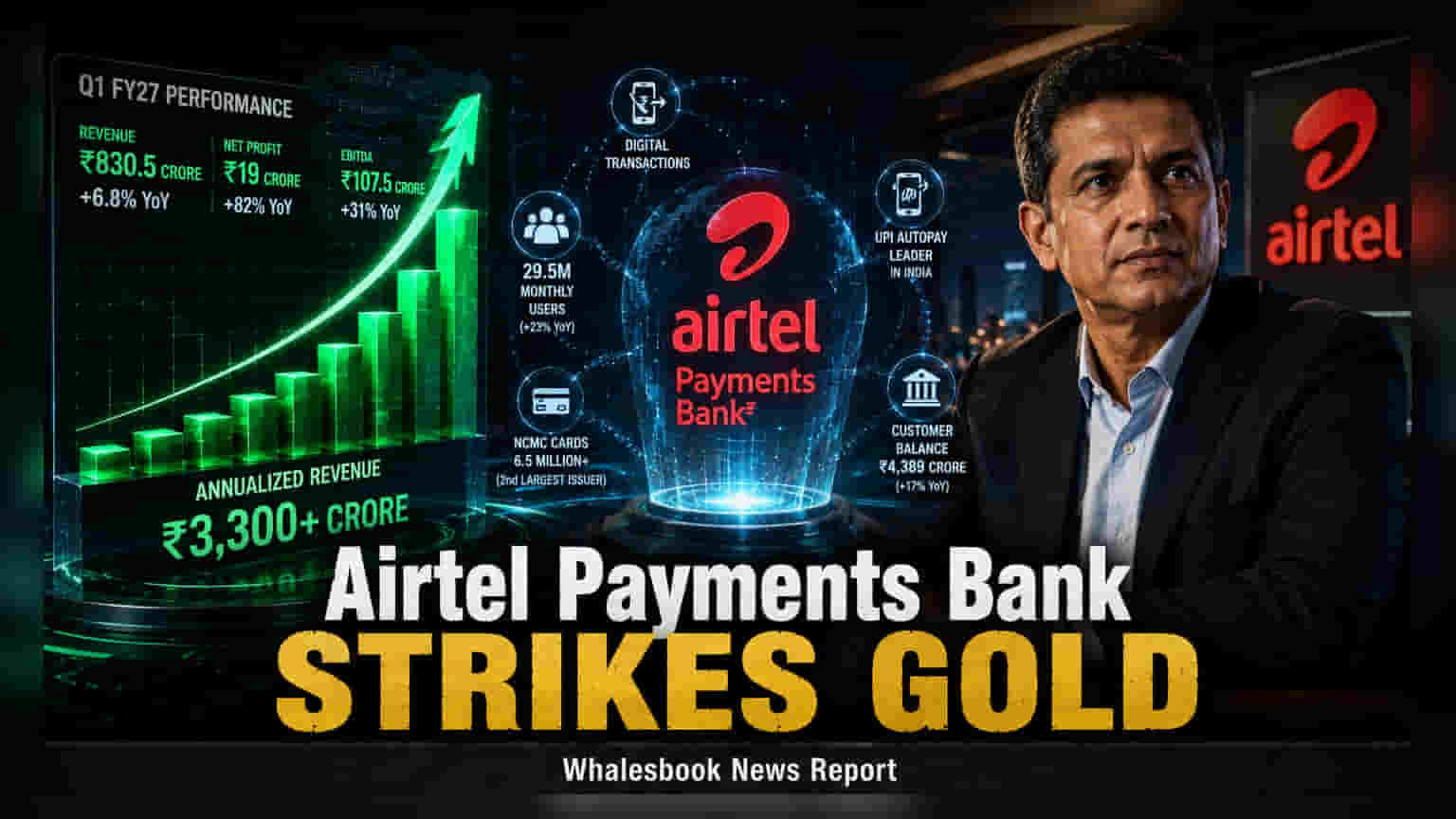
Airtel Payments Bank posted a 6.8% increase in revenue to ₹830.5 crore for Q1 FY27, with net profit climbing 82% to ₹19 crore. As a subsidiary of Bharti Airtel, these results highlight the digital banking arm's growing scale in UPI and transit payments. Investors in the parent company may note this performance as a reflection of its digital ecosystem expansion.
Airtel Payments Bank has reported steady financial growth for the first quarter of the 2026-27 financial year. The bank generated revenue of ₹830.5 crore for the April-June quarter, a 6.8% increase from ₹777.4 crore in the same period last year. With this performance, the bank's annualized revenue has now crossed the ₹3,300 crore mark.
Profitability and Operational Efficiency
The bank’s profitability improved significantly during the quarter. Net profit rose by 82% year-on-year to reach ₹19 crore. Operational efficiency also showed improvement, with Earnings Before Interest, Taxes, Depreciation, and Amortisation (EBITDA) increasing by 31% to ₹107.5 crore. These figures reflect the bank’s efforts to scale its business model, which relies on a high volume of small-ticket digital transactions and merchant services.
As a subsidiary of Bharti Airtel, Airtel Payments Bank is an unlisted entity. This means its shares are not traded on major stock exchanges like the NSE or BSE. For investors, the performance of the payments bank is primarily relevant as a contributor to the broader digital strategy and financial health of the parent company, Bharti Airtel.
Digital Adoption and Service Reach
The bank’s growth is driven by its deep penetration in both urban and rural markets. The number of monthly transacting users reached 29.5 million, representing a 23% increase compared to the previous year. Customer balances, which indicate the deposits held by users, grew by 17% to reach ₹4,389 crore.
Airtel Payments Bank has secured a strong position in specific digital payment niches. It currently ranks as the second-largest issuer of National Common Mobility Cards (NCMC) in India, with over 6.5 million cards issued. The bank also holds a significant share in the Unified Payments Interface (UPI) AutoPay segment, which automates recurring payments for users.
Sector Context and Business Risks
The payments bank sector in India operates under strict regulatory guidelines from the Reserve Bank of India. Because these entities cannot lend money directly, their revenue is tied to processing fees, transaction commissions, and merchant services. This model faces intense competition from large commercial banks and established fintech applications that also offer UPI and payment services.
A key risk for the business is the ongoing pressure on profit margins, which are typically thin in the digital payments space. Success depends on maintaining high transaction volumes and low operational costs. Additionally, regulatory changes regarding transaction charges or security norms for digital payments can directly impact the bank's ability to maintain its growth trajectory.
Investors looking for the next updates may monitor how the bank integrates further with Bharti Airtel’s telecom and digital offerings. Tracking the bank's ability to cross-sell financial products to its existing customer base while managing costs in a competitive digital banking environment will be essential for assessing its long-term contribution to the parent company.