

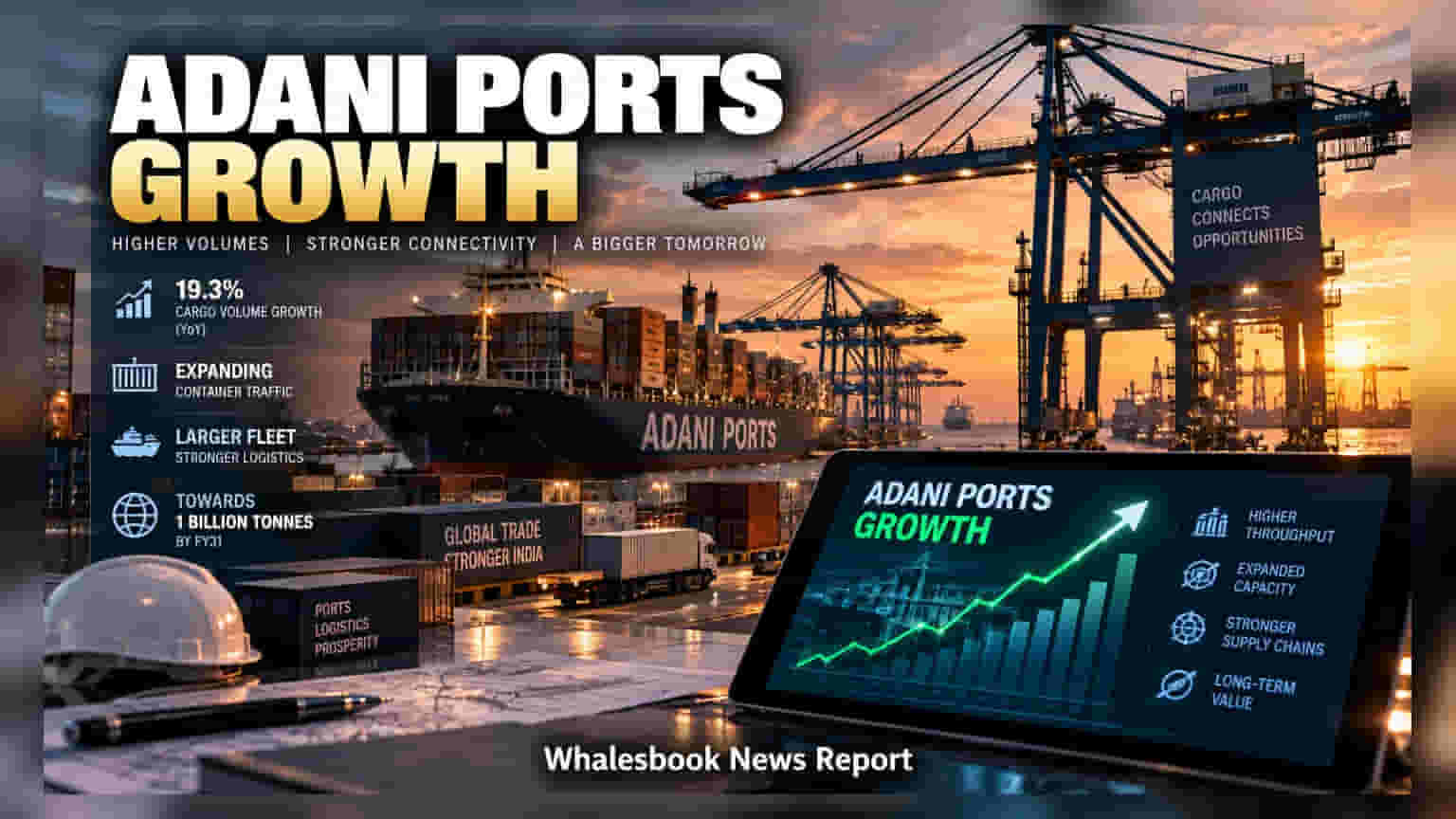
Adani Ports and SEZ reported a 19.3% year-on-year rise in August cargo volumes, recovering from the slower June quarter. The company has set a 1 billion tonne throughput target for FY31, backed by a major expansion into logistics and multi-modal transport. Shareholders are watching whether capital spending on new vessels and warehouses will support margin stability amid global trade volatility.
Adani Ports and Special Economic Zone (APSEZ) has shown strong operational momentum with a 19.3% year-on-year surge in cargo volumes during August. This performance marks a rebound from the softer throughput reported in the June quarter, where regional conflicts in West Asia created supply chain bottlenecks. The company continues to advance its ambitious long-term goal of achieving a total throughput of 1 billion tonnes by FY31. This growth is being driven by a mix of dry cargo demand, container volume increases, and contributions from its international assets, such as the North Queensland Export Terminal in Australia.
Expanding Beyond Traditional Port Operations
The company is currently executing a significant capital-intensive strategy to transition from a pure-play port operator into a comprehensive transport utility. The roadmap involves a substantial upgrade to its logistics infrastructure, including plans to expand its vessel fleet from 136 to over 200 ships. Additionally, the firm is scaling its rail operations by increasing owned rakes from 132 to 200. Beyond marine and rail, the company is also broadening its warehousing footprint, with capacity slated to expand from 3.1 million square feet to 12 million square feet, alongside a planned doubling of its truck fleet. This pivot to end-to-end logistics is designed to capture more value from the cargo moving through its network, though investors are mindful that such large-scale capital spending requires careful management to protect profit margins and keep debt levels in check.
Financial Targets and Operational Outlook
Financial performance remains a key focus for shareholders. In the first quarter of FY27, APSEZ reported an operating profit of Rs 6,500 crore, reflecting a 19% year-on-year increase. The management has provided operating profit guidance of Rs 25,000 to Rs 26,000 crore for FY27. While brokerage sentiment remains generally positive regarding the firm's growth trajectory, some analysts maintain a cautious stance on valuations, pointing to the need for consistent execution in these new logistics ventures. The port sector in India is currently seeing increased competition as private players continue to gain market share from state-run major ports. Success for APSEZ will depend on its ability to navigate global economic headwinds and ensure that its massive investments in infrastructure lead to high utilization rates. The next critical monitorable for investors will be the company’s ability to meet its quarterly profit guidance and the timeline for commissioning its expanded logistics assets.