

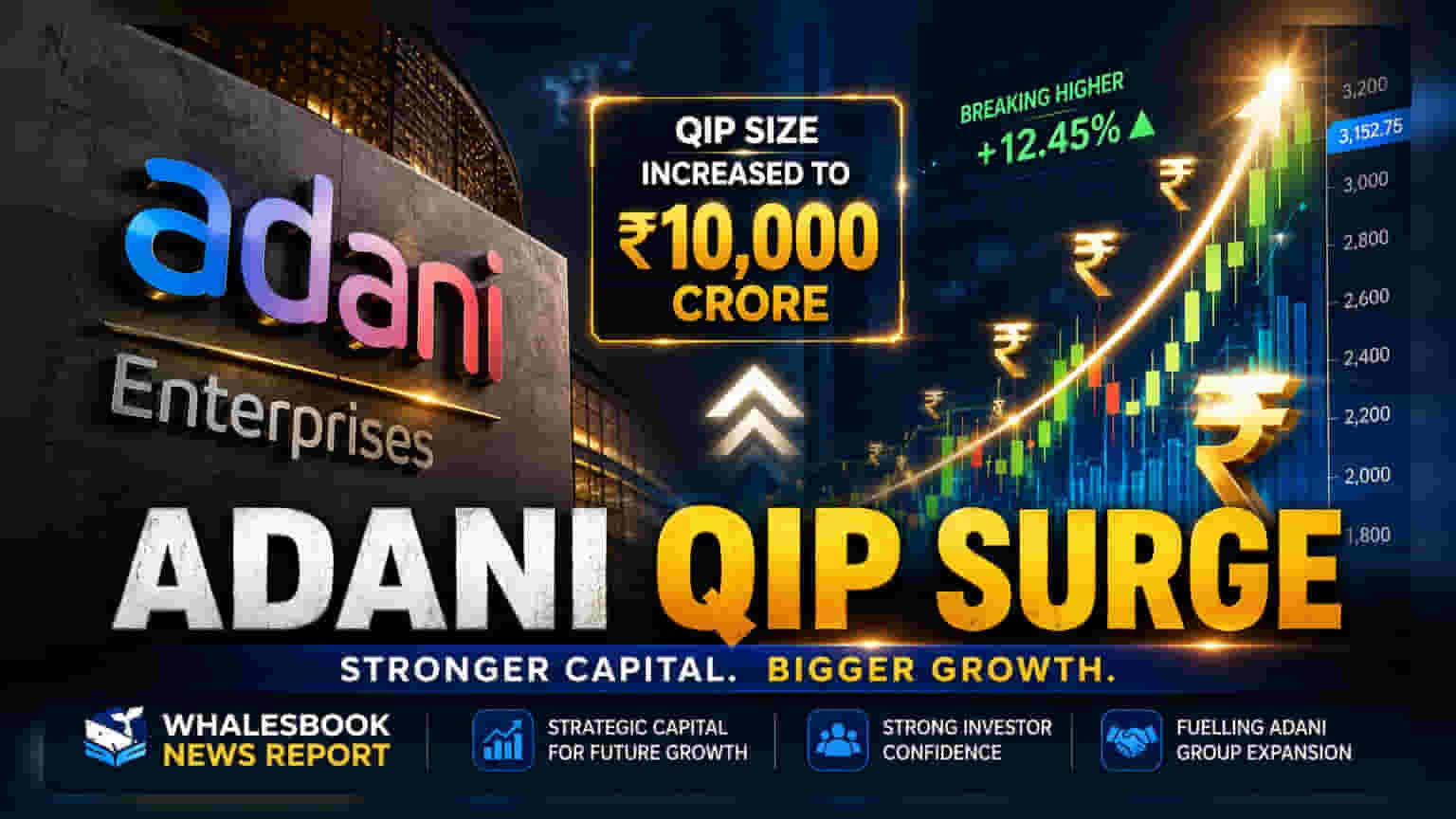
Adani Enterprises has increased its Qualified Institutional Placement (QIP) size to ₹15,000 crore, up from ₹10,000 crore, following bids worth ₹38,000 crore. The capital will fund expansion in its incubation businesses, debt repayment, and future acquisitions. This move supports the company’s planned capital spending of ₹35,000 crore for FY27.
What Happened
Adani Enterprises has increased the size of its Qualified Institutional Placement (QIP)—a method for listed companies to raise capital from institutional investors—to ₹15,000 crore. The decision follows strong interest from investors, with total bids reaching approximately ₹38,000 crore, nearly triple the company’s initial target of ₹10,000 crore. The issue was priced at ₹2,883 per share, which was set at a discount to the prevailing market price at the time of the launch on July 2, 2026.
Where The Funds Will Go
This capital injection is central to the company’s financial strategy for the coming years. A major portion of the funds will support its capital spending program, which is projected to reach ₹35,000 crore for the 2027 fiscal year. The company plans to deploy these resources into several key incubation businesses, including the development of AI-ready data centers, expansion of its airport infrastructure, construction of a polyvinyl chloride (PVC) plant, and new energy initiatives. Additionally, the company intends to use a portion of the proceeds to reduce debt across its solar, airport, and copper divisions, as well as to meet financial obligations related to its road projects.
The Aluminium Joint Venture
Separately, the company announced a major joint venture with International Resources Holding (IRH), an entity backed by Abu Dhabi’s IHC Group. The partners plan to build an integrated greenfield aluminium project in Odisha with an estimated total investment of $11.5 billion, or roughly ₹1.08 lakh crore. The project is planned in two phases, with the first phase requiring an investment of approximately ₹66,000 crore. The facility will include an alumina refinery, an aluminium smelter, a captive power plant, and a downstream manufacturing park, aiming to create a full value chain for aluminium production.
Funding And Execution Risks
While the successful QIP provides immediate liquidity, investors often look at how such large-scale capital deployments affect the balance sheet. The company is managing a high volume of projects simultaneously, including the Odisha aluminium venture. Large-scale expansion projects carry inherent risks, including the potential for cost overruns, delays in construction, and the need for sustained high levels of demand to ensure the new capacity is used efficiently. Maintaining disciplined debt management while funding these aggressive expansion plans remains a critical monitorable for the company.
What Investors Should Track
Moving forward, investors will be monitoring the actual deployment of these funds and the progress on the newly announced aluminium project. Key focus areas include the timeline for project commissioning, updates on debt reduction targets in the specified divisions, and the company's ability to maintain healthy profit margins as it scales its incubation businesses. Management commentary on the phasing of the Odisha investment and the specific impact on the company’s debt-to-equity ratio in future quarterly reports will also provide clarity on the financial health of the group.