 Whalesbook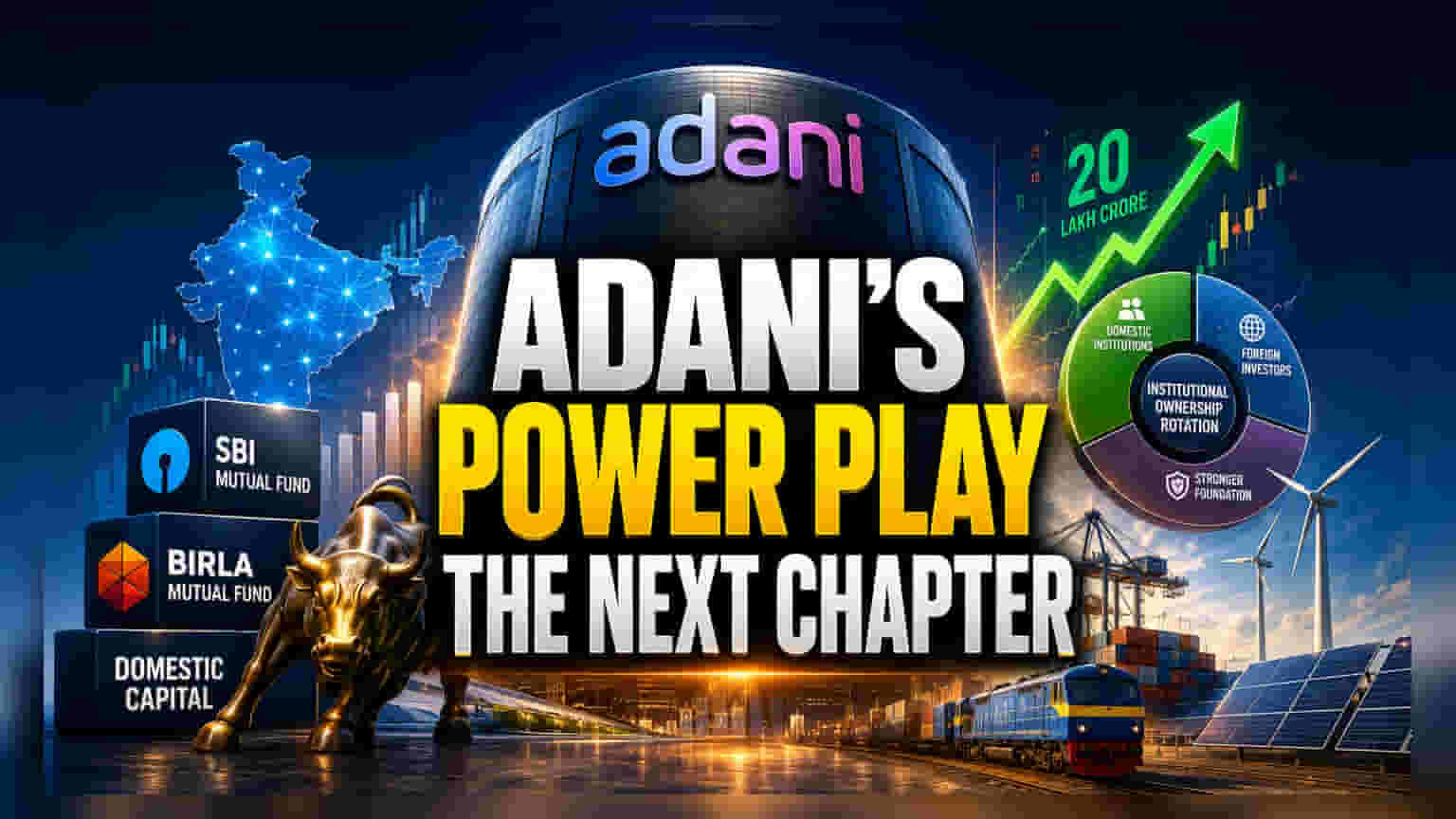


The Institutional Ownership Rotation
The recent surge in block deal activity reflects more than mere market participation; it signals a fundamental shift in the investor base. While international funds like GQG Partners provided liquidity during the post-short-seller recovery phase, the current influx of domestic capital—spearheaded by SBI Mutual Fund and Birla Mutual Fund—suggests that local institutions are consolidating their grip on the conglomerate’s infrastructure-heavy entities. This transition from foreign private equity-style backing to domestic public fund holdings often serves as a stabilization mechanism for volatile assets, effectively anchoring the valuation floor for Adani Enterprises and Adani Energy Solutions.
Valuation and Market Positioning
Adani Group entities have effectively neutralized the market-cap erosion caused by the 2023 Hindenburg Research incident, with total group market capitalization now hovering near the ₹20 lakh crore mark. Despite the recovery, the price-to-earnings ratios for flagship companies like Adani Enterprises remain elevated compared to broader utility and infrastructure benchmarks, reflecting high investor expectations for future capital expenditure realization. While Bernstein and other institutional research houses have signaled that the worst of the regulatory scrutiny has passed, the persistent premium suggests the market is pricing in accelerated growth rather than just recovery. This valuation divergence remains a point of contention for value-oriented managers who remain underweight in the sector.
The Forensic Bear Case
Beneath the surface of the current share price recovery, structural risks persist. The heavy concentration of debt among key group entities continues to be a concern, particularly as global interest rates remain sensitive. Reliance on domestic institutional capital, while currently providing a buffer against foreign sell-offs, also creates a dependency trap. Should domestic liquidity cycles tighten or retail-driven fund inflows decelerate, these concentrated positions could face significant downward pressure. Furthermore, while the U.S. DOJ and regulatory investigations have quieted, the group’s complex cross-holding structures and related-party transaction history remain long-term governance variables that could be triggered by future compliance audits or changes in domestic regulatory enforcement policy.
Future Outlook
Market participants are shifting focus from historical remediation to the operational execution of the group's green energy and logistics expansion plans. Analysts expect the next phase of valuation movement to be driven by quarterly earnings delivery and the successful commissioning of large-scale infrastructure projects. As the group nears a total recovery of its pre-2023 valuation, the potential for volatility remains elevated, with institutional support levels now serving as the primary barrier against further re-testing of technical lows.