

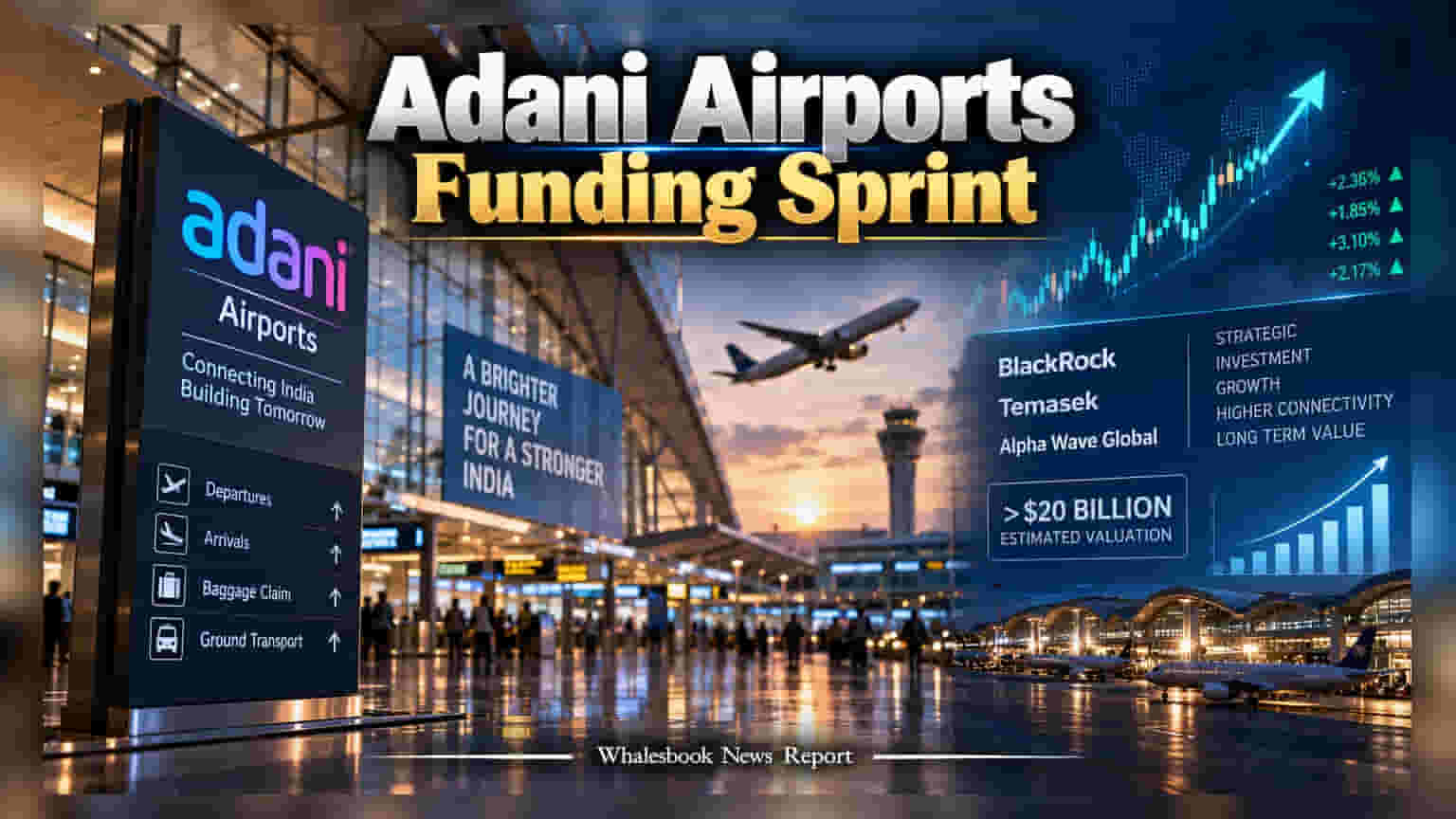
Adani Airport Holdings is in advanced discussions with global investors like BlackRock and Temasek to raise capital at a valuation exceeding $20 billion. This potential infusion aims to fuel the company's aggressive infrastructure expansion and support its future IPO plans. Investors are tracking how this capital will help manage the high costs of aviation development while navigating regulatory hurdles in the sector.
Adani Airport Holdings Ltd (AAHL), the aviation infrastructure arm of the Adani Group, is in advanced discussions to secure a significant capital infusion. Global institutional investors, including BlackRock, Temasek, and Alpha Wave Global, are reported to be evaluating stakes in the business. While negotiations are ongoing and details remain fluid, a successful deal could value the company at over $20 billion. This development highlights strong institutional interest in India’s aviation sector, which is witnessing a steady rise in both passenger traffic and cargo movement.
AAHL, a key subsidiary of Adani Enterprises Ltd, manages eight airports across India and recently operationalized the Navi Mumbai International Airport in late 2025. The business has demonstrated strong growth, reporting an EBITDA of Rs 1,633 crore in the first quarter of fiscal year 2027, marking a 49% increase compared to the previous year. This performance reflects the increasing operational scale and efficiency of the airport network.
For the Adani Group, these funds are essential for its massive infrastructure plans. The airport business requires consistent and heavy spending on construction, technology, and modernization. The group has publicly laid out plans to potentially list or demerge the airport business between 2027 and 2030, a move designed to unlock shareholder value and provide a clear path for institutional investors.
However, investors should consider the challenges inherent in this capital-intensive sector. The massive money spent on expansion creates pressure on cash flow and requires careful balance sheet management. Furthermore, the Indian government regulates the number of airports a single operator can control to maintain competition. These regulatory caps mean that future growth may be limited by policy, rather than just the company's ability to bid or build.
There is also the consideration of valuation premiums. As the company prepares for a potential future IPO, market analysts often debate the 'holding company discount'—a situation where the value of a parent company is sometimes less than the combined value of its individual parts. As the group pursues these investments, the key monitorable for the market will be how efficiently the company manages its debt while executing its expansion projects. Investors will also be tracking regulatory updates regarding new airport tenders and the progress toward the eventual timeline for public listing.