

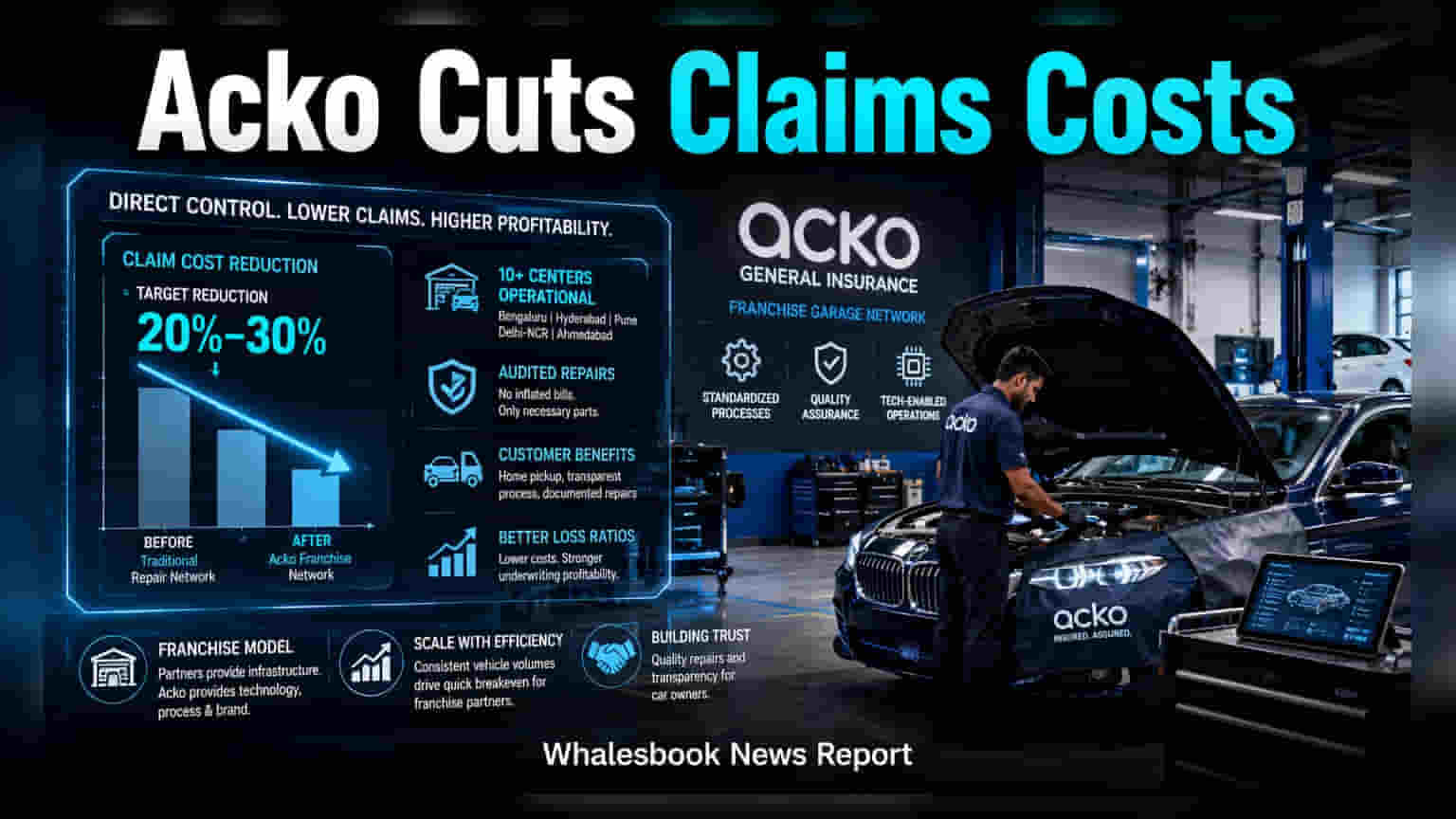
Digital insurer Acko is expanding its franchise garage network to reduce repair claims costs by up to 30%. By controlling the claims process and bypassing dealer networks, the company aims to improve profitability as it prepares for a potential IPO. Investors are monitoring this shift as a key move toward sustainable underwriting margins.
Acko General Insurance is actively expanding its footprint in the physical repair space by scaling its proprietary franchise garage network across major Indian cities. This strategic move aims to reduce repair and claims expenses by 20% to 30% by gaining direct control over the vehicle repair process. As of August 2026, the company has established over 10 operational centers in key regions including Bengaluru, Hyderabad, Pune, Delhi-NCR, and Ahmedabad.
The core objective behind this initiative is to resolve a systemic conflict of interest prevalent in the Indian motor insurance industry. Typically, car dealerships act as the primary distribution channel for insurance policies. Because these same dealerships also control the repair centers, they have a financial incentive to keep repair bills high. By building its own garage network, Acko aims to bypass these dealer-led repair channels, allowing the insurer to audit repairs, reduce inflated billing, and ensure that only necessary parts are replaced. This level of oversight is designed to directly lower the cost of claims, which is a major expense for any general insurer.
To manage this expansion without heavy capital spending, Acko is utilizing a franchise model. In this setup, partners provide the facility and infrastructure, while Acko provides the technology, standardized operating procedures, and branding. Because the company operates as a digital-first insurer, it can direct a consistent volume of vehicles to its franchise workshops, which helps these new locations reach a break-even point relatively quickly. This model also allows the insurer to provide customers with more transparency, such as home-pickup services and documented proof of repairs, which is intended to build trust with car owners whose vehicles are out of warranty.
For investors and market observers, this move is significant because it highlights the company's focus on profitability ahead of its potential public listing. Acko, which is currently a private company, has been working toward a potential IPO. In the general insurance sector, the ability to control claims costs—often referred to as the loss ratio—is the single most important factor in determining underwriting profitability. By moving from a purely digital model to one with physical franchise presence, the company is attempting to prove it can control its costs more effectively than traditional insurers who rely heavily on third-party repair networks.
However, this strategy comes with its own set of challenges. Transitioning from a purely digital operation to managing a physical network involves execution risk. The company must ensure that service quality remains consistent across all locations to avoid damaging its brand reputation. Scaling this network while maintaining high customer satisfaction will be a key monitorable. Additionally, as the company prepares for a future market entry, it will need to demonstrate that this strategy creates durable margins rather than just short-term efficiency. Market participants will likely track the company's ability to scale this network, the impact on its overall loss ratios in upcoming financial reports, and any further updates regarding its regulatory filings for an IPO.