

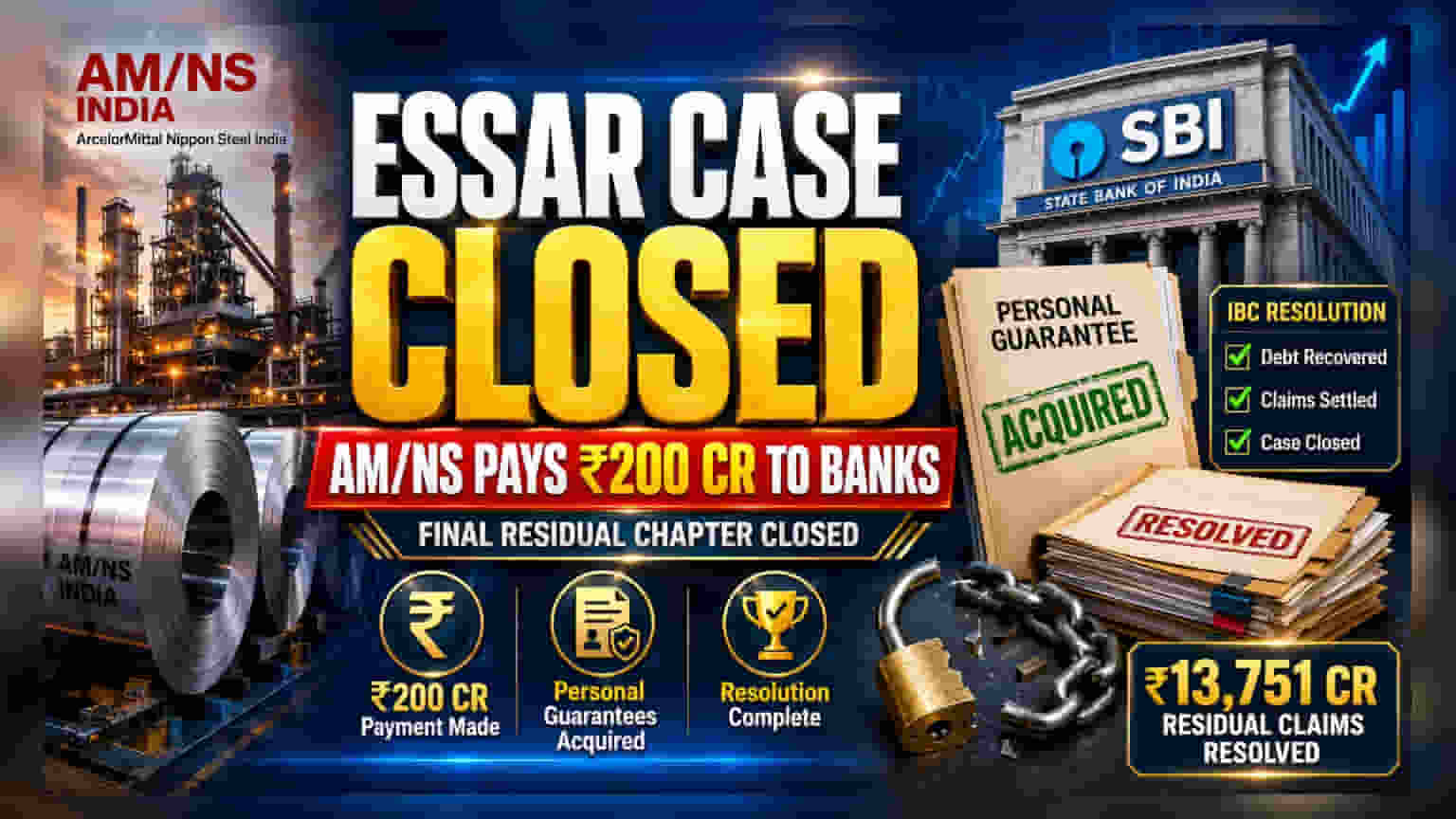
ArcelorMittal Nippon Steel India (AM/NS) has paid Rs 200 crore to lenders led by State Bank of India to acquire the personal guarantees of Essar Group promoters. This transaction concludes the final chapter of the long-standing 2019 Essar Steel insolvency process. For bank investors, this marks the end of a legacy bad loan case that had been pending resolution for years.
What Happened
ArcelorMittal Nippon Steel India (AM/NS) has completed a payment of Rs 200 crore to banks led by the State Bank of India (SBI). This payment allows AM/NS to acquire the personal guarantees previously held by Essar Group promoters, Prashant and Ravi Ruia. These guarantees were the final remaining part of the Essar Steel bankruptcy resolution, which originally took place in 2019. By taking over these claims, AM/NS has effectively cleared the last hurdle, allowing the banks to move on from this specific legacy case.
The Scale of the Resolution
To understand why this payment matters, it is necessary to look at the numbers. The residual liabilities linked to these guarantees amounted to Rs 13,751 crore. While the Rs 200 crore payment is a fraction of the total claim value, it represents a final recovery on a part of the debt that had been written off or classified as difficult to recover. Lenders had already recovered nearly 90% of the original Rs 49,000 crore debt owed by Essar Steel during the initial insolvency process in 2019. This new transaction deals with the remaining 'residual' claims that were stuck in legal processes for years.
Why It Matters for Bank Investors
For investors in Indian banks, particularly those who were part of the consortium led by SBI, this development is a positive, albeit small, step toward cleaning up old balance sheets. The Essar Steel case was one of the largest and most complex examples under the Insolvency and Bankruptcy Code (IBC). When large bankruptcy cases are fully closed, it helps banks improve their asset quality and reduces the time and resources spent on legal recovery efforts. While the amount recovered here is small relative to the initial losses, the symbolic closure of such a high-profile case is often viewed as a step forward for the banking sector's recovery framework.
The Changing Rules of Personal Guarantees
The ability of banks to pursue these personal guarantees is a result of legal changes that took place in late 2019. At that time, the government brought personal guarantors under the purview of bankruptcy law. This empowered lenders to initiate separate recovery proceedings against promoters who had provided personal guarantees for corporate loans. This case serves as a practical example of how these rules have been applied to extract residual value from a resolved insolvency case years later.
What To Track Next
Investors may keep an eye on how banks handle similar legacy bad loan portfolios. The key monitorable is not just the recovery amount but the speed at which banks can resolve or sell off these residual claims to move them off their books. Additionally, the broader impact on the banking sector will be seen in how such resolutions help in improving the overall return on assets and the efficiency of the bankruptcy resolution system in India.