

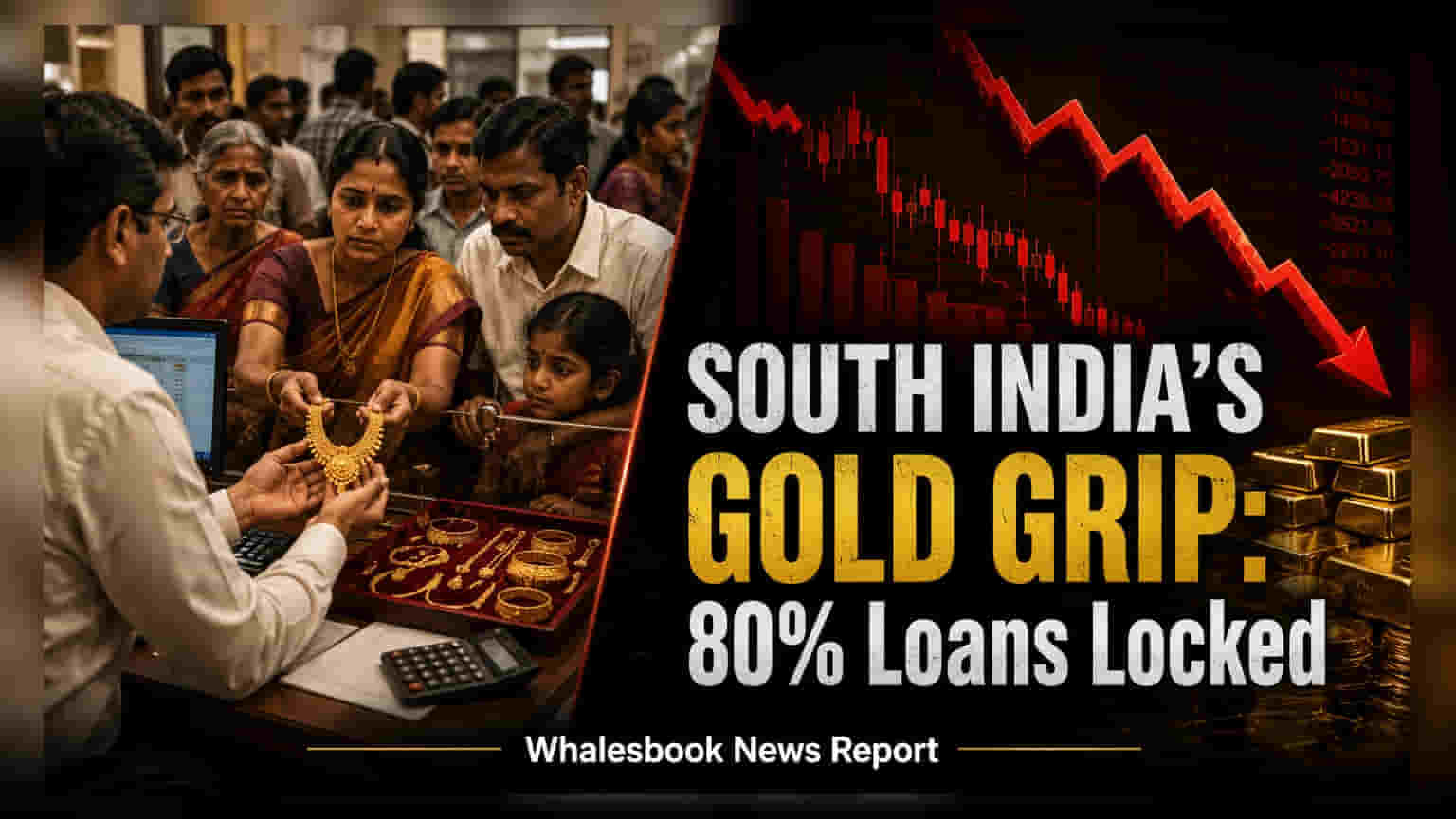
Five southern states lead India’s gold loan market, accounting for 80% of public sector bank outstandings. As total loans reach over ₹11.31 lakh crore, asset quality has significantly improved, with gross bad loans dropping to 0.12%. This growth is supported by rising gold prices, though increased competition between banks and finance companies remains a key factor to track.
Five southern states—Tamil Nadu, Andhra Pradesh, Karnataka, Telangana, and Kerala—collectively account for 80% of the total gold loan outstandings from public sector banks (PSBs) in India. As of March 31, 2026, the total gold loan portfolio for these banks reached over ₹11.31 lakh crore, reflecting the region's deep-rooted preference for using gold as a financial asset. Tamil Nadu leads the country in this segment, contributing over ₹4.12 lakh crore to the total.
The dominance of these states is largely attributed to high household gold holdings and a well-established infrastructure for gold-backed lending. While public sector banks hold a substantial portion of the market, the non-banking financial company (NBFC) sector is also growing rapidly. As of June 2026, the gold loan assets under management for NBFCs reached ₹3.41 lakh crore, marking a 69% year-on-year growth. This expansion highlights a thriving market where both banks and specialized finance companies are competing for borrowers.
Asset quality across the sector has improved notably, as lenders have tightened their loan-to-value ratios to protect against price swings. The Gross Non-Performing Asset (GNPA) ratio for scheduled commercial banks in the gold loan segment fell to 0.12% by March 31, 2026, down from 0.19% a year earlier. Similarly, NBFCs have seen their GNPA ratios decline significantly, indicating that despite the rapid growth in lending, the quality of these loans has remained strong.
However, the market faces specific risks that lenders and investors are monitoring. The intensity of competition between banks and NBFCs is putting pressure on the yields and profit margins of these loans. Furthermore, because these loans are backed by gold, the sector is highly sensitive to fluctuations in global gold prices, which determine the collateral value and the safety buffer for lenders. Any sudden drop in gold prices could force lenders to tighten lending terms further.
Looking ahead, the organized gold loan market is expected to continue its upward trend. Rating agency ICRA projects that organized gold loans in India will exceed ₹30 lakh crore by March 2028. The industry’s future performance will likely depend on how well lenders manage the balance between growth and the risks posed by price volatility and evolving regulatory oversight.