 Whalesbook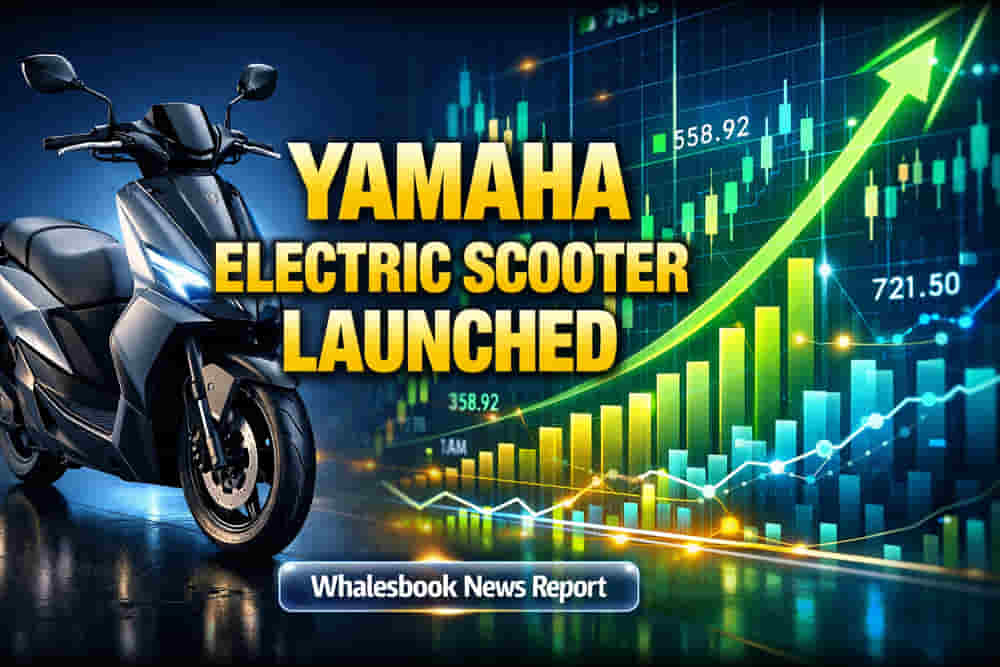
The Premium Price Dilemma
India Yamaha Motor (IYM) has officially entered the electric vehicle segment with the launch of its EC-06 scooter, priced at ₹1.67 lakh before taxes in Delhi. This positioning places the EC-06 at the higher end of India's increasingly competitive premium electric scooter market. Rivals such as Ather Energy's 450X are typically priced around ₹1.40-1.50 lakh, while Ola Electric's S1 Pro offers a claimed 180-km range for approximately ₹1.40 lakh, and TVS Motor's iQube models range from ₹1.00 lakh to ₹1.45 lakh. The EC-06's 169-km certified range is competitive, but its substantial price premium over established players will challenge adoption in a segment highly sensitive to value. The scooter is available in a bluish white color through Yamaha's premium Blue Square showrooms in select cities.
Strategic Alliances and Local Play
The EC-06 is manufactured by River at its Bengaluru facility, a key element of IYM's strategic collaboration with the domestic EV maker. This partnership combines Yamaha's extensive global two-wheeler expertise with River's Indian EV manufacturing capabilities, aligning with the 'Make in India' initiative. This approach allows Yamaha to navigate local production demands and potentially optimize costs. The launch is framed as a contribution to the Government of India’s 'National Mission on Transformative Mobility' and the nation's goal of achieving Net-Zero emissions by 2070. Initiatives like the Production Linked Incentive (PLI) scheme for automotive and battery manufacturing are expected to bolster the growth of such local EV ecosystems, which Yamaha aims to capitalize on.
Performance Metrics and Market Fit
Engineered for urban commuters seeking style and functionality, the EC-06 is powered by an Interior Permanent Magnet Synchronous Motor (IPMSM) coupled with a 4-kWh fixed battery. It delivers a peak power of 6.7 kW and 26 Nm of torque, enabling a top speed of 79 km/hour. The battery, backed by a three-year or 30,000-km warranty, requires approximately eight hours for a full charge using standard home plug-in compatibility. While these specifications meet modern EV standards, the performance metrics are broadly in line with its premium competitors, meaning the differentiation will likely stem from brand reputation and perceived quality rather than groundbreaking technical advantages. Yamaha's chairman, Hajime Aota, emphasized the EC-06 as a step toward sustainable urban mobility, timed to complement India's evolving EV infrastructure and policy support.
Future Trajectory and Analyst Views
Analysts anticipate continued strong growth in India's electric two-wheeler market, driven by government incentives and increasing consumer awareness. However, the EC-06 faces an uphill battle against deeply entrenched competitors and the inherent price sensitivity of the Indian consumer. While Yamaha's brand legacy is a significant asset, its ability to penetrate the market will depend on its marketing strategy and whether the EC-06's perceived quality and performance justify its premium pricing. Expansion of charging infrastructure remains a critical factor for mass adoption of EVs, especially for longer commutes, and will continue to shape the competitive dynamics for all players, including Yamaha's new entrant.