

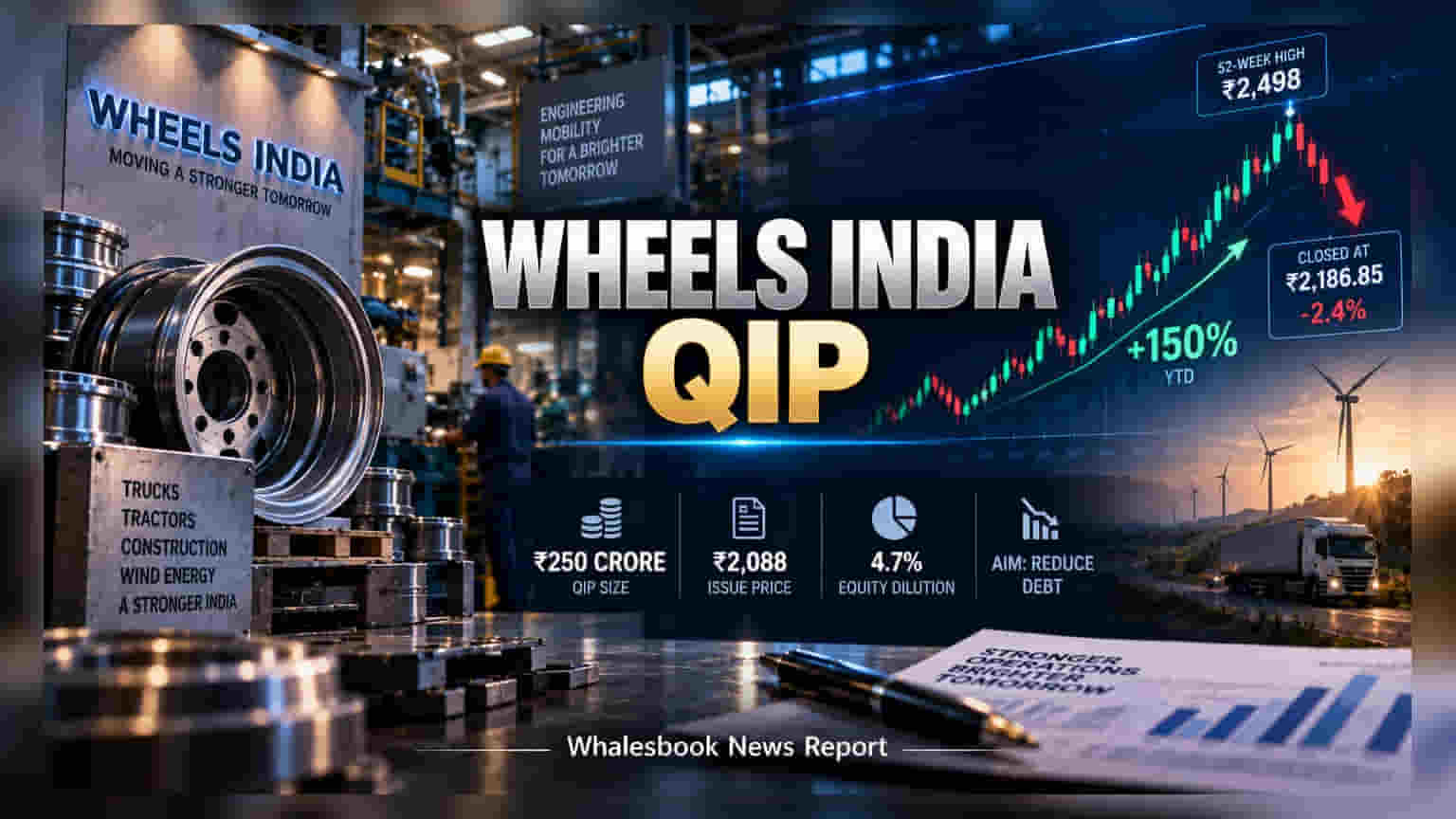
Wheels India has launched a Rs 250 crore Qualified Institutional Placement (QIP) at Rs 2,088 per share. The company plans to use the funds to lower its debt, resulting in an equity dilution of about 4.7%. Investors are now weighing the short-term impact of this dilution against the potential for a stronger balance sheet and improved financial health.
Wheels India has officially launched a Qualified Institutional Placement (QIP) to raise Rs 250 crore by issuing shares at Rs 2,088 each. This move aims to help the company lower its existing debt load. A QIP allows a company to raise capital from large institutional investors, such as mutual funds and insurance companies, without going through the lengthy process of a public follow-on offering. While the move is intended to strengthen the company’s balance sheet, it leads to an equity dilution of approximately 4.7%. Dilution means that existing shareholders now own a slightly smaller percentage of the company, which can sometimes cause the stock price to react negatively in the short term.
On the Bombay Stock Exchange, the stock closed at Rs 2,186.85 on Thursday, marking a 2.4% decline as the market digested the announcement. Despite this recent dip, the stock has experienced significant growth over the calendar year, rising over 150% from an opening price of Rs 864.85 in January to a 52-week peak of Rs 2,498. The company currently trades at a price-to-earnings (P/E) multiple of 32.53, suggesting that investors have high expectations for its future earnings growth.
Wheels India operates in a diverse manufacturing space, supplying components not just for commercial trucks and agricultural tractors, but also for the construction and wind energy sectors. The company maintains manufacturing facilities across several Indian states, including Tamil Nadu, Maharashtra, Uttar Pradesh, and Uttarakhand. This geographic and product diversity helps insulate it from downturns in any single segment, though the auto component industry remains sensitive to overall economic cycles and vehicle demand.
The key advantage of reducing debt is the potential for lower interest payments, which can free up cash for other operational needs or future investments. Investors may monitor whether this move helps the company improve its profit margins in upcoming quarters. The success and impact of this fund-raising will be measured by how effectively the company uses the capital to manage its borrowings and support its existing manufacturing footprint. The next important step for shareholders will be to look for management updates regarding the actual debt repayment and any potential changes in the company’s interest expense in the next quarterly financial reports.