

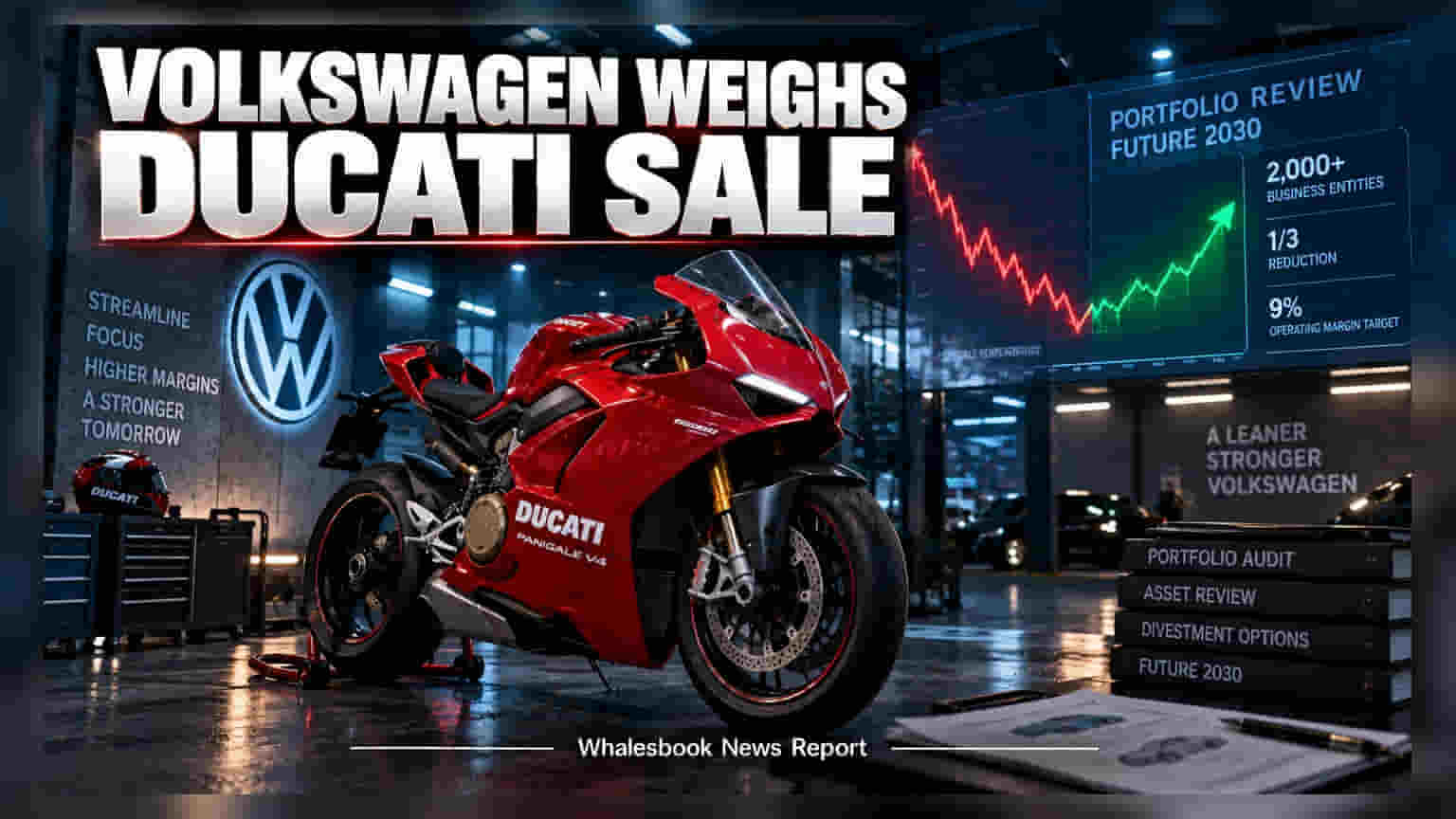
Volkswagen is evaluating the potential sale of its motorcycle brand, Ducati, as part of a major cost-cutting plan. The group aims for a 9% operating margin by 2030 by reducing its business holdings by one-third. Analysts estimate the premium motorcycle brand, which reported €925 million in revenue last year, could be valued at approximately €1.25 billion.
Volkswagen Group is conducting a wide-ranging audit of its massive portfolio, which includes over 2,000 business entities, with the high-performance motorcycle brand Ducati now under consideration for potential divestment. Audi CEO Gernot Döllner confirmed that the group is scrutinizing various assets to streamline operations, marking a shift in its corporate strategy.
This review is part of a broader corporate plan titled "Future 2030," which aims to boost the group's operating margin to 9%. To reach this goal, the supervisory board has approved a strategy to reduce the company's total business footprint by one-third. By trimming non-core or lower-margin assets, management hopes to improve the organization's focus and increase its competitiveness in the global automotive sector.
Ducati is a prestige asset for the group, known for its success in MotoGP racing, but its financial performance is currently being measured against these new, stricter efficiency targets. The brand reported €925 million in revenue and €52 million in operating profit for the previous year. Market analysts at Bloomberg Intelligence estimate that if the company proceeds with a sale, the brand could command a valuation near €1.25 billion.
However, a potential divestment faces significant hurdles. Past attempts to sell the motorcycle maker, most notably in 2017, were unsuccessful largely due to strong opposition from German labor unions. Any new move to offload the asset will likely face similar challenges, as labor representatives often resist the disposal of established, high-profile divisions. Furthermore, the broader restructuring plan carries execution risks, as it involves deep cost-cutting measures and potential workforce changes across the group.
Beyond the potential Ducati exit, Audi is also addressing other operational weaknesses. Management has signaled an urgent need to localize vehicle production in the United States to better compete with rivals like BMW and Mercedes-Benz. The current lack of US-based manufacturing is viewed as a competitive disadvantage, and the company is exploring options to utilize existing facilities to solve this issue.
Investors will track the board's upcoming decisions regarding the portfolio overhaul. Key monitorables include the final status of the Ducati review, progress on the 9% margin target, and any concrete steps taken toward localizing production in the US market.