

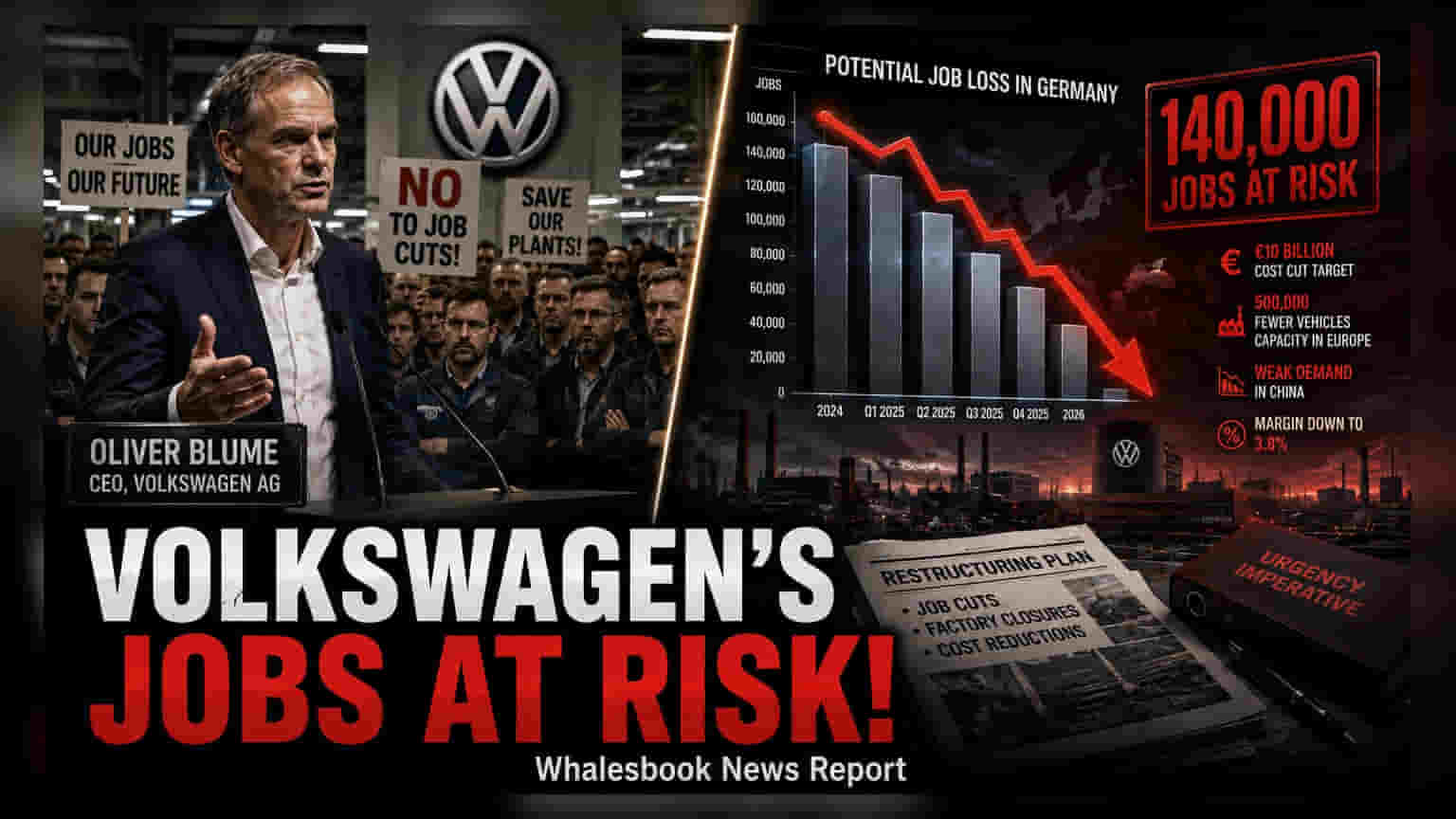
Volkswagen is bracing for major restructuring as union leaders warn that planned workforce reductions and potential factory closures could impact 140,000 employees. The automaker faces severe financial pressure, with first-half 2026 operating profits falling 12% and margins shrinking to 3.8%.
Volkswagen AG is currently navigating a period of intense internal conflict as management prepares to present aggressive restructuring plans to its workforce. Labor representatives have issued a stark warning that the proposed measures, which include both direct job cuts and the risk of factory closures, could eventually affect up to 140,000 positions. CEO Oliver Blume is scheduled to hold extraordinary staff assemblies at the Wolfsburg headquarters today to address these proposals, with further meetings planned for other major German plants.
Financial Pressure and Declining Margins
The push for restructuring comes after a difficult financial period for the German automotive giant. In the first half of 2026, the company reported an operating profit of €5.9 billion, a 12% decline compared to the previous year. The company’s operating margin—the percentage of revenue left after covering core business costs—has slipped to 3.8%, a figure that falls short of its strategic goals. As a result of these headwinds, which include stiff competition in the electric vehicle market, rising geopolitical tensions, and declining sales in China, Volkswagen has officially withdrawn its revenue growth forecast for the 2026 fiscal year.
The Challenge of High Costs
At the heart of the management’s restructuring effort is a significant operational issue: Volkswagen currently faces a roughly 20% cost disadvantage compared to many of its global competitors. Executives are now looking to eliminate approximately €10 billion in overhead expenses. This plan reportedly includes a reduction in annual production capacity in Europe by 500,000 vehicles, as well as a reduction in the number of managerial layers and vehicle model variants to streamline operations.
Governance and Political Hurdles
For investors monitoring the company, the situation is complicated by Volkswagen’s unique governance structure. CEO Oliver Blume’s ability to execute these changes depends heavily on gaining support from powerful labor unions and the state of Lower Saxony, which holds a veto over critical decisions. Furthermore, the Porsche-Piëch family, which controls the holding company Porsche SE, has been vocal about the need for faster action to reverse the decline in profitability. This creates a difficult environment where management must balance the urgent need for cost-cutting against the risk of industrial action from a workforce that feels burdened by past strategic errors in software and vehicle development.
What to Monitor Next
Volkswagen is not listed on the Indian stock exchanges, but its global struggles provide a significant case study for the automotive sector. The immediate concern for stakeholders is the outcome of the ongoing discussions between management and employee representatives. Investors should look for official announcements regarding the specific timeline for production capacity reductions, any confirmed plans for factory closures, and whether management can successfully navigate the resistance from labor unions without causing major disruptions to operations.