

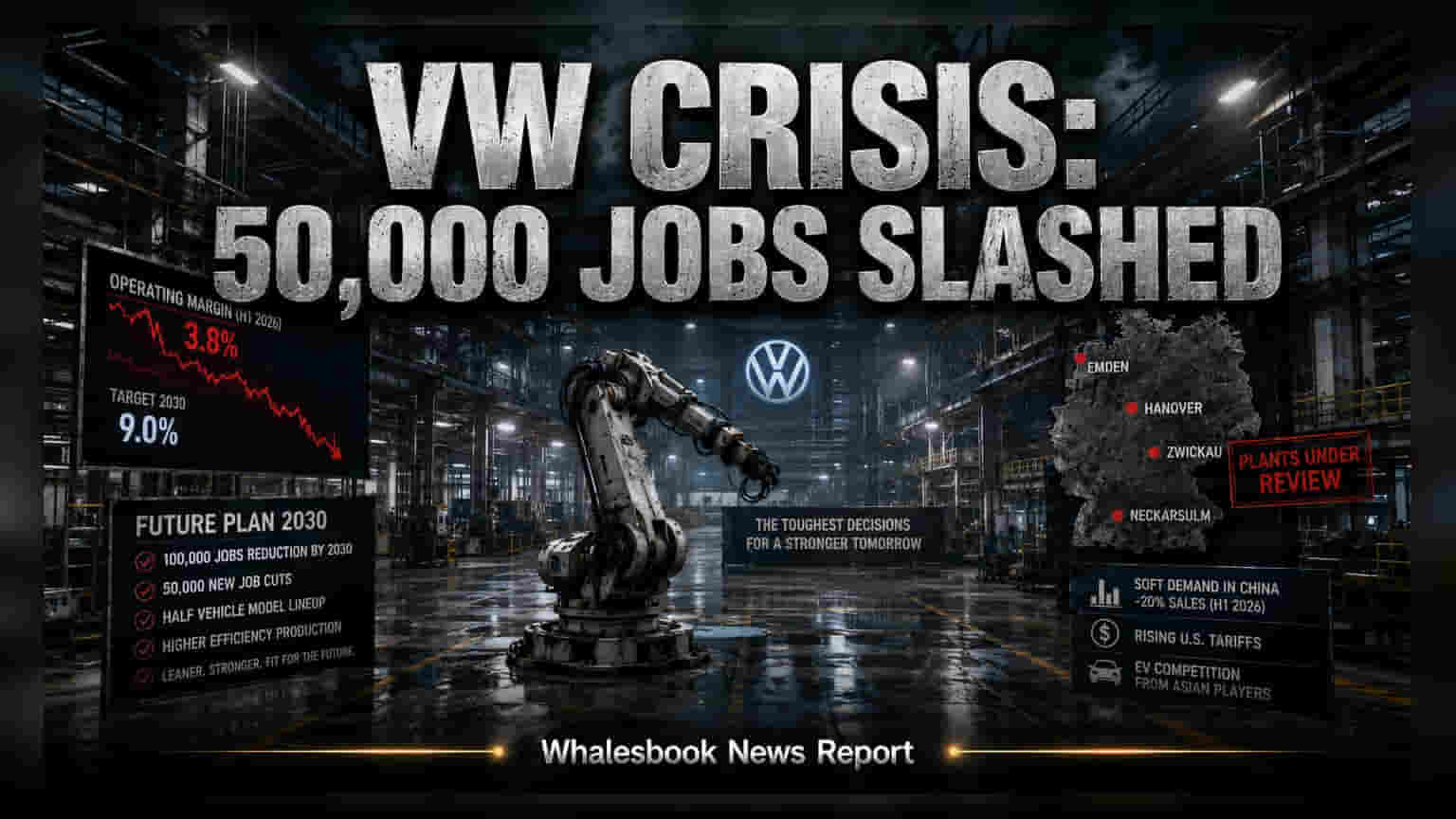
Volkswagen has launched its 'Future Plan 2030' to cut 100,000 jobs by 2030, including 50,000 new reductions, as it faces falling sales in China and tough global competition. The automaker aims to raise its operating margin from 3.8% to 9% through this massive restructuring. Investors are tracking how the company navigates potential labor resistance and the future of four key German manufacturing plants.
The supervisory board of Volkswagen has unanimously approved its 'Future Plan 2030', an aggressive restructuring initiative designed to stabilize the automaker's finances in an increasingly difficult global market. The plan mandates a total reduction of 100,000 positions by 2030, a figure that includes 50,000 newly announced job cuts alongside previously scheduled reductions. This overhaul represents the most significant workforce downsizing in the company's 89-year history.
Financial performance has been a central driver for this decision. Volkswagen reported an operating margin of just 3.8% during the first half of 2026. Management has set an ambitious target to reach a 9% operating margin by 2030. To achieve this, the company intends to streamline its operations by halving its vehicle model lineup and focusing on higher-efficiency production methods.
The operational impact of this plan is significant, particularly in Germany. Volkswagen has identified four manufacturing facilities—Emden, Zwickau, Hanover, and Neckarsulm—that currently lack clear production targets beyond the early 2030s. The company is actively scrutinizing the viability of these plants, which faces potential closures or major retooling as part of the effort to remove production overcapacity.
External market pressures have forced this shift in strategy. Volkswagen has struggled with softening demand in China, where sales declined by 20% in the first half of 2026. Additionally, the company is grappling with rising import tariffs in the United States and intense competition from Asian manufacturers that have gained market share in the electric vehicle segment. These factors have combined to squeeze profitability and necessitate a leaner corporate structure.
Execution of this plan carries substantial risks. The restructuring requires navigating complex negotiations with labor unions and political stakeholders, including the state of Lower Saxony, which holds a significant interest in the company. Any delays or disputes regarding workforce reductions could lead to operational disruptions. Furthermore, the company’s credit rating outlook will depend on its ability to meet the 9% margin target and execute these cost-cutting measures without damaging its long-term production capabilities.
Investors are now looking ahead to the next series of updates, specifically regarding union agreements and the confirmed future production allocations for the German manufacturing plants. Management’s ability to balance these difficult structural changes while maintaining market share in key regions like China will be a primary focus in upcoming quarterly earnings reports.