

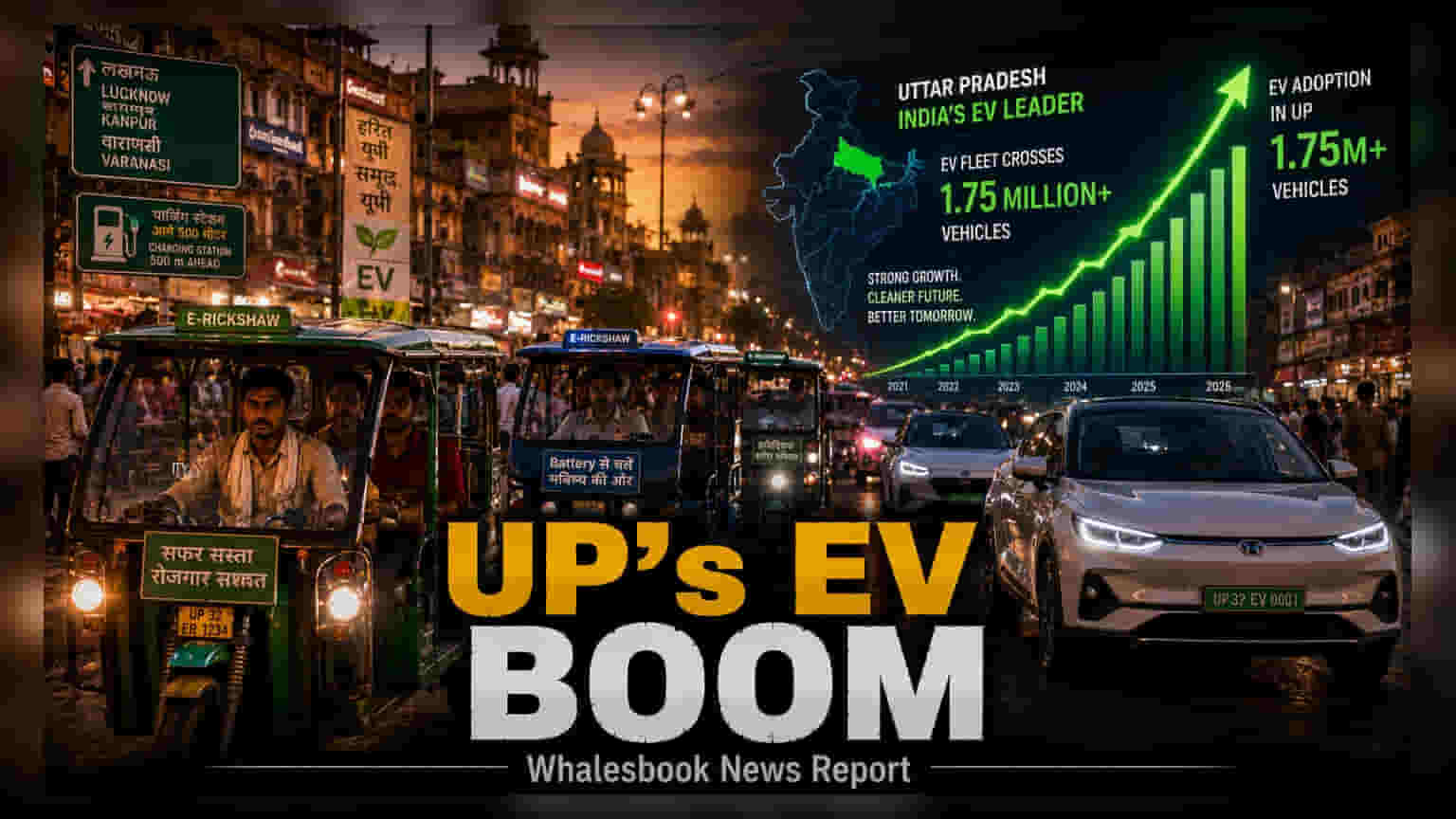
Uttar Pradesh has emerged as the largest electric vehicle hub in India, with over 1.75 million units primarily driven by mass adoption of e-rickshaws. While these vehicles support local employment, the state is now focusing on formalizing the sector with the 2026 Aggregator Rules. Investors are monitoring how these regulatory changes, alongside infrastructure gaps and financing risks, will shape the future of this rapidly growing segment.
Uttar Pradesh has established itself as a leading hub for electric vehicles (EVs) in India, with a fleet exceeding 1.75 million vehicles. This growth is not fueled by personal electric cars or premium two-wheelers, but by the mass adoption of e-rickshaws. These vehicles have become the backbone of last-mile connectivity in the state, offering an affordable transport solution in tier-2 and tier-3 cities while providing a vital source of self-employment for thousands of low-income earners.
While the sheer volume of EVs is high, the sector faces significant operational and structural challenges. The rapid proliferation of e-rickshaws has led to increased traffic congestion in major metropolitan areas like Lucknow and Kanpur. Furthermore, the industry has historically operated with minimal oversight, creating a fragmented market where safety standards, route planning, and parking management have often been overlooked.
New Regulatory Framework
To bring structure to this unorganized sector, the state government implemented the 'Uttar Pradesh Motor Vehicles (Aggregator and Delivery Service Provider) Rules, 2026' in May 2026. This regulation aims to improve safety, ensure better accountability, and provide a framework for fleet operators and delivery service providers. By mandating stricter compliance, the government is attempting to move the industry toward a more formal model, which may impact how smaller fleet owners operate in the near term.
Operational and Financial Risks
Beyond regulation, the sector faces two primary hurdles: infrastructure and finance. The lack of standardized, widespread charging infrastructure remains a primary bottleneck for sustainable scaling. Many operators currently rely on informal charging arrangements, which can be inefficient and inconsistent.
From a financial perspective, the sector is heavily reliant on informal financing channels. Many drivers often secure vehicles through loans with high interest rates, which creates financial vulnerability. This reliance on non-institutional credit poses a risk to the long-term economic stability of fleet owners and could lead to debt stress if the market sees a slowdown or if operating costs, such as electricity prices, rise significantly.
Future Monitorables
The next phase for the Uttar Pradesh EV market will be defined by how effectively these new aggregator rules are enforced and whether the state can bridge the charging infrastructure gap. While the growth in e-rickshaws has successfully served a social need for affordable transit and jobs, the transition to a more regulated, efficient, and institutionally-backed market remains the key monitorable. Stakeholders will also track whether the government’s push for public transport electrification, such as the deployment of electric buses, can complement the existing e-rickshaw network without creating further traffic bottlenecks.