

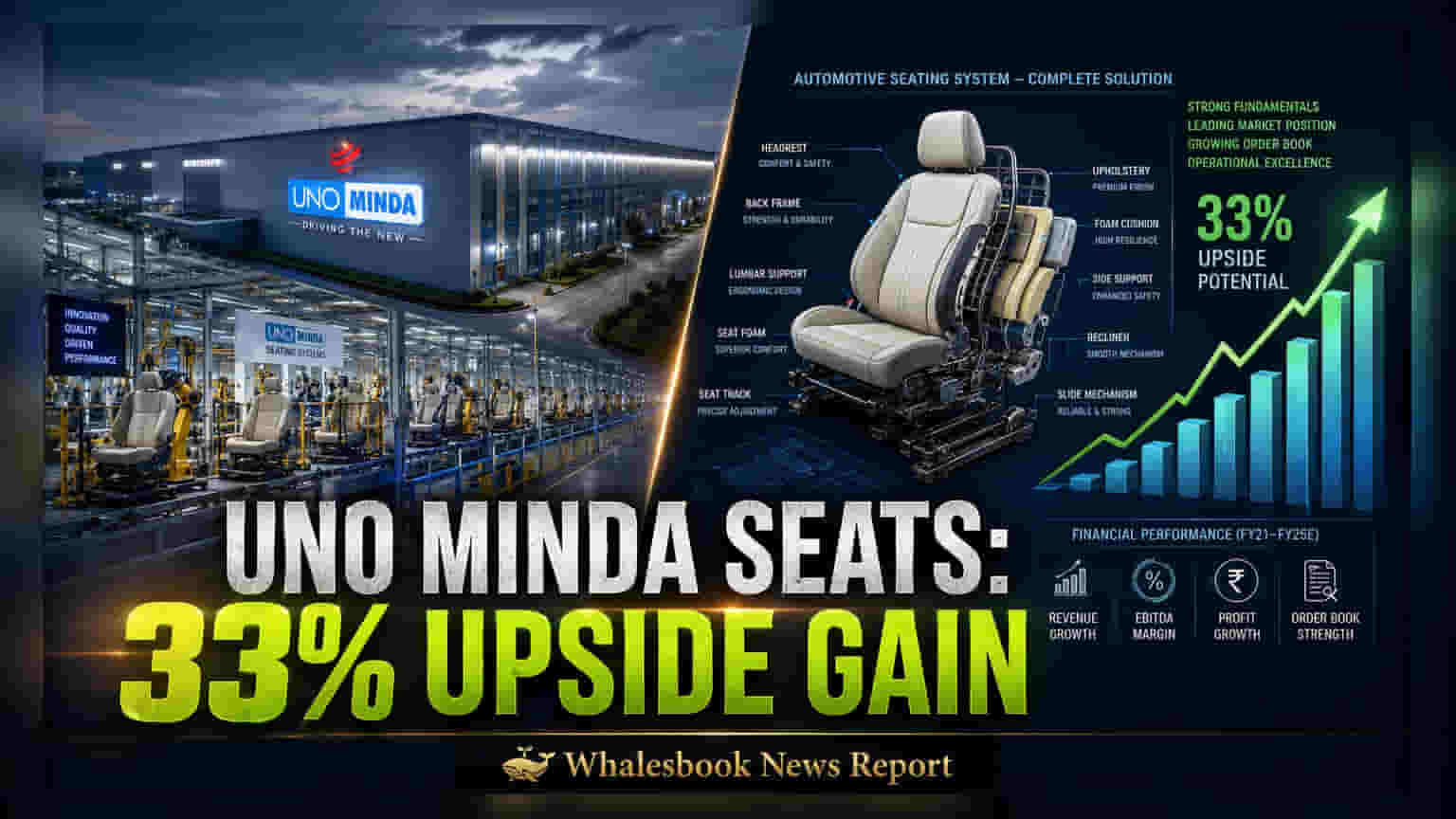
Uno Minda is setting up a new factory in Chhatrapati Sambhajinagar to manufacture 4-wheeler seating systems. This expansion aims to increase the company's product value per vehicle by entering a higher-end automotive component segment with a new joint venture project.
Uno Minda has announced a capital spending plan of ₹320 crore to build a new manufacturing plant in Chhatrapati Sambhajinagar, Maharashtra. The facility will focus on producing complete seating systems for 4-wheeler passenger vehicles, marking a strategic shift for the company. Currently, the company’s seating business is mostly limited to two-wheelers and commercial vehicles, which accounts for about 7% of its total revenue. By moving into passenger vehicles, the company is attempting to increase the value of parts it supplies for each car, moving from smaller components to more complex, higher-value seating systems.
Joint Venture and Order Visibility
The expansion is being carried out through the company's joint venture with Tachi-S Seating Private Limited. One of the main points for investors to track is the revenue visibility for this new facility, as the joint venture has already secured an order from a major vehicle manufacturer. This is a crucial factor because it provides some certainty regarding demand before the plant begins operations. The new facility is expected to start production in the final quarter of the 2028 financial year and will have an annual capacity of 240,000 units.
Financial and Strategic Context
Historically, Uno Minda has been involved in the automotive seating space since 2022, primarily producing seat recliners. This new investment represents a move into complete seating systems, which are among the most expensive components in the interior of a passenger vehicle. Analysts expect that this transition could help the company grow its revenue by expanding the range of products it offers to existing and new customers. While the seating division currently contributes a smaller portion of the company’s overall business, this expansion aims to create a larger footprint in the 4-wheeler segment.
Monitoring Execution and Debt
Investors may want to watch how the company manages the funding for this project and the timeline for completion. Large investments in new factories always carry the risk of delays or cost overruns, which can put pressure on profit margins if demand does not match expectations. Additionally, shareholders may observe how the company balances this capital spending with its existing debt levels and cash flow. The success of this venture will depend on the company's ability to maintain high manufacturing quality while scaling up to meet the requirements of large automotive manufacturers. The ultimate impact on profitability will become clearer as the plant nears its commissioning date in FY2028 and begins to contribute to the company's top line.