

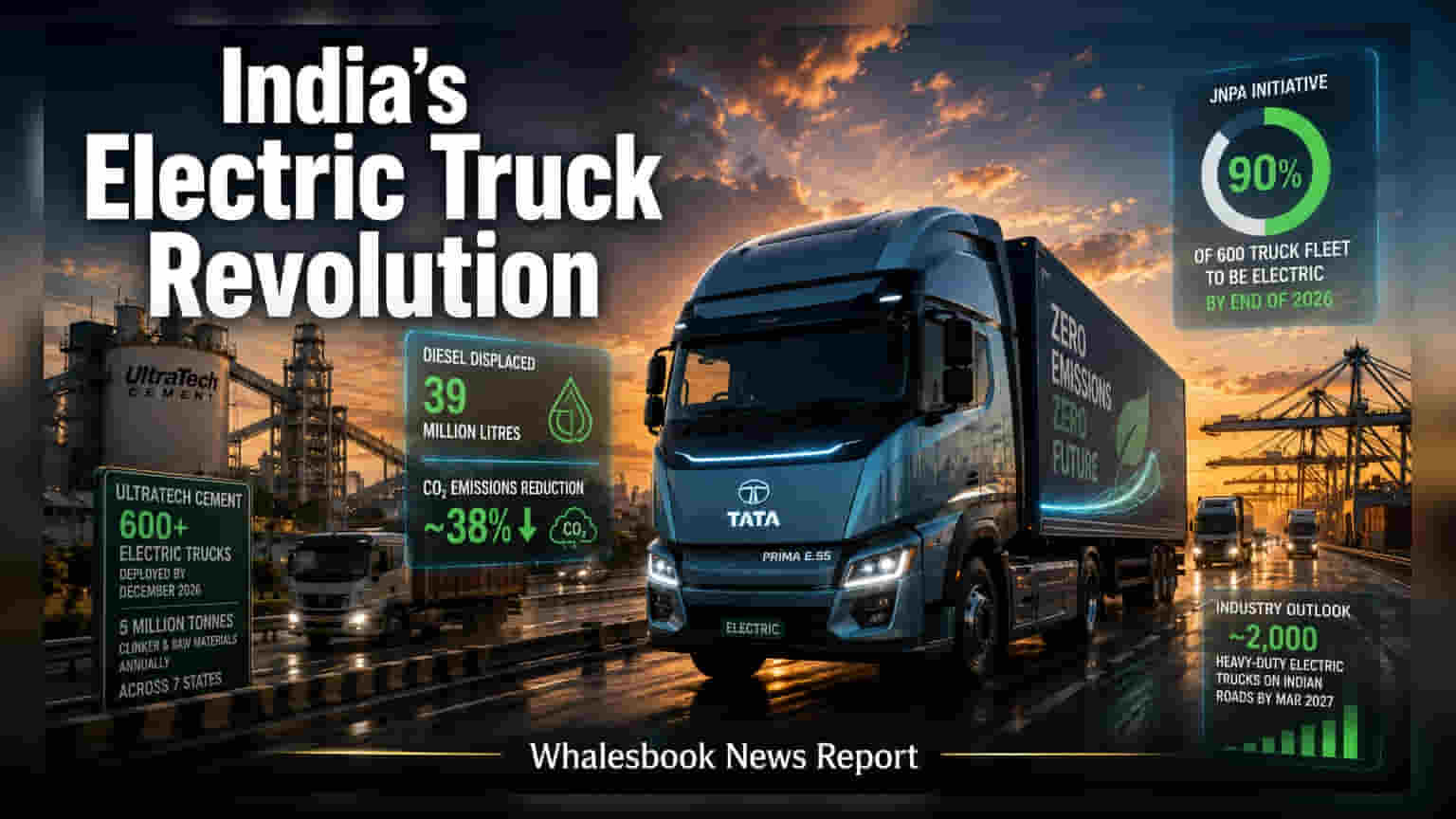
India’s heavy-duty logistics sector is rapidly shifting to electric vehicles to lower emissions. Industrial leaders including UltraTech Cement and the Jawaharlal Nehru Port Authority plan to deploy nearly 2,000 electric trucks by FY27. While this transition supports long-term ESG goals, high upfront costs remain a challenge for fleet operators as they move away from traditional diesel engines.
India is witnessing a major transformation in its heavy-duty logistics sector as industrial giants pivot toward electric trucks to reduce their carbon footprint. The shift is being spearheaded by large players like UltraTech Cement and the Jawaharlal Nehru Port Authority (JNPA), who are setting ambitious targets for the next few years. This movement away from diesel fuel is part of a broader push to meet net-zero targets and improve long-term environmental sustainability in industrial transport.
UltraTech Cement has announced a plan to integrate over 600 heavy-duty electric trucks into its operations by December 2026. These vehicles will be deployed to handle the transport of five million tonnes of clinker and raw materials annually across seven states. The company expects this initiative to displace 39 million litres of diesel and significantly lower CO₂ emissions. At the same time, the Jawaharlal Nehru Port Authority has launched a project to convert 90% of its internal fleet of 600 trucks to electric power by the end of 2026.
This trend is expected to grow, with the broader industry aiming to have nearly 2,000 heavy-duty electric trucks active on Indian roads by March 2027. Leading vehicle manufacturers, including Tata Motors, Ashok Leyland, and Sany, are seeing rising demand for these electric models, which are now being integrated into the supply chains of major cement and infrastructure firms.
Despite the environmental benefits, the transition requires a significant amount of money to be spent upfront. A heavy-duty electric truck typically costs between ₹80 lakh and ₹1.1 crore, which is substantially higher than the ₹30 lakh to ₹60 lakh price tag of a standard diesel-powered truck. To manage this financial pressure, many companies are exploring leasing and subscription-based fleet management models instead of purchasing the vehicles outright.
Operational challenges also remain a key factor for investors to track. The success of this transition depends on the availability of reliable charging infrastructure, consistent battery performance, and the ability of these trucks to maintain full payload capacity over long-haul routes.
Following the announcement regarding the fleet expansion, UltraTech Cement shares saw a decline of approximately 1.8% to 1.9% on September 2, 2026, amid broader market volatility. Going forward, investors may track how these companies manage the cost of these electric fleets and whether the operational savings from lower fuel and maintenance costs can effectively offset the high initial capital spending. The timeline for infrastructure development and the pace of new truck deployment will be important monitorables for the sector.