

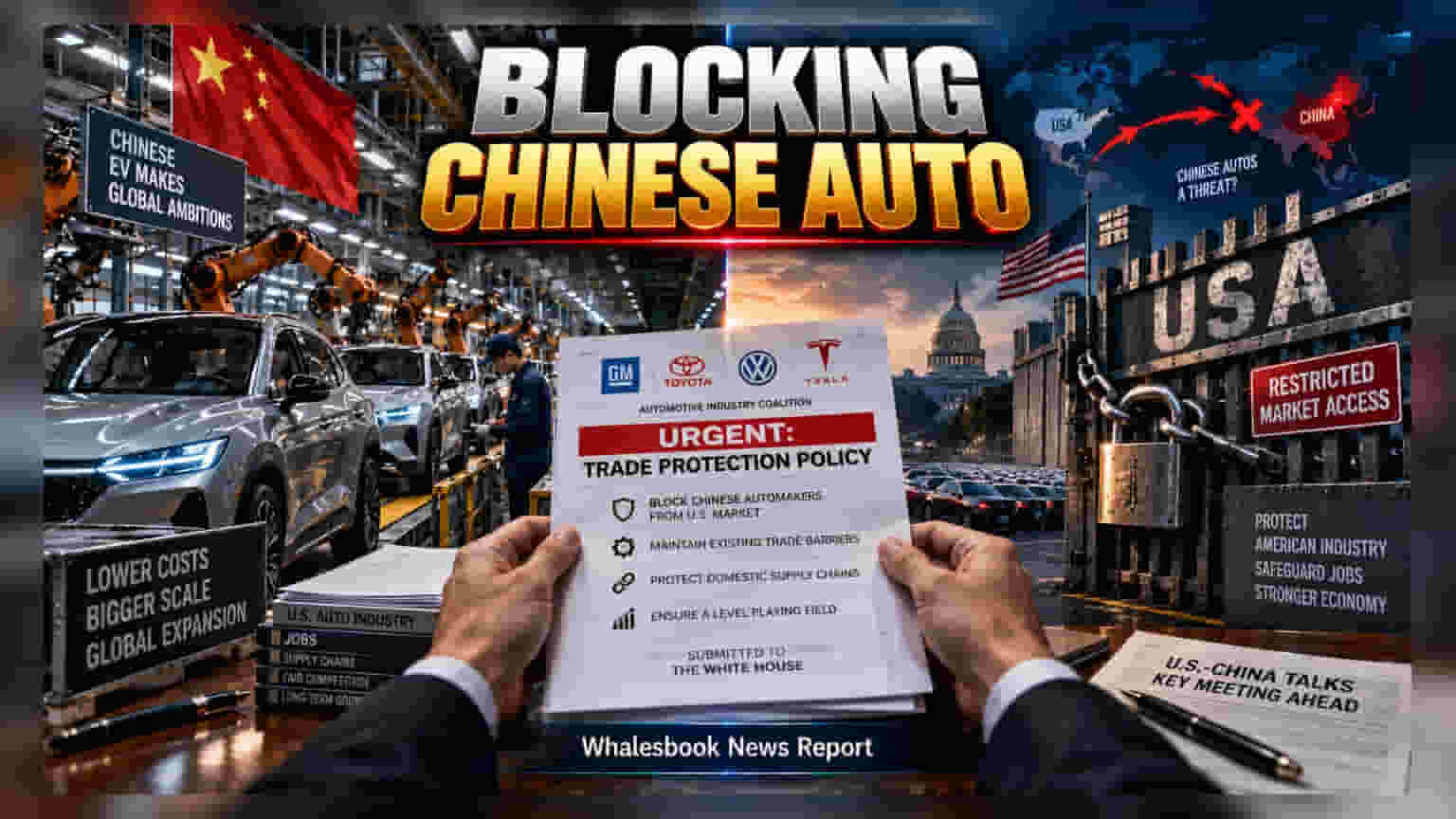
A coalition of major automakers, including Tesla, GM, Toyota, and Volkswagen, has petitioned President Donald Trump to maintain strict trade barriers against Chinese manufacturers. This move comes ahead of a crucial summit between the US and China. Investors tracking global auto stocks or auto component suppliers should monitor this, as any change in US trade policy could alter global competition, supply chains, and EV pricing power.
Major global automotive groups, including General Motors, Toyota, Volkswagen, and Tesla, have formally asked the US government to block Chinese vehicle manufacturers from entering the American market. This petition, delivered to the White House, seeks to maintain existing trade barriers and protect domestic supply chains. The move directly challenges recent comments by President Donald Trump, who had suggested he might be open to Chinese firms building factories on US soil.
The timing of this appeal is critical, as it coincides with preparations for a high-stakes meeting between President Trump and Chinese President Xi Jinping scheduled for next week. The industry coalition is concerned that allowing Chinese automakers to operate in the US could disrupt the current market balance.
For investors, the primary concern revolves around pricing power and competitive pressure. Chinese electric vehicle manufacturers often operate with significant scale and cost advantages. Established global automakers are worried that an influx of these vehicles could cause market saturation and erode their profit margins. By forcing this issue, the auto industry is effectively trying to influence the outcome of the upcoming bilateral trade discussions.
For Indian investors, this development holds importance beyond just the US market. Many Indian companies, particularly in the auto-component space, are integrated into the global supply chains of these major manufacturers. Any shift in US trade policy that protects domestic manufacturers could change where global automakers source their parts or how they structure their manufacturing. If the US sustains its hardline stance, it might limit the entry of low-cost Chinese vehicles, but it could also lead to retaliatory trade measures that impact the broader global automotive sector.
The automotive industry faces a complex environment where balancing diplomatic trade relations with industrial protectionism is difficult. Investors should monitor the upcoming US-China summit for any announcements regarding trade policy. The final direction taken by the administration will likely influence future capital spending, manufacturing strategies, and profitability trends for global auto manufacturers. Tracking these developments is essential for understanding how the global automotive value chain might evolve in the coming years.