

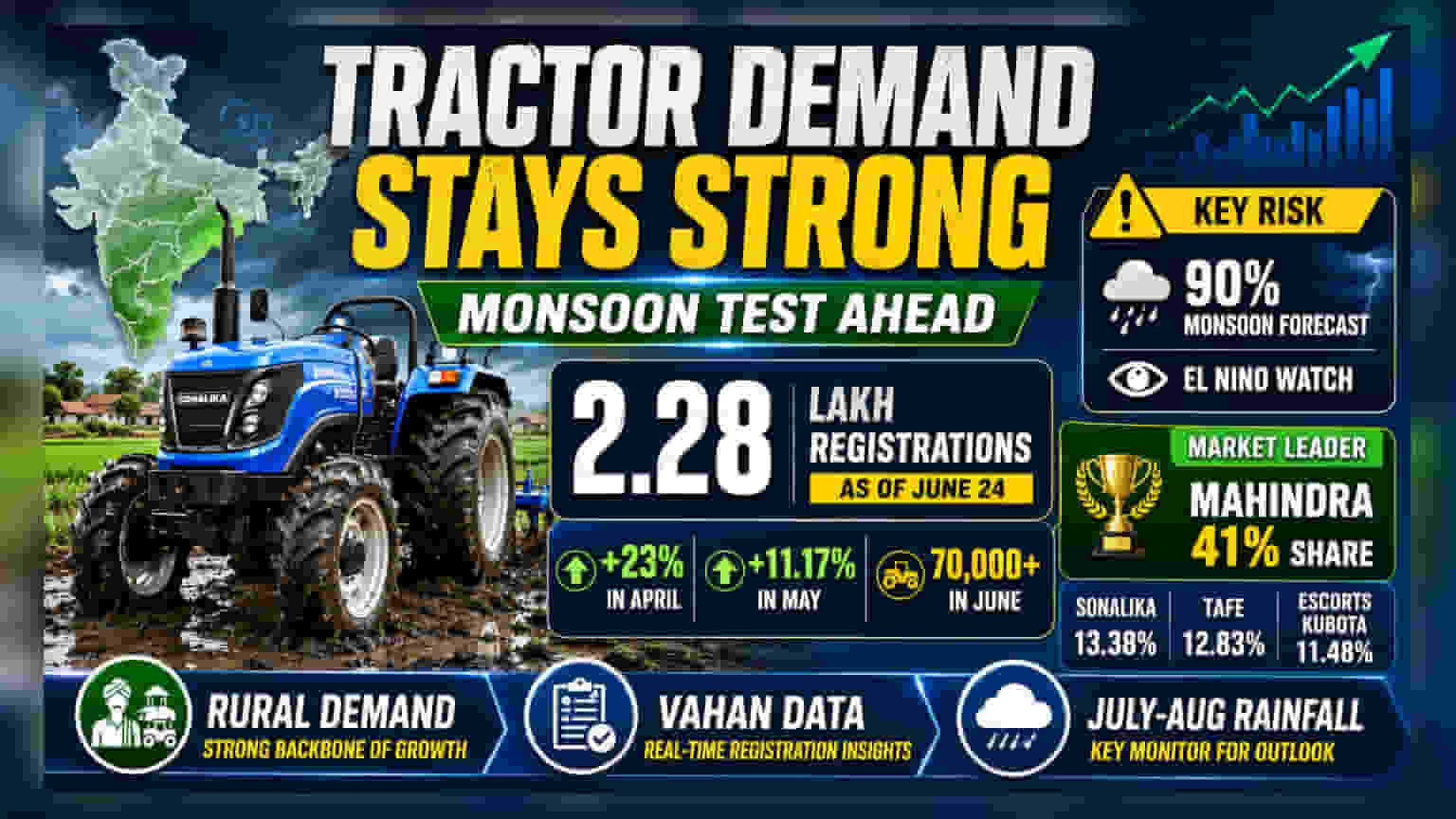
Tractor registrations reached 2.28 lakh units in Q1FY27, slightly above the 2.21 lakh units recorded in the same quarter last year. While the sector is showing resilience due to government support and better affordability, investors are now focusing on the monsoon impact. A potential El Niño and a high base from last year could pressure future growth rates.
What Happened
The Indian tractor industry witnessed a resilient start to the fiscal year 2026-27. Data from the government’s Vahan portal indicates that tractor registrations hit 2.28 lakh units as of June 24, surpassing the 2.21 lakh units recorded during the same period in the previous fiscal year. While the sector is currently tracking double-digit growth for the quarter, the momentum is being carefully watched as the year progresses.
Monthly performance has been uneven but generally positive. April saw a strong year-on-year growth of 23%, followed by an 11.17% rise in May, which recorded the highest-ever monthly registrations for the segment. June is also expected to be a strong month, with over 70,000 units already registered by late June.
The Monsoon and Rural Demand Test
Tractor demand is deeply linked to the agricultural cycle and the health of the monsoon. As a primary tool for farmers, tractor sales often act as a barometer for rural economic sentiment. The industry is currently operating against a backdrop of uncertainty regarding rainfall, with the India Meteorological Department forecasting rainfall at 90% of the long-period average.
The potential for a "Super El Niño" event remains a primary concern for the industry. A weak monsoon could negatively impact Kharif crop output and, consequently, farm incomes. Lower farm income typically leads to reduced spending power, which could affect tractor demand in the second half of the year. Investors are closely tracking rainfall distribution patterns in July and August, as these months are critical for crop health.
Why Future Growth Faces a Hurdle
While the sector has benefited from GST rate changes that improved affordability, analysts note that sustaining these high growth percentages will be challenging. One of the main reasons is the "base effect."
Last year, the sector experienced a significant surge in demand, partly due to policy-led factors. As the company compares its performance against these higher numbers from the second half of last year, maintaining high double-digit growth may become difficult. If the sales numbers do not significantly exceed the strong performance of the previous year, percentage growth may appear to slow down.
Key Players and Market Standing
The market remains competitive, with major domestic and international players vying for share. Mahindra Group continues to lead the segment, holding a 41% market share as of May 2026. Other significant players include International Tractors (Sonalika) at 13.38%, TAFE at 12.83%, and Escorts Kubota at 11.48%. Other manufacturers like John Deere India, Eicher Tractors, and CNH Industrial round out the rest of the market. Investors often watch these market share shifts to see which company is successfully gaining ground in specific regions or product categories.
What Investors Should Track
For investors, the next few months will be crucial. The most important monitorables include the actual monsoon rainfall distribution in the coming weeks and any updates on rural income levels. Additionally, tracking monthly Vahan portal data will provide a clearer picture of whether demand remains robust or begins to taper off. Finally, management commentary from tractor manufacturers regarding inventory levels and demand outlook in rural markets will be key to understanding the sector’s health for the remainder of the fiscal year.