

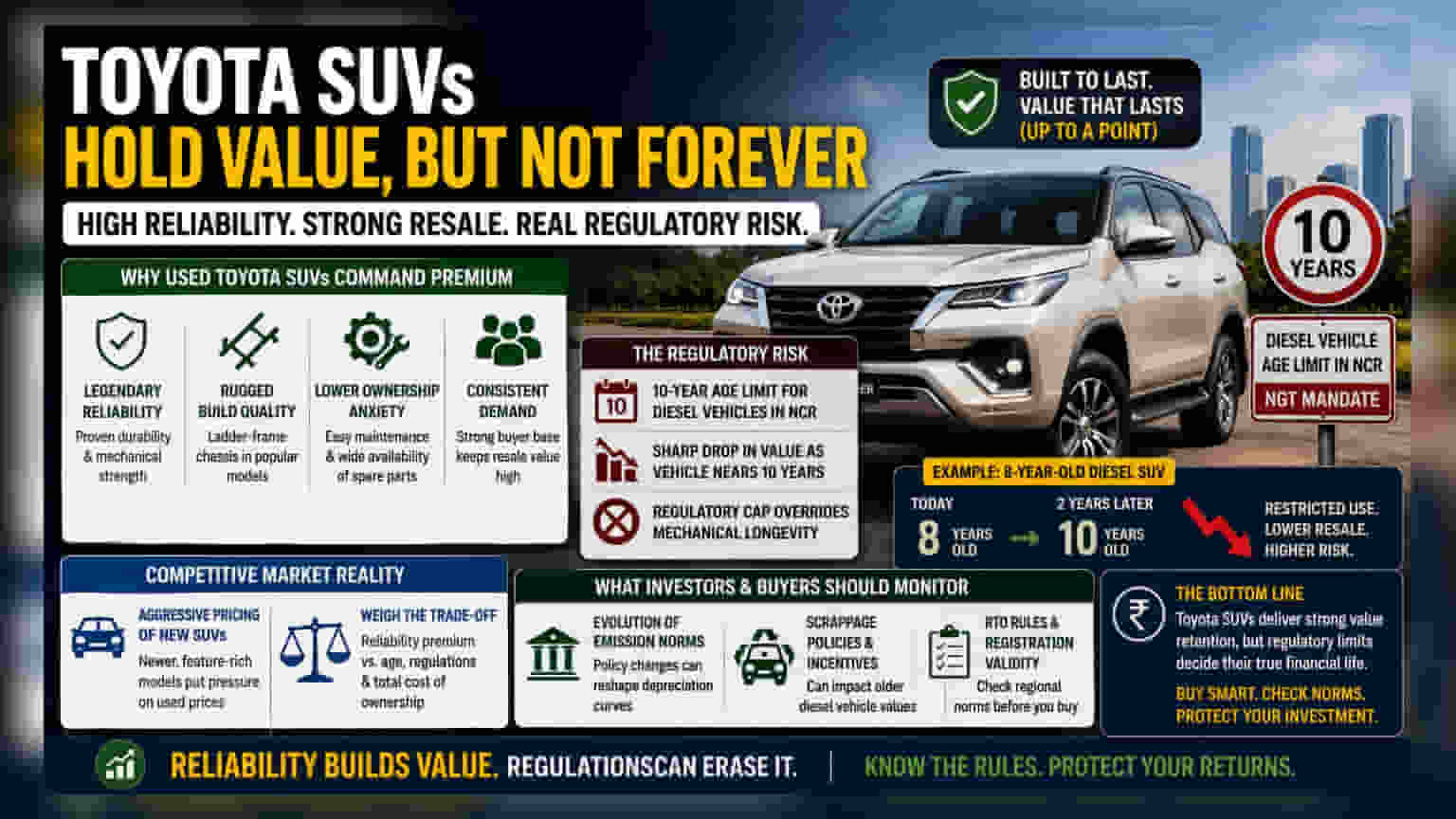
Pre-owned Toyota SUVs command strong resale values due to their reputation for durability and low maintenance. However, buyers and investors must consider the significant regulatory risk posed by emission norms, especially the 10-year usage limit for diesel vehicles in the Delhi-NCR region, which can affect long-term asset value.
Understanding the Pre-Owned Demand
In the Indian secondary automobile market, Toyota SUVs, particularly popular models like the Fortuner, have long been observed to maintain their market value better than many competitors. This phenomenon is driven by a strong reputation for mechanical durability, often attributed to the company's manufacturing philosophy. For a buyer, this means that while the initial purchase price of a used Toyota SUV is higher, the vehicle often retains a larger portion of its value when it is eventually sold again.
Why Resale Value Remains High
The financial attractiveness of these vehicles in the pre-owned space stems from a combination of factors. Consistent demand for proven, rugged platforms—often featuring ladder-frame chassis designs—creates a steady buyer base. Furthermore, the perceived ease of maintenance and the availability of spare parts across the country contribute to lower ownership anxiety. In the pre-owned market, where the buyer often bears the risk of hidden mechanical issues, the track record of reliability becomes a key factor that supports the premium pricing of used Toyota vehicles compared to some other brands.
The Financial Risk of Regulatory Norms
While reliability supports asset value, regulatory risks are the most significant factor that can diminish that value. In India, particularly in the National Capital Region (NCR), the National Green Tribunal (NGT) has mandated a 10-year age limit for diesel-powered vehicles. Since a large majority of Toyota’s popular SUV and MPV offerings in India are diesel-powered, this regulation poses a clear financial risk. An investor or buyer purchasing an 8-year-old diesel SUV may find that the vehicle has a limited usable life in certain regions, which can lead to a sharp drop in resale value as the vehicle approaches the 10-year mark. This regulatory cap overrides mechanical longevity and serves as a major risk factor for asset depreciation.
Sector and Competition Context
While Toyota benefits from a strong brand image, the broader used SUV market is becoming increasingly competitive. Other manufacturers are aggressively pricing new SUVs, which can exert pressure on the resale prices of older models. Investors tracking this segment should note that while Toyota maintains a niche for reliability, the entry of newer, feature-rich SUVs from competitors often leads to a shift in consumer preference. The financial benefit of buying a used Toyota must be weighed against the age of the vehicle, the specific regional emission norms, and the total cost of ownership compared to newer, albeit potentially less durable, alternatives.
What Investors Should Monitor
For those looking at the financial aspect of this segment, the key monitorable is the evolution of emission regulations. Future shifts in government policy regarding diesel vehicles or the expansion of vehicle scrappage incentives could significantly alter the depreciation curve of older SUVs. Additionally, prospective owners should verify the registration validity and the specific RTO norms of the region where the vehicle will be operated, as this directly impacts the practical 'financial life' of the asset.